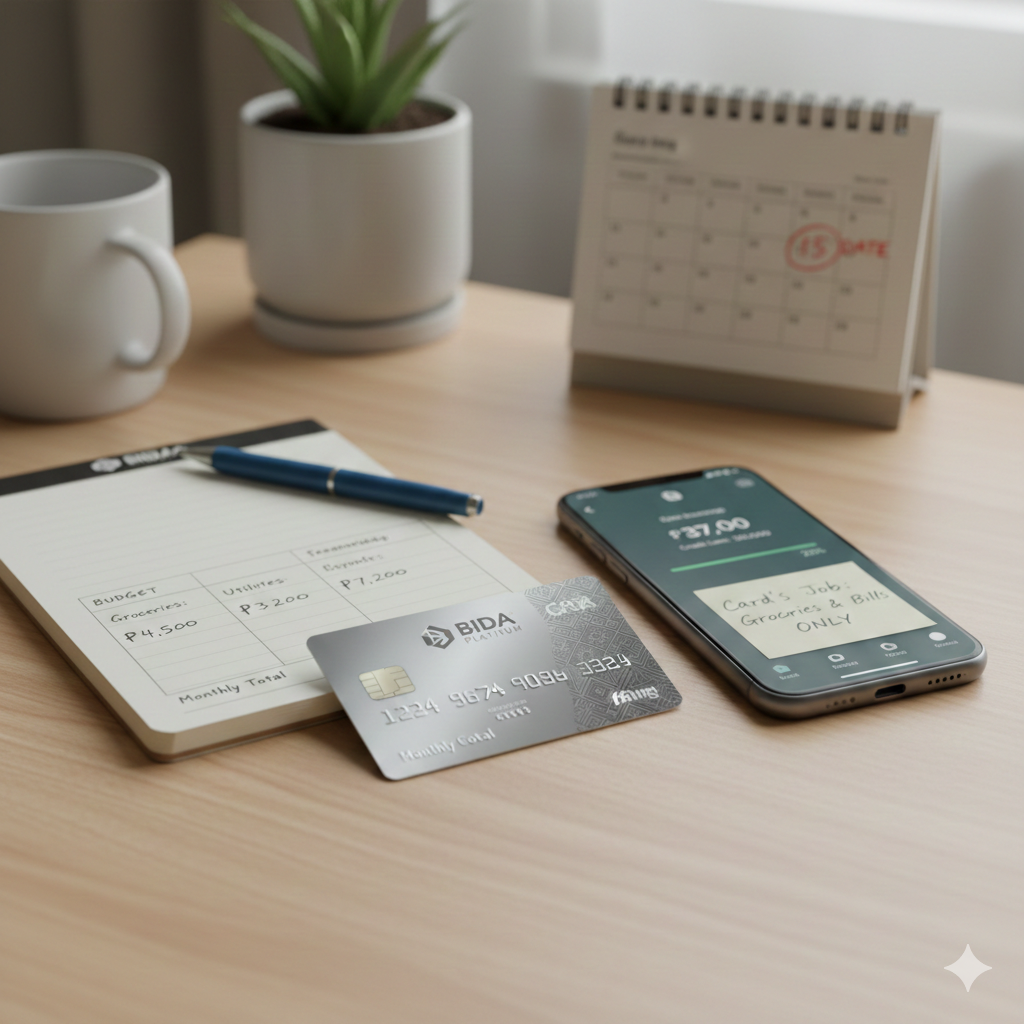
How to Use One Credit Card Like a Pro (Without Debt)
You don't need multiple credit cards. Learn how Filipinos can manage just one credit card efficiently without falling into debt.
Not sure which credit card to keep? Learn how Filipinos can decide which cards are worth keeping — and which ones to cancel safely.

Elena is staring at four credit cards spread across her coffee table.
She got the first one three years ago when she started working. She accumulated her credit cards over 18 months because someone told her "more cards = better credit score."
Now she's looking at a renewal notice. ₱2,500 due next month for a card she's used twice this year.
She asks her boyfriend, "Which ones should I actually keep?"
He shrugs. "I don't know. All of them? Aren't you supposed to keep all your cards?"
This is one of the most common questions on r/PHCreditCards, and the answer isn't what most people think.
Having multiple credit cards isn't automatically good.
Most Filipinos collect cards for the wrong reasons. They think more cards mean better credit scores. They get seduced by sign-up bonuses. They apply during mall promos because the sales guy was convincing.
Then reality hits.
Multiple due dates to remember. Different reward systems to track. Annual fees adding up to ₱5,000+ per year. The mental load of managing it all starts confusing you.
Here's what banks won't tell you: under RA 10870 (the Philippine Credit Card Industry Regulation Law) and BSP guidelines, you can cancel any credit card anytime. You just need to either pay the balance in full or agree to a fixed repayment plan.
Canceling isn't some scary permanent black mark. It's normal financial management.
The real question is different: which cards actually earn their place in your wallet, and which ones are just bleeding you dry?
If you are still figuring out the basics, start here: Credit Cards for Beginners in the Philippines: The Complete Guide
Before we talk about specific cards to keep or cancel, let's get clear on something.
Most Filipinos don't need five credit cards.
They need one primary card that handles most spending, plus maybe one backup for emergencies.
Your primary card should be the one you use for 80% of your purchases. It should have no annual fee or a fee so low you don't think about it. It should match what you actually buy (groceries, bills, gas, whatever). And it should be from a bank where you already have a relationship.
Your backup card might be a NAFFL card that costs nothing to keep open, your oldest card that helps your credit history, or something with specific benefits you occasionally need.
Everything beyond these two, you need a really compelling reason.
Elena realized she was paying ₱7,500 in combined annual fees across four cards when she only regularly used one. That's ₱7,500 for the privilege of having cards sit in her drawer.
Read more: How to Use One Credit Card Like a Pro (Without Debt)
Some cards earn their spot. Here's when keeping a card makes sense.
Keep your oldest card (if the fee is reasonable)
Miguel has a BDO Classic from five years ago when he graduated college. Annual fee is ₱1,800, which he gets waived every year with one phone call. He barely uses it now because he got a better rewards card two years ago.
But he keeps it active with one small purchase every few months.
Why? Because five years of perfect payment history shows up on his TransUnion credit report. That history demonstrates long-term responsible behavior to lenders.
When you close a card, the account doesn't disappear immediately from your report, but eventually that history gets less weight. Your oldest active accounts show stability and experience.
If your oldest card is NAFFL or you can easily get the fee waived, keep it open. Make one small purchase every few months. Pay it off immediately. This maintains the account without real cost or effort.
Keep unconditional NAFFL cards
True No Annual Fee For Life cards are rare and valuable.
Rina has a PNB Ze-Lo Mastercard from four years ago. She uses it maybe once every two months. The rewards are mediocre. Nothing special about it.
But it's genuinely free forever with no conditions.
She keeps it as her backup card. If her primary card gets blocked for fraud or has issues, she has a working credit card ready. Costs her zero pesos and zero mental energy.
Simple rule: if a card is truly NAFFL with no spending requirements, keep it unless you have a specific reason not to.
Want to understand NAFFL better? Read: Are No-Annual-Fee Credit Cards Always Better?
Keep cards that actually save you money
Some cards genuinely save you money on things you were going to buy anyway.
Carlo lives in Alabang and does 90% of his grocery shopping at Robinsons because it's two blocks from his condo. He has a BDO ShopMore card that gives extra points on Robinsons purchases. Over the past year, he redeemed enough points to cover around ₱3,000 worth of groceries.
Annual fee: ₱1,800. Value earned: ₱3,000. Net benefit: ₱1,200.
The card makes financial sense for his specific lifestyle.
If a card saves you more than it costs and you're not changing your spending habits just to earn rewards, keep it. The math should be obvious and the usage should feel natural.
Keep cards with benefits you actually use
Travel cards make sense if you actually travel. Lounge access matters if you fly often enough to use it.
Anna travels internationally for work about six times a year. Her BPI Gold Mastercard has a ₱3,500 annual fee but includes travel insurance, lounge access, and no foreign transaction fees. She uses the lounge every trip and the insurance covered one delayed flight worth ₱8,000 in hotel costs.
For her, the card pays for itself several times over.
For someone who flies once every two years, same card would be terrible.
Keep premium cards only if you use the benefits regularly enough to justify the cost.
Not every card deserves a spot. Here's when it's time to let go.
Cancel high annual fees with minimal usage
Most obvious candidate: cards charging thousands in annual fees that you barely use.
Mark has a Metrobank Travel Platinum card with a ₱5,000 annual fee. He got it three years ago thinking he'd travel more. He's used it four times in the past year for ₱18,000 total purchases. No travel. No lounge access. Just ₱5,000 gone.
He calls Metrobank and asks to downgrade to Titanium (₱2,500 fee, waived first year). They agree. He keeps his credit limit, maintains his account history, stops hemorrhaging money.
Before canceling a high-fee card outright, always ask about downgrading to a lower-tier product. Many banks will let you shift to a NAFFL or low-fee version while preserving your account history and credit limit.
Cancel cards that stress you out
Some cards create more problems than they solve.
Sofia has a card that gives 5x points on dining but only if she spends at least ₱15,000 monthly in that category. Her natural dining spend is around ₱8,000 monthly.
She finds herself adding extra restaurant meals and unnecessary food delivery just to hit the threshold and "maximize rewards."
She's spending an extra ₱7,000 monthly to earn maybe ₱500 worth of points. The math is backwards, but the psychological pull of "maximizing rewards" overrides logic.
She cancels the card and goes back to her simple cashback card. Her monthly spending drops by ₱7,000. She's happier and actually saving money.
If a card causes stress, makes budgeting harder, or encourages spending you wouldn't otherwise do, get rid of it. Your mental health matters more than any reward program.
If you recognize this pattern, read: Why Chasing Rewards Can Quietly Make You Spend More
Cancel duplicate cards
If you have three cards that all do basically the same thing, you don't need all three.
Dan has two cashback cards from different banks. Both give 2% back on everything. Both have similar annual fees. Both are Visa/Mastercard with identical acceptance.
Why does he have both? He applied for the second one during a promo two years ago and never bothered canceling. Now he pays two annual fees for redundant functionality.
He keeps the older one (better credit history) and cancels the newer one. Nothing changes except he saves ₱2,000 in annual fees.
Audit your cards honestly. If two or more serve the exact same purpose, keep the one that makes most sense (oldest, cheapest, or best rewards) and cancel the duplicates.
Cancel promo-driven NAFFL that doesn't fit
Some cards were only worth getting because of a limited NAFFL promo that required hitting a spending threshold. If you hit that threshold artificially and can't maintain that spending naturally, the card might not make sense long-term.
Liza got a card with "spend ₱100,000 in 12 months and get NAFFL" promo. She forced herself to hit that target by shifting expenses around, including things she normally wouldn't buy.
Now that she has NAFFL locked in, she realizes she doesn't actually like using the card. The rewards don't match her spending, the app is clunky, she resents having changed her behavior just to qualify.
Even though it's free, she keeps it in her drawer unused. Eventually she cancels it because having an unused card creates vague financial clutter.
NAFFL is valuable, but only if the card otherwise fits your needs. Don't keep something just because it's free if it adds zero value.
This is what scares most people. They've heard closing cards "ruins your credit score."
The reality is more nuanced, and for most Filipinos, the impact is minimal if you close cards responsibly.
TransUnion and other credit bureaus don't publish exact scoring formulas, but patterns reported by Filipino cardholders suggest scoring works similarly to international models.
What actually matters
Credit utilization is your total balance divided by your total credit limit. If you have ₱20,000 in balances across ₱200,000 in limits, that's 10% utilization.
When you close a card, your total available credit decreases. If your spending stays the same, your utilization percentage goes up, which can temporarily lower your score.
Example: You have three cards with ₱50,000 limits each (₱150,000 total). You carry ₱30,000 in balances (20% utilization). You close one card. Now you have ₱100,000 total but still ₱30,000 in balances (30% utilization). Score might drop slightly.
The fix is either pay down balances before closing, or only close cards you weren't using anyway (no balance impact).
Length of credit history matters because your oldest accounts demonstrate long-term responsible behavior. Closing your oldest card can eventually impact this, though the closed account still appears on your report for years as "closed/paid."
Account mix (cards, loans, etc.) can help but it's a minor factor.
Real-world impact for Filipinos
Based on r/PHCreditCards experiences, people who close one to three cards while maintaining good payment history on remaining cards typically see only minor score changes and stay in "low risk" ranges.
The bigger risk isn't losing a few credit score points.
The bigger risk is keeping cards you can't manage properly, missing payments, carrying balances you can't afford, spiraling into debt.
For most Filipinos, the mental and financial benefit of simplifying to one or two cards far outweighs any minor temporary credit score dip.
If you've decided to cancel, do it properly. Here's the process under RA 10870 and BSP guidelines.
Step 1: Pay your balance or arrange payment
You can't close a card with an outstanding balance unless you either pay it completely or work out a fixed installment agreement with the bank.
Check your statement. If you owe money, pay in full before requesting closure. If you can't pay in full, call the bank about installment options.
Step 2: Redeem unused rewards
Points, miles, and cashback typically disappear when you close an account. Banks aren't required to preserve them, and most won't.
Log into your rewards account. Redeem everything valuable. Convert points to cash, gift certificates, whatever provides actual value. Don't leave thousands of points to evaporate.
Step 3: Ask about downgrades first
Before committing to closure, ask if you can downgrade to a lower-fee or NAFFL product instead.
"I'm thinking about closing this because of the annual fee. Do you have any no-annual-fee options I could switch to?"
If they offer reasonable downgrade, you maintain credit limit and account history while eliminating the fee. If not, proceed with cancellation.
Step 4: Call official customer service
Don't just stop using the card. You must formally request closure through official channels.
Call the customer service number (usually on the back of your card), tell them you want to close the account, follow their process. Some banks require branch visit or written request.
Get a reference number. Ask when closure will be finalized and how you'll receive confirmation.
Step 5: Get written confirmation
After the bank processes closure, ask for written or emailed confirmation that the account is officially closed and balance is zero. Keep this documentation.
This protects you if issues arise later.
Step 6: Destroy the physical card
Once you have written confirmation, cut up the card (through the chip and magnetic stripe) and dispose of it. Don't throw it away intact.
Step 7: Monitor your credit report
Filipino cardholders can request credit reports from TransUnion and other bureaus. After closing, check your report a few months later to confirm the account shows "closed/paid" with no outstanding balance.
If you just got your first card, read: I Just Got My First Credit Card — What Should I Do First?
After auditing, most Filipinos end up with something like this:
Elena kept her BPI Blue (primary, good rewards on actual spending) and her old BDO Classic (oldest card, NAFFL after negotiating lifetime waiver). She canceled RCBC Flex (duplicate) and downgraded Security Bank to NAFFL version.
From four cards with ₱7,500 combined annual fees to two cards with zero fees. Her credit score dropped maybe 10 points temporarily but recovered within three months. Less stress, saves money, still has all the credit access she needs.
That's a win.
If you are wondering about multiple cards, read: How Many Credit Cards Should You Actually Have?
Keeping cards "just in case"
Vague fear of "what if I need it someday" keeps people paying fees on cards they never use. If you can't articulate a specific scenario where you'd need that card, you don't need it.
Closing everything at once
Don't close four cards in the same month unless you have urgent reason. Spread closures over several months if you're concerned about credit score impact.
Closing cards before applying for loans
If you'll apply for a home loan or car loan in the next few months, keep your credit profile stable. Close cards after the loan is approved, not right before.
Not asking for downgrades first
Banks prefer keeping customers. Before canceling, always ask if they can waive the fee or offer downgrade. You might be surprised what they'll do to retain you.
Closing your oldest card when other options exist
If you need to simplify, close newer cards first when possible. Your oldest card with good history is usually worth keeping if cost is reasonable.
Just so you know clearly: under RA 10870 and BSP regulations, you have the right to close any credit card anytime for any reason, provided you settle the balance or arrange payment.
Banks must process your closure within reasonable timeframe (typically seven business days) and provide confirmation. They can't refuse if you've met payment requirements.
If a bank tries pressuring you to keep a card or refuses legitimate closure, you can escalate to BSP Consumer Assistance Office.
You're not trapped. You control which cards you keep and which you cancel.
The right number of credit cards isn't the same for everyone.
It's not about maximizing your credit score at all costs.
It's about finding the balance that lets you manage credit responsibly without unnecessary stress or expense.
For most Filipinos, that means one primary card for everyday spending, maybe one backup for redundancy, nothing else.
Audit your cards honestly at least once a year. Ask yourself: "Did this card save me more money than it cost me? Would I miss it if I canceled tomorrow? Is it making my life simpler or more complicated?"
Keep the ones that clearly serve a purpose. Cancel or downgrade the rest.
You're allowed to simplify. You're allowed to cancel cards that don't make sense anymore. You're allowed to prioritize peace of mind over theoretical credit score optimization.
The best strategy is the one you can actually maintain long-term without stress, not the one that looks optimal on a spreadsheet.
If you want to learn more about managing credit cards responsibly, check out our guides:
How to Use One Credit Card Like a Pro | Best Credit Cards for Beginners in the Philippines (2026) | Paying the Minimum vs Paying in Full