How to Use One Credit Card Like a Pro (Without Debt)
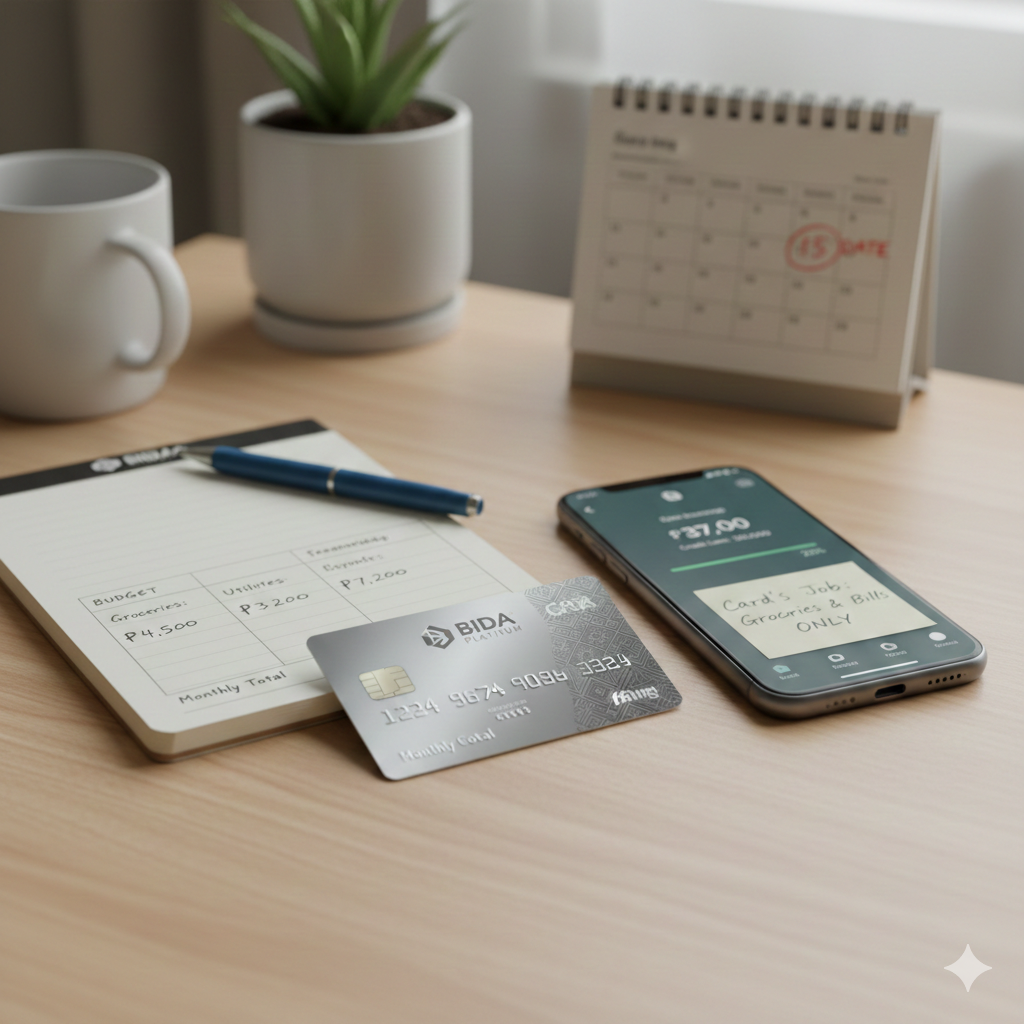
You don't need multiple credit cards. Learn how Filipinos can manage just one credit card efficiently without falling into debt.

Trisha pulls out her wallet to pay for breakfast. Four credit cards slide out and scatter across the table.
Her boyfriend stares. "Apat? When did you get four cards?"
"Oh... BPI last year, then Metrobank for the promo, then Security Bank because NAFFL, then UnionBank because my officemate said it's good for groceries."
"Which one do you actually use?"
Trisha pauses. She honestly can't remember the last time she used three of them.
"Mostly just the BPI. But having options is good, right?"
This is how card collection happens. Not through careful planning, but through "why not?" moments that pile up until you're carrying four cards and using one.
According to BSP data, Filipino cardholders have an average of 2.3 credit cards.
But averages don't tell you what's right for you.
Some people manage five cards perfectly. Others struggle with one. The number that works depends entirely on whether you have the systems and discipline to handle it.
Here's what actually matters: can you track multiple due dates, pay every card in full every month, and avoid the psychological trap of seeing multiple credit limits as "extra money"?
If the answer is "I think so" or "probably," you need fewer cards, not more.
New to managing money? Start here: Smart Money Habits for Young Filipinos
Most beginners should start with one card and stick with one card for at least 6–12 months.
Not because one card is optimal for rewards or credit building. Because one card is optimal for learning.
Every credit card you add means another statement to check, another due date to remember, another balance to track, another set of rewards to monitor.
With one card, you check one statement. You remember one due date. You track one balance. Simple.
Andrea has one BPI card. Her system: check the app twice a week, pay in full before the due date every month, done. Total time spent on credit card management: maybe 30 minutes monthly.
Her coworker with four cards spends hours monthly just making sure she didn't miss anything across multiple apps and statements.
The BSP explicitly warns that multiple cards increase the risk of missed payments because you're juggling multiple due dates.
Miss one payment and you get hit with late fees (typically ₱750–₱1,500) plus interest charges on your entire balance, not just the overdue amount.
Jerome had three cards. He set up autopay on two of them but forgot about the third because he rarely used it. He missed a ₱500 purchase that triggered ₱1,200 in late fees and interest.
One card he forgot about cost him more than two years of the "rewards" he was supposedly optimizing for.
When you have one card, you're forced to make it work within that limit and those terms. You learn to budget properly. You learn to pay in full consistently. You learn to track spending accurately.
These are foundational skills.
When you have multiple cards, it's easy to spread spending across cards, lose track of totals, and accidentally overspend because your mental accounting breaks down.
Patrick started with one card and used it for 12 months. Every month, paid in full. Never carried a balance. Never paid interest. Never missed a due date.
After proving he could handle one card perfectly, he added a second card for specific purposes. That second card works because the discipline was already locked in.
Want to master the basics first? Read: How to Use One Credit Card Like a Pro
A second card isn't automatically bad. It's bad when you add it before you're ready.
Here's when adding a second card makes sense:
Not "mostly in full" or "usually in full." Every single month, full payment, no exceptions, no interest charges ever.
This proves you have the discipline and systems to manage credit properly. Until you have this track record, adding more cards just adds risk.
"Backup in case my primary card has issues" is a valid purpose.
"Different network (Visa vs Mastercard) for international acceptance" is a valid purpose.
"Specialized rewards for a category I spend heavily in" is a valid purpose.
"More cards seems better" is not a valid purpose.
Denise has two cards. Her primary is a cashback card she uses for everything. Her second is a NAFFL card she keeps as backup and uses maybe once every two months just to keep it active.
She can articulate exactly why she has each card and what role each plays. That's the standard you should meet before adding cards.
Some people naturally maintain systems. They use spreadsheets or apps. They set multiple calendar reminders. They check statements religiously.
If you're this person and you've proven it over 6–12 months with one card, a second card won't break your system.
If you're not this person (and most people aren't), adding cards just creates gaps where mistakes can slip through.
When Reddit users who successfully manage multiple cards describe their setup, patterns emerge:
Primary card handles 90% of spending. Backup card (often NAFFL) stays in wallet for emergencies or when primary card has issues.
Ryan uses his Security Bank cashback card daily. His backup BDO Classic card sits unused most months but saved him twice when his primary card was temporarily blocked for fraud protection.
One card for daily spending (groceries, gas, bills). Second card for specific high-spend categories where rewards are significantly better.
Gina uses a basic cashback card for everything except international travel. Her second card (which she only uses for flights and hotels) has no foreign transaction fees and gives travel insurance.
She doesn't use the travel card domestically. It serves one specific purpose.
Some merchants or countries accept only one network. Having one of each ensures you're never caught without payment options.
This is most relevant for frequent travelers or people who shop internationally online.
Reddit threads are full of people with 5–9 credit cards admitting they only actively use 2–3 of them.
The others just sit there creating risk and complexity.
The more cards you have, the more likely you'll eventually miss a payment somewhere.
You forget to check one app. You think a bill is on autopay but it isn't. You lose track of which card you used for which purchase.
Each mistake costs ₱750+ in late fees plus interest charges.
Maricar had six cards at her peak. She missed at least one payment quarterly across different cards. Over one year, she paid roughly ₱4,500 in avoidable late fees.
She consolidated down to two cards and hasn't missed a payment since.
Sound familiar? Read: Common Credit Card Mistakes Filipinos Admit on Reddit
When you spread spending across five cards trying to "maximize category bonuses," you often end up with:
Ben had four rewards cards, each supposedly "optimized" for different categories. After one year, he calculated his actual net rewards after annual fees: ₱2,800.
His friend with one simple cashback card earned ₱3,200 and spent zero mental energy on optimization.
Every card you add increases cognitive load.
"Which card should I use for this purchase?" "Did I already hit the cap on that category this month?" "When is the due date for the card I barely use?"
This mental overhead is exhausting and often leads to decision fatigue where you just stop caring and start making mistakes.
Camille reduced from five cards to two and described it as "like a weight lifted off my shoulders." She didn't realize how much stress the complexity was causing until it was gone.
People often justify multiple cards by saying "it improves my credit score."
This is technically true but practically misleading.
Yes, having multiple cards with low utilization can help your credit score. But carrying balances, missing payments, or having too many hard inquiries in short succession can hurt your score more than multiple cards help it.
The BSP and local credit bureaus care most about payment history and utilization, not the number of cards.
One card paid perfectly for two years builds better credit than three cards with occasional late payments.
Focus on perfect payment behavior first. Optimize card count later if you need to.
Here's a simple test: if you can't immediately answer these questions about every card you have, you have too many cards.
For each card you own:
If you had to check an app or statement to answer any of those questions for any card, that card is in your "not actively managed" pile.
Cards in that pile are liabilities, not assets.
Here's the path that works for most Filipinos:
Get one simple card. Learn the basics. Pay in full every month without fail. Build perfect payment history.
Don't even think about a second card during this period. Master one first.
Once you have 6–12 months of perfect payments, you can consider adding a second card if you have a clear purpose.
Most people stay at this stage permanently. One primary card, maybe one backup. That's enough.
A third card only makes sense if you've successfully managed two cards for another 6–12 months, you have strong organizational systems in place, and you have a specific need the third card fills.
Most Filipinos never need to reach this stage.
If you genuinely have the systems, income, and discipline to manage 4+ cards perfectly, you probably don't need this article.
But if you're reading this wondering "how many cards should I have," the answer is probably fewer than you currently have.
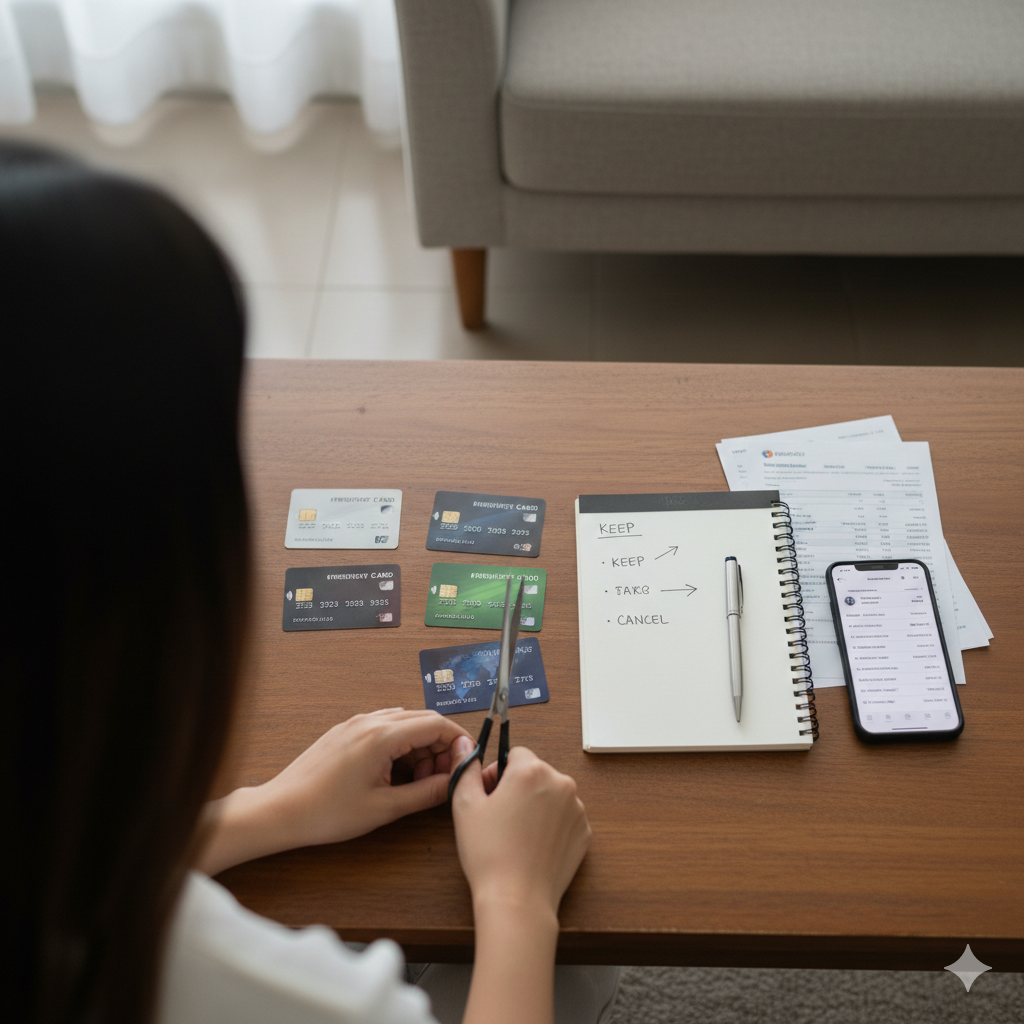
If you have cards you don't use, you have two options:
Want to decide which cards to keep? Read: Which Credit Card Should I Keep (and Which to Cancel)?
The best number of credit cards is the number you can manage perfectly without stress.
For most Filipinos, that's one or two cards. Maybe three if you're highly organized and have specific needs.
It's not about maximizing credit limits or optimizing category bonuses or collecting cards. It's about building sustainable financial habits that work long-term without mental overhead.
One card managed perfectly beats five cards managed poorly.
Every time.
Remember Trisha from the beginning? She eventually closed two of her four cards. Kept her primary BPI card and one NAFFL backup. Her wallet is lighter, her statements are simpler, and she hasn't missed a payment in eight months.
The goal isn't to have the most cards or the most optimal setup. The goal is to have the simplest system that meets your needs without creating stress, mistakes, or unnecessary complexity.
For most people, that means starting with one card, mastering it completely, and only adding more if there's a clear reason and proven discipline.
Simplicity almost always wins.