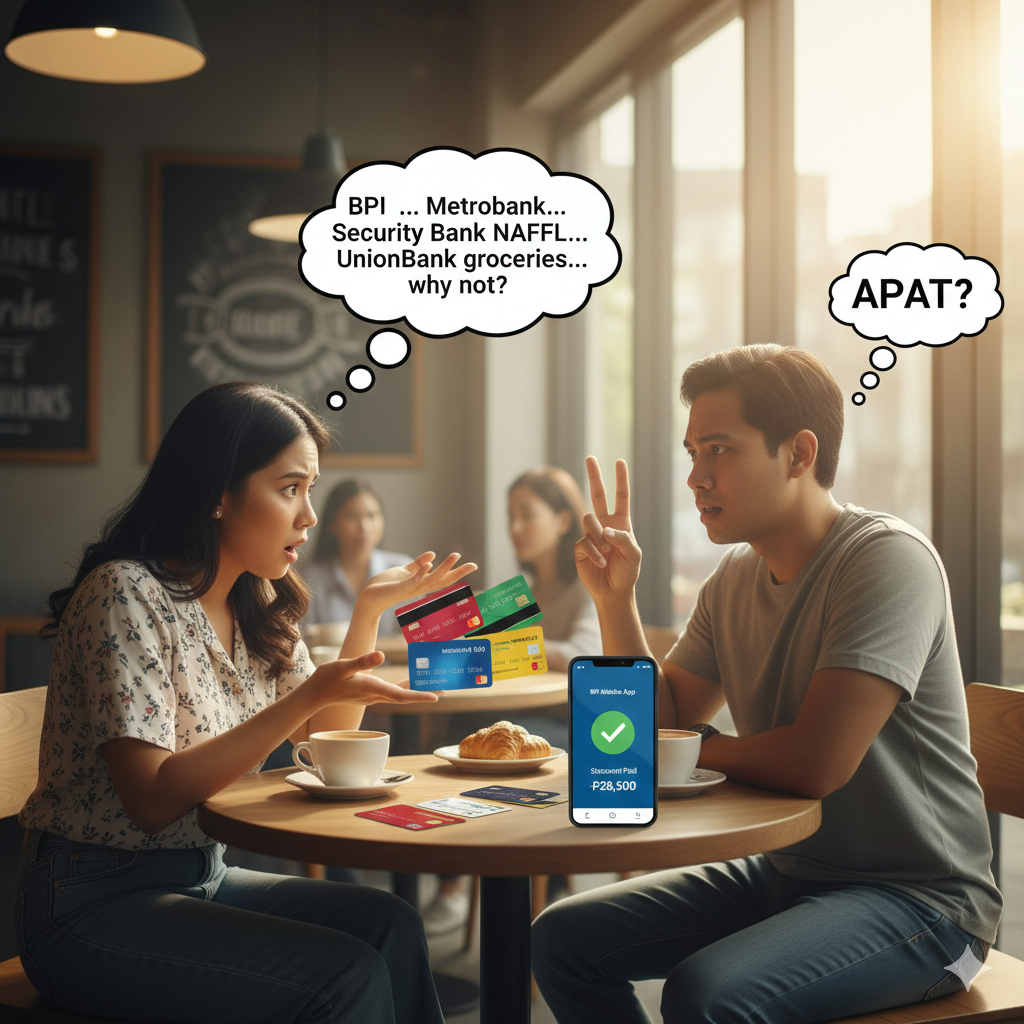
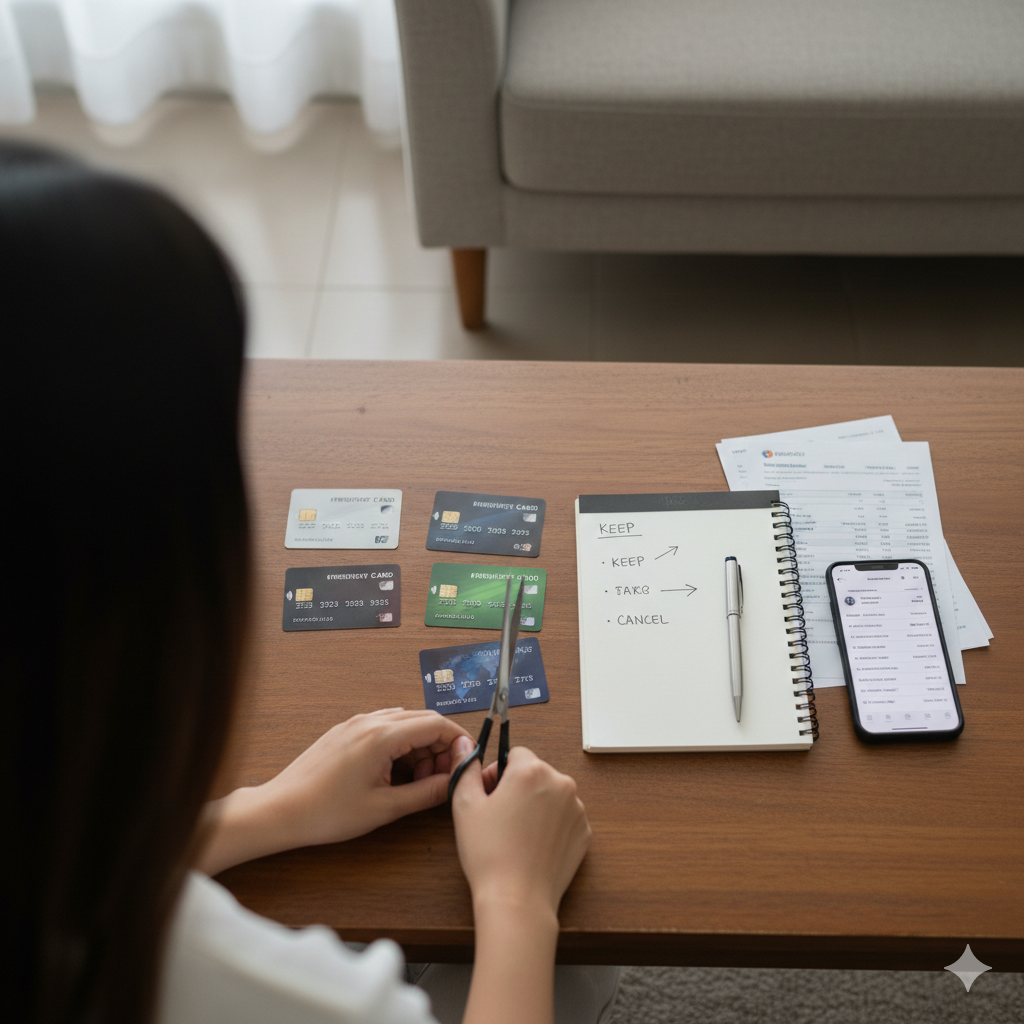
How Many Credit Cards Should You Actually Have?
Learn how many credit cards Filipinos should actually have based on spending habits, financial goals, and ability to manage multiple accounts.
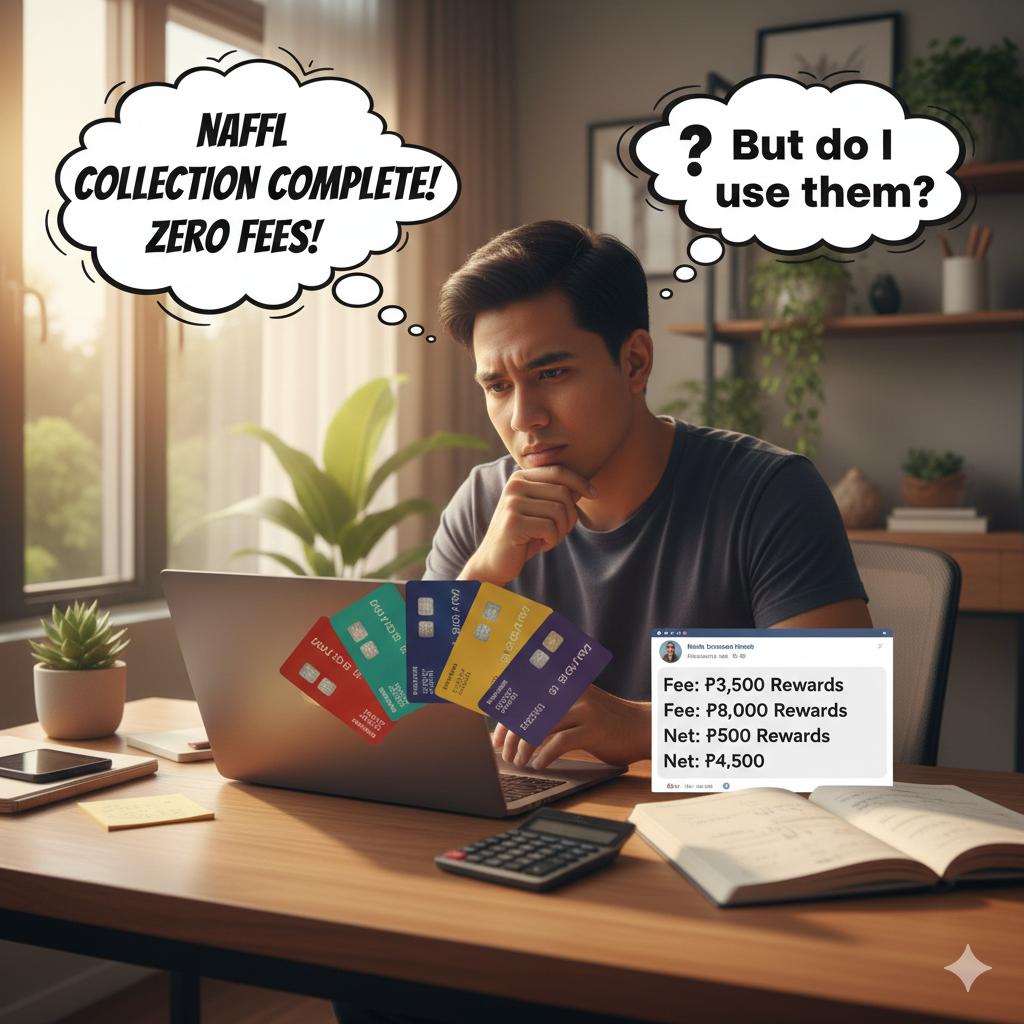
Someone posts a screenshot showing five credit cards spread across their desk. All NAFFL (No Annual Fee For Life).
"Finally completed my NAFFL collection! Zero annual fees forever!"
The comments flood in. Half the people congratulate them. The other half ask: "But do you actually use all of them?"
Long pause.
"Well... I mainly use two. But the others are free, so why not keep them?"
This is the NAFFL trap that catches thousands of Filipinos every year.
No annual fee sounds like pure upside. Free card, free credit limit, free backup option. What could go wrong?
Turns out, a lot.
NAFFL cards are extremely popular in the Philippine market, and for good reason. Saving ₱2,000 to ₱5,000 annually in membership fees is real money.
But here's what the "no annual fee" marketing doesn't tell you: free from annual fees doesn't mean free from costs, complexity, or consequences.
There are two main types of NAFFL setups in the Philippines:
The second type is where people get caught. They force themselves to spend ₱50,000 or ₱100,000 in a short window just to qualify for NAFFL, buying things they wouldn't normally buy, just to avoid future annual fees.
That's not saving money. That's spending money to maybe save money later.
New to managing money? Start here: Smart Money Habits for Young Filipinos
Let's be fair. NAFFL cards have real advantages, especially for specific situations.
When you're paying ₱2,500 annually for a card, you feel pressure to "use it enough" to justify the fee. This pressure often leads to unnecessary spending.
With NAFFL cards, that pressure disappears. You can use the card when it makes sense and ignore it when it doesn't, without worrying about wasting money on membership fees.
Mark has a NAFFL card he uses maybe three times a year for online purchases that require credit cards. If that card had an annual fee, he'd have canceled it years ago. But since it's free, he keeps it as a backup and it costs him nothing.
Length of credit history matters for your credit score and future loan applications. Keeping your oldest card open helps, but only if you can afford to keep it.
NAFFL cards are easy keepers. You can leave them in a drawer, make one small purchase every few months to keep them active, and maintain that credit history without ongoing costs.
Liza's oldest credit card is a NAFFL card she got six years ago. She barely uses it anymore because she has better rewards cards now, but she keeps it open specifically for credit history length. If it had an annual fee, she would have canceled it and lost that history.
Sometimes your primary card gets declined, blocked for fraud protection, or has technical issues. Having a backup card saves you from embarrassing moments at checkout or being stranded without payment options.
If your backup card charges ₱3,000 annually and you only use it twice a year in emergencies, that's expensive insurance. If it's NAFFL, it's genuinely free insurance.
Carlos keeps two cards. His primary card offers great rewards and he uses it daily. His backup is a basic NAFFL card that lives in his wallet unused most months. The few times his primary card had issues, he was grateful the backup was there.
But NAFFL cards aren't pure upside. They come with real downsides that people discover too late.
There's often a reason these cards can afford to be free.
NAFFL cards tend to be basic products with simple earn rates and fewer premium perks than high-fee rewards or travel cards. The banks aren't giving you premium benefits for free. They're giving you entry-level benefits for free.
When you compare a NAFFL card earning 0.5% rewards against a ₱3,500 annual fee card earning 2–3% rewards, the math might favor the paid card if your spending is high enough.
Reddit users frequently complain about NAFFL promo cards from major banks having poor point values. You spend ₱100,000 to qualify for NAFFL, then discover the rewards structure is so weak you'd have been better off with a simple paid cashback card.
"It's free, so why not keep it?"
This thinking leads people to accumulate five, six, seven credit cards they don't actually use. Each card adds complexity even if it costs nothing.
More cards mean more statements to check, more due dates to remember, more potential for fraud you won't notice, more mental clutter.
Sofia proudly collected four NAFFL cards over two years. Then she realized she was spending hours monthly just checking statements on cards she barely used, worrying about fraudulent charges on accounts she'd forgotten about, and occasionally missing small purchases that triggered minimum payments.
The "free" cards were costing her time and mental energy she didn't want to spend.
NAFFL only removes the annual fee. It doesn't remove interest charges, late fees, over-limit penalties, or cash advance costs.
Credit cards in the Philippines can charge around 2% monthly interest (up to 24% annually per BSP's cap on unpaid balances; check your bank's current rate). If you're carrying ₱20,000 in debt on your "free" card, you're paying around ₱400 monthly in interest.
You "saved" ₱2,000 in annual fees but you're paying ₱4,800 annually in interest charges.
That's not free. That's expensive.
The psychological danger is that "no annual fee" makes the card feel harmless, which can lead to looser spending discipline. You forget you're borrowing money that still costs 24% annually if you don't pay it back on time.
NAFFL cards aren't wrong for everyone. They're wrong for people who misuse them.
Here's when they work well:
If you're putting ₱10,000 to ₱30,000 monthly on credit cards and paying in full, you probably don't need premium rewards cards with high annual fees.
A simple NAFFL card with basic cashback or flat points gives you the convenience of credit cards without ongoing costs. The rewards might be modest, but modest rewards on modest spending is fine when you're not paying fees.
Ana uses a basic NAFFL card for everything. Groceries, gas, occasional dining, online shopping. She earns maybe ₱2,000 annually in cashback. A premium card might earn her ₱4,000 but cost ₱3,500 in fees. The NAFFL card is better for her situation.
Your oldest card helps your credit profile. If it's NAFFL, you can keep it forever without cost pressure.
Make one small purchase every few months to keep it active. Pay it off immediately. Let it sit in your financial history building credibility with lenders.
This strategy only works if you're disciplined enough to manage a card you rarely use without forgetting about it or letting fraud slip through.
NAFFL cards work great for people who already have solid credit card discipline.
If you're consistently paying in full, tracking all your cards properly, and not overspending, adding a NAFFL card to your lineup creates zero downside.
The problem is most people who think they have this discipline actually don't.
Here's when you should avoid collecting NAFFL cards:
More cards mean more complexity. If you're already having trouble tracking spending across one or two cards, adding more "because they're free" makes the problem worse.
Miguel got three NAFFL cards in six months. Within a year, he'd accidentally missed a ₱200 purchase on one card he forgot about, triggering late fees and interest charges that totaled ₱1,200.
His "free" card cost him ₱1,200 because he couldn't track it properly.
Sound familiar? Read: Common Credit Card Mistakes Filipinos Admit on Reddit
Some NAFFL promos require you to spend ₱50,000 to ₱100,000 in three to six months to qualify for lifetime fee waiver.
If you're forcing that spending by buying things you wouldn't normally buy, you're not saving money. You're spending money to avoid future fees.
Do the math honestly. If you naturally spend ₱50,000 in six months anyway on things you'd buy regardless, fine. If you're spending an extra ₱30,000 you wouldn't otherwise spend just to hit the threshold, you've lost ₱30,000 to save ₱2,500 annually.
That's terrible math.
Beginners should focus on mastering one simple card before worrying about optimization strategies like collecting NAFFL cards.
Learn your billing cycle. Understand due dates. Build the habit of paying in full every month. Track your spending properly.
Once those fundamentals are locked in for at least six months? Then think about whether NAFFL cards add value.
Starting with multiple NAFFL cards because "they're free" is like learning to juggle by starting with five balls instead of two. You're adding complexity before you've mastered basics.
Not sure how many cards you need? Read: How Many Credit Cards Should You Actually Have?
The real question is "Does this card fit my life?"
A ₱3,500 annual fee card that earns you ₱8,000 in value annually is better than a NAFFL card that earns you ₱500 annually.
A NAFFL card you forget about and mismanage is worse than having no card at all.
Cost is only one factor. Fit matters more.
Elena has two credit cards. One is a ₱2,500 annual fee cashback card she uses for everything and earns around ₱6,000 annually. Net value: ₱3,500.
Her friend has four NAFFL cards. Combined annual value from all four: maybe ₱1,500. But she spends hours managing them, occasionally misses small charges, and feels constant low-level stress about tracking everything.
Who's in better shape financially? Elena.
The paid card that fits her life beats the free cards that complicate it.
Ask yourself these questions honestly:
No annual fee is nice. But it's not the only thing that matters, and sometimes it's not even the most important thing.
A card's value is about fit, not price.
The best credit card strategy is the one you can maintain long-term without stress, whether that's one paid card, one NAFFL card, or some combination.
Don't collect NAFFL cards just because they're free. Get cards that serve specific purposes in your financial life and that you can manage properly.
Free cards that add complexity and stress aren't really free.
Paid cards that genuinely improve your financial life are worth the cost.
The goal isn't to minimize fees. The goal is to maximize the value you get from your financial tools while keeping your system simple enough to manage.
For most Filipinos, that means one or two well-chosen cards (NAFFL or paid) that match your actual spending and lifestyle, not a collection of five "free" cards you barely use.
Want to understand card selection better? Read: Which Credit Card Should I Keep (and Which to Cancel)?