A Quarterly Savings Check-Up (Without Overthinking It)
A simple quarterly savings check-up helps Filipinos stay on track without stress. This guide explains what to review — and what to ignore.
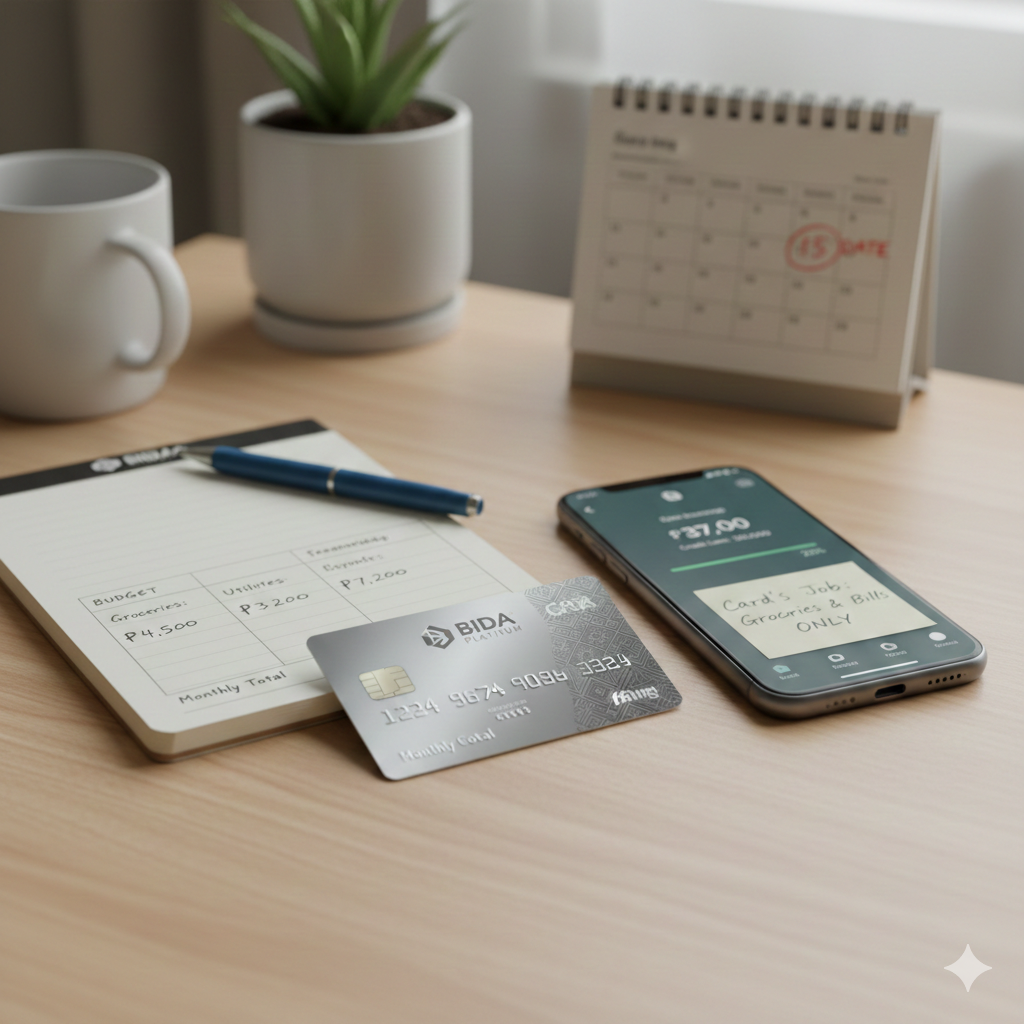
One Card Is Not a Limitation. It's an Advantage.
I still remember a conversation on r/PHCreditCards that stood out to me.
Someone posted: "I only have one credit card. Is that bad? Everyone seems to have 3 or 4."
The top comment was simple. "One card managed well is better than three cards mismanaged."
Here's what many first-time cardholders don't realize: having one credit card is not a disadvantage. Especially when you're still learning the fundamentals.
Multiple cards mean multiple due dates, multiple statements and multiple chances to mess up. It also leads to higher total annual fees and more temptation to overspend.
The BSP's credit card primer actually encourages cardholders to "consider maintaining only the right number of credit cards" for exactly this reason. More cards mean more statements and due dates to monitor, which increases complexity and risk.
For beginners, one credit card is often ideal. It reduces mistakes. It simplifies tracking. And it builds discipline faster than juggling multiple accounts ever could.
This guide will show you how to use one credit card like a pro.
The first rule of the one-card system is simple. Give your card a purpose.
Don't just swipe randomly because "I have a card now." Decide upfront what your card is for.
Assigning clear purposes to your starter card whether it be groceries, bills, or transport. Pick a category or two and stick to it.
Here are the best uses for a single credit card:
Monthly essentials:
Fixed subscriptions:
Planned purchases:
A credit card is a payment tool, not extra income. It's designed for expenses you can already afford, with the convenience of paying at the end of the month instead of immediately.
When you give your card a specific job, it becomes a tool with a purpose instead of a temptation sitting in your wallet.
Ana uses her BDO card exclusively for groceries and utilities. Every month, she knows exactly what's going on that card.
Pro tip: Write down your card's purpose somewhere you'll see it. "This card is for groceries and utilities only." It sounds simple, but it works.
Avoid using your card randomly "just because you can." Every swipe should be intentional.
Here's a mindset trap I see all the time.
"My limit is ₱50,000 and I'm only at ₱35,000. I still have ₱15,000 to spend."
That thinking leads straight to debt.
Your credit limit is not a spending target. It is a boundary you should stay well below.
There is such a thing as credit utilization ratio. It's your current balance divided by your credit limit, expressed as a percentage.
So if you have a ₱50,000 limit and you're using ₱15,000, your utilization is 30%.
Financial experts widely recommend keeping your utilization below about 30% as guidance for healthier credit profiles. Some even suggest staying under 20% or lower is even better.
Here's my practical recommendation for the one-card system: Keep your usage under 30% to 40% of your limit as a general habit. Not because of some magical credit score formula, but because it keeps you disciplined and prevents you from getting too close to maxing out.
This gives you breathing room. It prevents you from feeling stretched. And it makes paying in full much more manageable.
Carlo got his first card with a ₱40,000 limit. Within two months, he was at ₱38,000. "I didn't max it out," he told me. "I still had ₱2,000 left."
That's not how it works. Being at 95% utilization means you've basically maxed out your card. And now paying in full feels impossible, so you start paying minimum, and the debt trap begins.
Don't think "how much can I spend?" Think "how much should I spend to stay comfortable?"
Pro tip: Check your balance weekly. Not obsessively, just a quick check. Most Philippine banks have apps now (BDO, BPI, Metrobank, UnionBank, Security Bank). Open the app, check your current balance, close the app. Takes 30 seconds.
This keeps you aware without creating anxiety.
This is the non-negotiable rule of the one-card system.
You must pay your full statement balance before the due date. Every single month. No exceptions.
You pay no finance charge if you pay the Total Amount Due in full on or before the Payment Due Date. And you only enjoy the full grace period if there's no unpaid balance from prior cycles.
Translation: pay in full, and you never pay interest.
Carry any balance, even ₱100, and you start paying interest on everything. Plus you lose the grace period on new purchases.
Minimum payments are typically a small percentage of your balance, commonly around 3% to 10%, depending on the issuer. But paying only the minimum leads to interest on the remaining balance, which can keep you in debt for years.
Here's the rule: If you can't pay off your full statement balance within the same month, you shouldn't have made that purchase.
Your credit card is not a way to buy things you can't afford. It's a convenient payment method for things you were going to buy anyway.
Eric has used the same Security Bank card for 8 years. He's never paid a peso in interest. Why? Because he treats it like a debit card. He only charges what he can pay off immediately.
Some months he uses ₱15,000. Some months ₱5,000. He pays the full amount every time.
That's the discipline that makes the one-card system work.
How to make sure you always pay in full:
Here's where beginners get distracted.
They see people on r/PHCreditCards talking about category bonuses, points strategies, cashback maximization, combining multiple cards for different merchant types.
That's advanced territory.
When you're learning to use one credit card responsibly, you don't need any of that.
You don't need to worry about:
You need consistency and discipline. You need to prove to yourself that you can manage one card without falling into debt.
Rewards and optimization come later. After you've paid in full every month for at least 6 to 12 months. After the habits are locked in. Start simple.
My friend Sofia got obsessed with points optimization in her first three months of having a card. She signed up for multiple rewards programs. She studied which merchants gave bonus points. She timed purchases around promo periods.
She also ended up with a ₱18,000 balance that she couldn't pay in full because she'd been so focused on "maximizing rewards" that she forgot the actual rule: don't spend more than you can afford.
The points she earned? Worth maybe ₱500. The interest she paid over the next 6 months? Over ₱2,000.
That's not optimization. That's distraction.
Here's my recommendation: For your first year with a credit card, ignore rewards entirely. Focus on building the habit of paying in full. That discipline is worth more than any cashback or points program.
Once you've mastered that, then you can start thinking about rewards.
For now, just use your card as a convenient payment method. That's it.
There's a balance between staying aware and becoming obsessive.
You should review your credit card activity regularly. But you don't need to check it every day.
Once a month is enough.
Here's what to review when your statement comes out:
Under RA 10870 (Credit Card Industry Regulation Law) and bank terms and conditions, you typically have a limited window to dispute billing errors, usually 30 to 60 days from the statement date depending on your bank's policy. So you need to catch them early.
Do regular statement reviews instead of obsessing daily. Check in monthly, address any issues, pay your bill, move on.
This keeps you informed without creating unnecessary stress.
What you don't need to do:
Set up a recurring reminder. "Review credit card statement." First Saturday of every month. Takes 10 minutes. That's all you need.
My system is simple. When my statement email arrives, I open it that same day. I review every transaction. I check the total. I verify the due date. Then I schedule the payment immediately, even if the due date is 3 weeks away.
Done. I don't think about it again until next month's statement.
Here's a simple budgeting approach that works perfectly with one credit card.
Decide upfront how much you're going to put on your card each month. Not your credit limit. Your personal budget limit.
Let's say you decide ₱10,000 per month is your card budget. That's for groceries, utilities, subscriptions, and maybe gas.
Track your spending throughout the month. When you hit ₱10,000, you stop using the card. Simple as that.
This prevents you from ever being surprised by your statement balance.
You can do this tracking in a few ways:
Method 1: Check your pending balance weekly. Most bank apps show pending transactions that haven't posted yet. Quick check every Saturday. If you're at ₱8,000 and it's week 3, you know you have about ₱2,000 left for the rest of the month.
Method 2: Keep a simple spreadsheet or note. Every time you swipe, write it down. Running total. Low-tech but effective.
Method 3: Use your bank's transaction alerts. Most Philippine banks send SMS or push notifications for every transaction. Keep an eye on those throughout the month.
Credit cards work best when combined with proper budgeting. The card is just a payment tool. The budget is what keeps you in control.
The beauty of the one-card system is simplicity.
You're not juggling multiple due dates or trying to remember which card you used for what. Everything is in one place.
Check out our guide:
Smart Money Habits for Young FilipinosOkay, so when does it make sense to get a second card?
Not in your first year. Probably not in your second year either.
But eventually, after you've proven to yourself that you can manage one card perfectly for an extended period, a second card might make sense.
Here are the only good reasons to consider a second card:
But even then, you should only consider a second card if:
More cards mean more statements and due dates to monitor. That's real. Juggling several cards early on makes missed payments and overspending more likely. Start with one beginner-friendly card and master it first.
Learn when multiple cards make sense:
How Many Credit Cards Should You Actually HaveEven with just one card, people still make mistakes. Here are the most common ones I see.
Mistake 1: Using it for things you can't afford. Just because you have a ₱30,000 limit doesn't mean you can afford a ₱25,000 purchase. If you don't have the cash to pay it off immediately, don't buy it.
Mistake 2: Treating the minimum as acceptable. Paying minimum keeps you in debt for years. It's a trap. Always pay in full.
Mistake 3: Not checking statements. You need to review every transaction monthly. Fraud happens. Billing errors happen. Catch them early.
Mistake 4: Missing the due date. Even once. Late fees are commonly in the ₱500 to ₱1,000 range, depending on the bank. Plus you get hit with interest. Plus it can hurt your credit score. Set reminders. Automate if possible.
Mistake 5: Cash advances. Never use your credit card to withdraw cash from an ATM. According to Philippine bank fee schedules and BSP's fee table, cash advances typically cost ₱200 per transaction, plus interest starts from the transaction date with no grace period. And you earn no rewards.
Mistake 6: Chasing rewards too aggressively. Don't spend extra just to earn points. You're not saving money by spending it.
Mistake 7: Not understanding your terms. Read your card's terms and conditions. Know your interest rate, your annual fee, what counts as a cash advance, and what triggers fees.
Learn from real experiences:
Common Credit Card Mistakes Filipinos Admit on RedditThere's something powerful about limiting yourself to one card.
It forces you to be intentional. Every swipe matters more when you only have one card to manage.
With multiple cards, it's easy to lose track. "Oh, I'll put this on card A and that on card B." Before you know it, you have three statements to juggle and three due dates to remember.
With one card, you always know exactly where you stand.
Beginners should start with one card specifically because it builds discipline faster. You can't hide from your spending when it's all in one place.
Kim deliberately keeps just one card even though she qualifies for more. "The moment I have two cards, I know I'll start making excuses. 'Oh, this card is almost full, I'll use the other one.' One card keeps me honest."
That honesty is valuable.
When you only have one card, you can't play mental games with yourself. You can't shift balances around or tell yourself that spreading purchases across multiple cards somehow makes them more affordable.
That clarity is an advantage, not a limitation.
Here's a bonus tip that most beginners don't know about.
After you've had your card for a year and you've been paying in full every month, you can often get your annual fee waived.
Most Philippine credit cards charge annual fees ranging from ₱1,500 to ₱5,000 or more, depending on the card type.
These fees are often negotiable, especially if you have a good payment history. Banks don't guarantee waivers, but many offer full or partial waivers as retention incentives.
When your annual fee posts to your statement, call your bank's customer service. Be polite. Explain that you've been a responsible cardholder, you always pay in full, and you'd like to request a fee waiver.
It's worth a 5-minute phone call to potentially save ₱1,500 to ₱3,000.
With just one card, you only need to do this once a year. It's simple to manage.
If you have three or four cards, you're making these calls multiple times a year and tracking different annual fee dates. That's more hassle than it's worth when you're just starting out.
Remember that r/PHCreditCards post from the beginning?
"I only have one credit card. Is that bad?"
The answer is no. It's not bad. For most beginners, it's actually ideal.
If you can't manage one credit card well, having three cards won't make you better at managing credit. It will just give you three ways to mess up instead of one.
Master one card first.
Give it a clear purpose. Treat your limit as a ceiling, not a target. Pay in full every single month. Ignore optimization and focus on consistency. Review your statement monthly, not daily.
Do this for at least a year. Build the habits. Prove to yourself that you can handle credit responsibly.
Then, if you still want a second card for a specific reason, you'll be ready. You'll have the discipline and the systems in place.
Many people discover that one card is all they ever need.
Angel uses a BDO card she's had for over 10 years. Never wanted another one. Never needed another one. She uses it for groceries and utilities, earns cashback, pays in full every month, and has never paid a peso in interest.
The credit card companies want you to believe you need multiple cards. That more cards mean more benefits, more rewards, more opportunities.
But for most Filipino millennials and Gen Z first-time users, one well-managed card beats multiple mismanaged cards every single time.

A simple quarterly savings check-up helps Filipinos stay on track without stress. This guide explains what to review — and what to ignore.

When savings finally feel sufficient, many Filipinos feel uncertain instead of relieved. This article explains what "enough" really means...
Locking money sounds restrictive — but for some Filipinos, it reduces stress. This article explains when restricted access can actually improve p...