Paying the Minimum vs Paying in Full: What Really Happens
Understand the real cost of minimum payments and why paying in full is the only way to avoid debt.
From minimum payments to overspending, here are the most common credit card mistakes Filipinos admit and how to avoid them.

One of the best things about r/PHCreditCards is the honesty.
People don't just share their wins. They share their regrets, their expensive lessons and the things they wish someone had told them before they swiped that first time.
I still remember reading a thread where someone asked: "What's a common misconception about owning a credit card?"
The responses were brutal and valuable.
People admitted to maxing out cards thinking they could pay it off "soon." Others confessed to chasing sign-up bonuses and ending up in debt. Some shared stories about missing one payment and dealing with consequences for years.
These aren't theoretical mistakes. These are real Filipinos talking about real money they lost. Real debt they're still paying off. Real lessons they learned the hard way.
The beautiful thing about Reddit is you can learn from their mistakes without paying the price yourself.
This article distills the most common credit card mistakes Filipinos admit on Reddit and in local financial communities. Not to judge anyone. But to help you avoid the same expensive lessons.
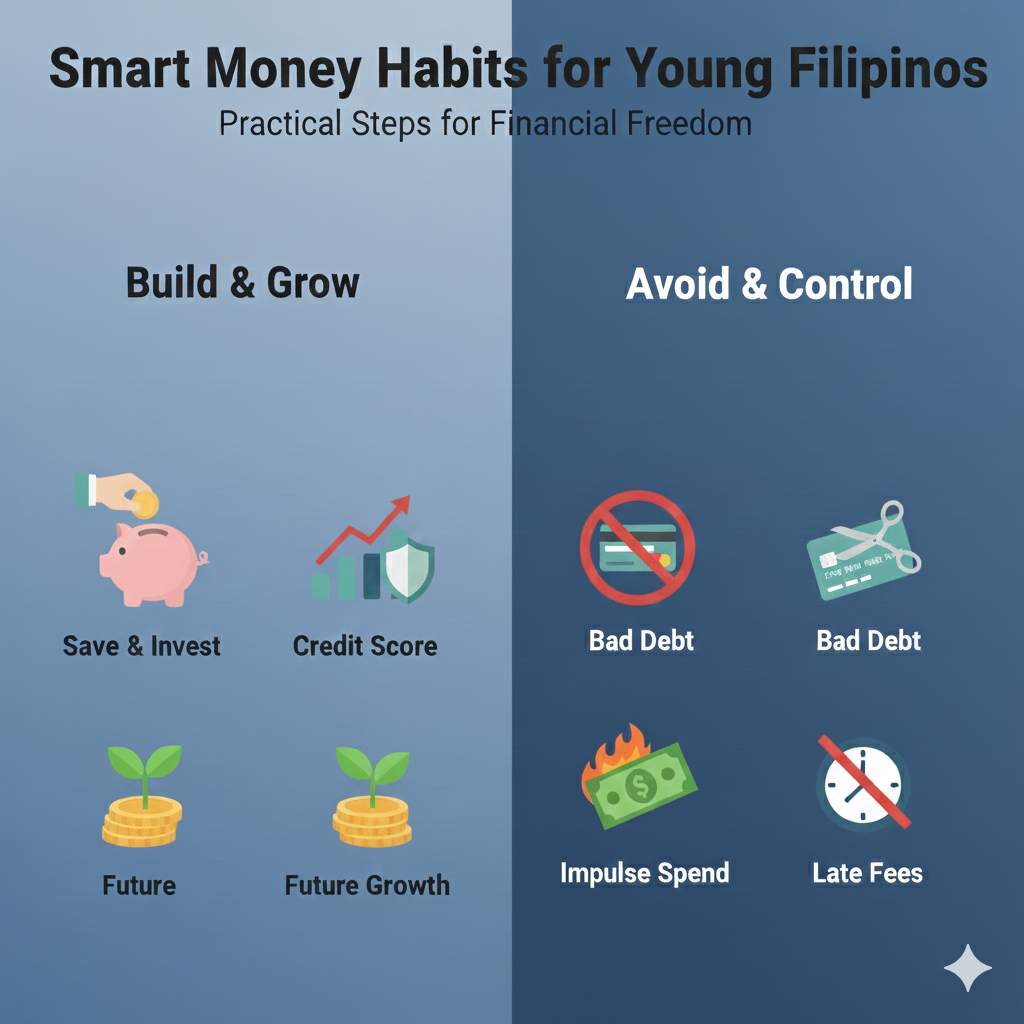
For the broader financial mindset, check out: Smart Money Habits for Young Filipinos.
This is the big one. The mistake that shows up in almost every "what I wish I knew" thread on r/PHCreditCards.
People see their credit limit and think "pera ko na yan." My money now.
You get approved for a ₱50,000 limit. Suddenly you're looking at laptops you couldn't afford last week. Booking trips you've been putting off. Buying clothes you don't really need.
The limit feels like a windfall. Like the bank just gave you ₱50,000.
But they didn't give you anything. They gave you permission to borrow ₱50,000. That you have to pay back. With interest if you're late.
Local articles on the biggest credit card mistakes Filipinos make consistently list this as the top error. Treating the limit as extra money and swiping without a repayment plan.
Reddit discussions show this pattern repeatedly. Someone gets their first card with a ₱30,000 limit. Within two months, they've charged ₱28,000 for gadgets, online shopping budol, and a weekend trip. They figured they'd pay it off with their next salary.
Then reality hits. Their salary is ₱25,000. After rent, bills, and living expenses, they can maybe pay ₱8,000 toward the card. The rest becomes a balance they're carrying for months, accumulating interest.
One common theme in Reddit discussions: people who maxed out their limits from the start ended up in long-term debt. The ones who stayed well below their limits stayed out of trouble.
Here's the truth about your credit limit. It's not your money. It's not even money you should aspire to spend. It's a ceiling. A maximum boundary that you should stay far away from.
Your actual spending limit should be based on what you can pay in full by the due date. If you can afford to pay ₱10,000 in full next month, that's your real limit. Not the ₱50,000 the bank approved.
My friend Liza got her first card with a ₱40,000 limit. She was excited. But she also knew herself. She knew that seeing ₱40,000 available would tempt her to spend ₱40,000.
So she called the bank and asked them to lower her limit to ₱15,000. Voluntarily.
"I can afford to pay ₱15,000 in full every month," she told me. "₱40,000? No way. I'd be in debt by month three."
That self-awareness saved her from the mistake most people make.
For more on managing one card responsibly, check out: One Credit Card System.
This mistake is so common that it deserves its own article. And it has one. But it's worth covering here because it shows up constantly in Reddit regret threads.
If you pay only the minimum, the remaining balance is carried over and charged interest. Your debt grows over time instead of shrinking.
But people still do it. Why? Because the minimum feels responsible.
You open your statement. Total amount due: ₱18,000. Minimum amount due: ₱900.
₱18,000 feels impossible. ₱900 feels manageable. So you pay ₱900 and tell yourself you're being responsible. You paid your bill, right?
Technically yes. Financially, you just volunteered to stay in debt for years.
Reddit discussions and Philippine financial blogs consistently warn that minimum payments feel "responsible" but mostly cover interest. Your actual debt barely moves. You could pay ₱10,000 in minimum payments over a year and still owe ₱15,000.
One pattern that appears repeatedly on Reddit: people paying minimum for months, then looking up one day and realizing they've paid thousands but still owe nearly the original amount.
The realization hits hard. "I've been paying ₱800 a month for 8 months. That's ₱6,400. Why do I still owe ₱12,000 on a ₱15,000 purchase?"
Because most of that ₱800 went to interest. Not to your actual debt.
Nick fell into this trap early on. He had a ₱20,000 balance from furnishing his new place. He figured he'd pay minimum until he "got ahead financially."
Two years later, he'd paid over ₱30,000 total and still owed ₱8,000. He spent ₱10,000 extra in interest by paying minimum instead of just buckling down and clearing it in 6 months.
"I thought I was being smart," he said. "Keeping my monthly expenses low. Turns out I was paying more than it cost me."
The rule is simple. Pay your full statement balance every month. Not the minimum. Not "most of it." The full amount.
If you can't afford to pay in full, that means you spent more than you should have. And the solution isn't minimum payments. It's to stop using the card until you clear the debt.
For a detailed breakdown of why minimum payments trap you, read: Paying the Minimum vs Paying in Full.
This one is subtle. And it's expensive.
Redditors frequently share experiences of overspending to hit sign-up bonuses, earn annual fee waivers, or maximize category promos. Then they end up struggling to pay in full.
The math never works out. They earn ₱2,000 in points but pay ₱5,000 in interest because they couldn't pay their balance in full.
Banks design rewards specifically to encourage more swiping: the cashback, the points, the promos. They're all designed to make you use your card more.
And it works. Especially on beginners who haven't built solid habits yet.
You see a promo: "5x points on groceries this month!" So you stock up. You buy things you'll eventually need anyway, but you buy them now to hit the promo.
Your grocery bill goes from ₱4,000 to ₱8,000. You earn extra points worth maybe ₱200. But you also charged an extra ₱4,000 that you weren't planning to spend yet.
If you can't pay that in full, the interest wipes out the points value several times over.
Reddit discussions show this pattern clearly. People who focus on rewards before they've mastered paying in full end up in debt. People who ignore rewards at first and just focus on paying in full end up financially stable.
The rewards don't make you responsible. They just amplify whatever habits you already have.
If you have good habits (pay in full, track spending, stick to budget), rewards are a nice bonus. If you have bad habits (spend impulsively, carry balances, chase deals), rewards make it worse.
Sofia got obsessed with maximizing her card's rewards in her first six months. She studied the categories. She timed her purchases around promos. She even made unnecessary purchases just to hit spending thresholds for bonuses.
By month six, she had ₱1,800 in rewards points and ₱22,000 in credit card debt that she couldn't pay off.
The ₱1,800 in points was worth celebrating. The ₱22,000 in debt wasn't.
This mistake seems small until you experience the consequences.
According to the Credit Card Association of the Philippines, a missed payment can trigger late fees (typically ranging from ₱250 to ₱1,000 depending on your balance and issuer), interest on the unpaid balance, and possible damage to your credit record.
And it's not just the money. It's the stress.
Reddit users share stories about one late payment leading to late fees, higher interest charges, and later problems when applying for loans or trying to increase credit limits.
The frustrating part is it's so preventable. Unlike overspending or poor budgeting, missing a due date is usually just a lack of systems.
You meant to pay. You had the money. You just forgot. Or you thought the due date was next week. Or you paid on the due date but it posted a day late.
I know someone who missed a payment by three days because they were traveling and forgot to set up payment before leaving. They had the full amount in their account. They weren't trying to avoid paying.
But the bank doesn't care about your reasons. Late is late.
The solution is simple systems, not memory or good intentions. Set up actual systems.
Set up app notifications for your statement date and due date. Add recurring calendar reminders 3 days before your due date. Consider auto-pay if you're disciplined about tracking spending.
Treat your credit card due date like rent. You wouldn't forget to pay rent and hope your landlord understands. Don't do it with your credit card either.
For a complete guide on how billing cycles and due dates work, read: Credit Card Due Dates Explained.
The BSP's credit card primer explicitly advises cardholders to "consider maintaining only the right number of credit cards" because more cards mean more statements, more due dates, and higher total fees to monitor.
But beginners don't know this. They think more cards equal more benefits, rewards and flexibility. Better credit building.
So they apply for multiple cards in their first year.
Suddenly they have cards with different:
Reddit discussions and local guides consistently warn that new users who grab three to four cards quickly end up confused about limits and due dates. This increases the risk of missed payments and over-utilization.
The complexity isn't just annoying. It's dangerous.
You forget which card you used for which purchase. You miss a due date because you were tracking three others. You accidentally max out one card because you forgot you'd used it last week.
More cards don't make you better at managing credit. They just give you more opportunities to mess up.
Ralph got three cards in his first six months. He thought he was being smart. Building credit faster. Maximizing rewards across different categories.
What actually happened: he missed a payment on one card (different due date than the others). He paid minimum on another because he confused the statement dates. And he racked up ₱8,000 in annual fees across all three cards for benefits he wasn't even using.
After a year of stress, he canceled two cards and kept only one. His credit card management became dramatically simpler and more successful.
For more on this strategy, check out: One Credit Card System.
This one doesn't get talked about as much as the others, but it shows up enough on Reddit to be worth mentioning.
Cash advance is when you use your credit card to withdraw cash from an ATM or get cash over the counter at a bank.
It seems convenient. You're short on cash. You have credit available. Just withdraw ₱5,000 and pay it back next month.
But the cost is brutal.
Most Philippine banks typically charge a flat fee (around ₱200 per transaction with many issuers) plus interest that starts immediately from the transaction date with no grace period. You also don't earn any rewards on cash advances.
So that ₱5,000 withdrawal costs you ₱200 immediately. Then it starts accumulating interest at up to around 3% per month under the BSP cap. If you pay it off in one month, you've paid roughly ₱200 + ₱150 interest = ₱350 extra for borrowing ₱5,000 for 30 days.
That's a 7% cost for one month. If you annualize that, it's obscene.
Reddit users who've done this usually say the same thing: "I didn't know it would cost that much. I thought it was like any other transaction."
It's not. It's the most expensive way to use your credit card.
The rule is simple. Never use cash advance. If you need cash that badly, you have a bigger budgeting problem that a credit card withdrawal won't solve.
Build an emergency fund instead. Even ₱5,000 in savings is better than relying on cash advances.
This sounds boring. And it is boring. But it's also expensive when you skip it.
Your credit card terms and conditions explain exactly what costs money. Annual fees, late payment fees, cash advance fees, foreign transaction fees, over-limit fees.
They also explain what counts as a cash advance (which may include e-wallet top-ups depending on your bank's coding and terms), how interest is calculated, when your grace period applies, and how to dispute charges.
People skip reading this. Then they get surprised by fees they didn't expect.
One common scenario on Reddit: someone tops up their GCash using a credit card, then gets hit with a cash advance fee. They had no idea wallet top-ups might be treated differently.
Different banks have different policies on this. Some treat wallet top-ups as regular purchases. Others code them as cash advances. The only way to know for sure is to read your terms or call and ask.
This seems small but it compounds into bigger problems.
You're supposed to review your credit card statement every month. Check every transaction. Look for errors. Catch fraudulent charges. Verify the total matches what you expected.
Under RA 10870 and bank terms and conditions, you typically have a limited window to dispute billing errors, usually 30 to 60 days from the statement date depending on your bank's policy.
If you don't check your statement for two months, you might miss your dispute window. That fraudulent charge? Too late to contest. That duplicate billing? You're stuck with it.
Reddit users share stories about finding unauthorized charges weeks after the statement date, only to be told by the bank that it's too late to dispute.
Prevention is simple. When your statement email arrives, open it that same day. Review every transaction. Takes 10 minutes. Could save you thousands.
My system: first Saturday of every month, review credit card statement. It's a calendar reminder that pops up, I spend 10 minutes, then I'm done.
Ten minutes a month is a small price to pay for financial security.
This is a mindset trap that's easy to fall into.
You want something that costs ₱15,000. You don't have ₱15,000 right now. But you're getting paid in two weeks. Or your bonus is coming next month. Or you're expecting a client payment.
So you charge it. You tell yourself it's fine because you'll have the money soon.
Then soon arrives. And the money is less than expected. Or an emergency expense comes up. Or the client pays late.
Suddenly that ₱15,000 you were "definitely going to pay off" becomes a balance you're carrying. With interest.
Local banking guides are explicit about this. Don't charge what you don't currently have. Don't base card spending on future income that hasn't materialized yet.
Future money is imaginary until it hits your account. Don't make real purchases with imaginary money.
After reading through hundreds of Reddit threads and stories from Filipino credit card users, I noticed something.
Almost every mistake traces back to one of two root causes.
Root cause 1: Treating credit as extra money instead of borrowed money.
This underlies mistakes 1, 3, and 9. When you see your credit limit as pera mo na, everything else follows. The overspending. The reward chasing. The future money justification.
Root cause 2: Lack of systems.
This underlies mistakes 4, 5, 7, and 8. When you rely on memory instead of systems, you miss due dates. You get overwhelmed by multiple cards. You skip reading terms. You forget to check statements.
Get these two things right, and you avoid 90% of the mistakes Filipinos admit to on Reddit.
Here's something I've noticed about Reddit threads on credit card mistakes.
Everyone who shares their regret says some version of the same thing: "I wish I'd known this earlier."
But here's the uncomfortable truth. Most of them probably did know.
Somewhere, at some point, they'd heard that paying minimum keeps you in debt. That maxing out your card is dangerous. That missing a due date has consequences.
They knew. They just didn't believe it would happen to them.
Or they thought they'd be different. Smarter. More careful. More in control.
Until they weren't.
The gap between knowing and doing is where most financial mistakes live.
You can read every article. You can understand every concept. You can nod along to every warning.
But if you don't actually set up the calendar reminder, you'll miss the due date.
If you don't actually track your spending, you'll be shocked by your statement.
If you don't actually pay in full, you'll accumulate debt.
Reading this article doesn't protect you. Acting on it does.
Pick one system from this article. Just one.
Set up a calendar reminder for your due date. Download your bank's app and enable notifications. Schedule time to review your next statement. Call your bank and ask what counts as a cash advance on your specific card.
One action today. Before you close this tab and forget.
Because the people sharing their expensive mistakes on Reddit? They were all planning to "do it later" too.
Later became never. Never became debt.
Don't let reading turn into just another thing you knew but didn't do.
If you want to learn more about avoiding these mistakes, check out our guides:
Paying the Minimum vs Paying in Full | How to Use One Credit Card Like a Pro | I Just Got My First Credit Card - What Should I Do First?