Credit Card Travel Rewards in the Philippines
New to travel rewards? This beginner-friendly guide explains how credit card travel points actually work in the Philippines.
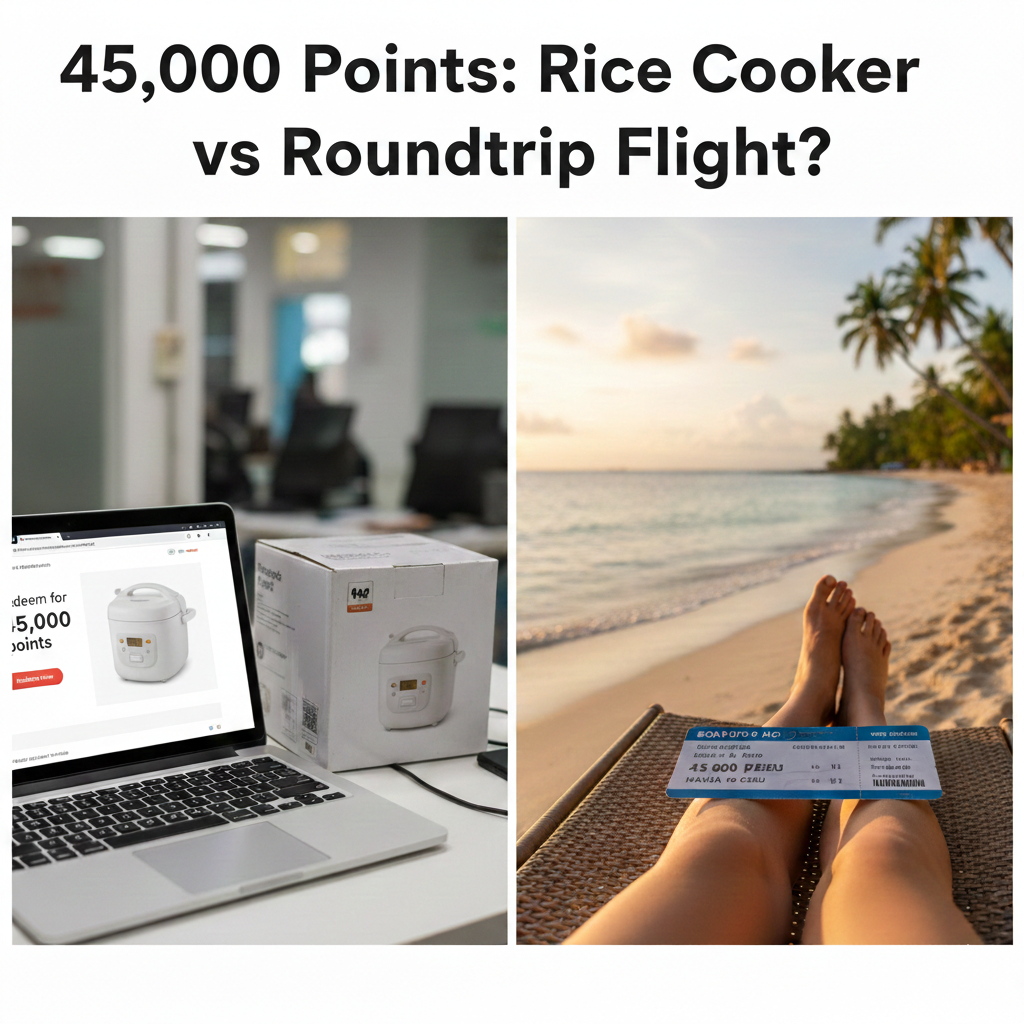
"I Used My Points — But It Felt Like a Waste"
Marco had been collecting points for almost two years.
Every grocery run, every Grab ride, every online order — he was swiping his card and watching the balance grow. 45,000 points. He checked it sometimes just to feel good about it.
Then one afternoon, he redeemed everything.
For a rice cooker.
His wife thought it was practical. And sure, they needed one. But for weeks after, Marco kept thinking about it. Those points could have been a flight to Cebu. A long weekend somewhere. Something he'd actually remember.
"Libre naman," he kept telling himself. But it didn't really feel that way.
This is one of the most common feelings in the PH credit card community — not regret over having points, but regret over what you did with them. And it almost always traces back to the same handful of mistakes.
Here's what those mistakes look like, and how to avoid them.
👉 Still figuring out how redemptions work? Start here: How to Redeem Airline Miles Without Wasting Them
The reward catalogue is designed to look appealing.
Think about it: gadgets, appliances and shopping vouchers. Items you can actually hold in your hands. There's something satisfying about exchanging points for a physical thing — it feels real, immediate, done.
The problem is that the math almost never works in your favor.
Here's a concrete example. BPI has a shopping credits redemption where 20,000 points gets you ₱1,000. That's ₱0.05 per point. If you'd used a similar balance toward a flight redemption, you could realistically get ₱3,000 to ₱5,000 worth of travel value — sometimes more on the right route and timing.
Same points, but at 1/3 to 1/5 the value.
Banks know that merchandise redemptions are popular with beginners. They're easy to understand, easy to fulfil, and very good for the bank's bottom line. You get less. They clear more reward liability off their books. It's a clean arrangement — just not for you.
A rough rule: if a catalogue option gives you less than ₱0.01 per point, it's probably not worth it. That rice cooker Marco got? It cleared the bar. Barely. His points deserved better.
"Baka mag-expire na yung points ko."
This single thought has caused so many bad redemptions.
The pressure feels real. And to be fair, some points do expire. But what happens is that people rush — they pick whatever the catalogue has available, book a flight they don't actually want, or convert to airline miles without checking if award seats even exist on the routes they need.
Then they're stuck with a redemption they made out of fear, not strategy.
Here's the thing: panicking is almost always worse than the thing you're afraid of. If your points are about to expire, look for low-effort ways to reset the clock before going into full redemption mode. Mabuhay Miles, for instance, only need one earn or redeem activity every two years to stay alive — sometimes a small partner transaction is enough.
And if the options are genuinely bad and the balance is small? It might actually be okay to let it go. Losing 3,000 points is painful. But it's less painful than locking yourself into a terrible flight booking you'll resent for months.
👉 Beginner Mistakes Filipinos Make With Travel Rewards
This one surprises people.
The assumption is that using miles is always better than paying cash. But that's only true when the cash price you're replacing is actually high. When it's not, the whole math collapses.
Think about a Cebu Pacific seat sale. Manila to Cebu for ₱799. Manila to Singapore for ₱1,499. Those prices are already low enough that paying cash barely hurts. If you use miles for those flights instead, you're replacing a small cash cost — but you're still paying taxes and fees on top, and you've burned a chunk of your balance on something that didn't really need the help.
Those same miles could have done real work on a Manila to Tokyo flight during Holy Week, where cash fares can hit ₱25,000 or more. That's where miles actually change what's possible for you.
The simple version: save your miles for when cash prices hurt. When there's a promo sale and the fare is already cheap, just pay cash and keep your balance for something better.
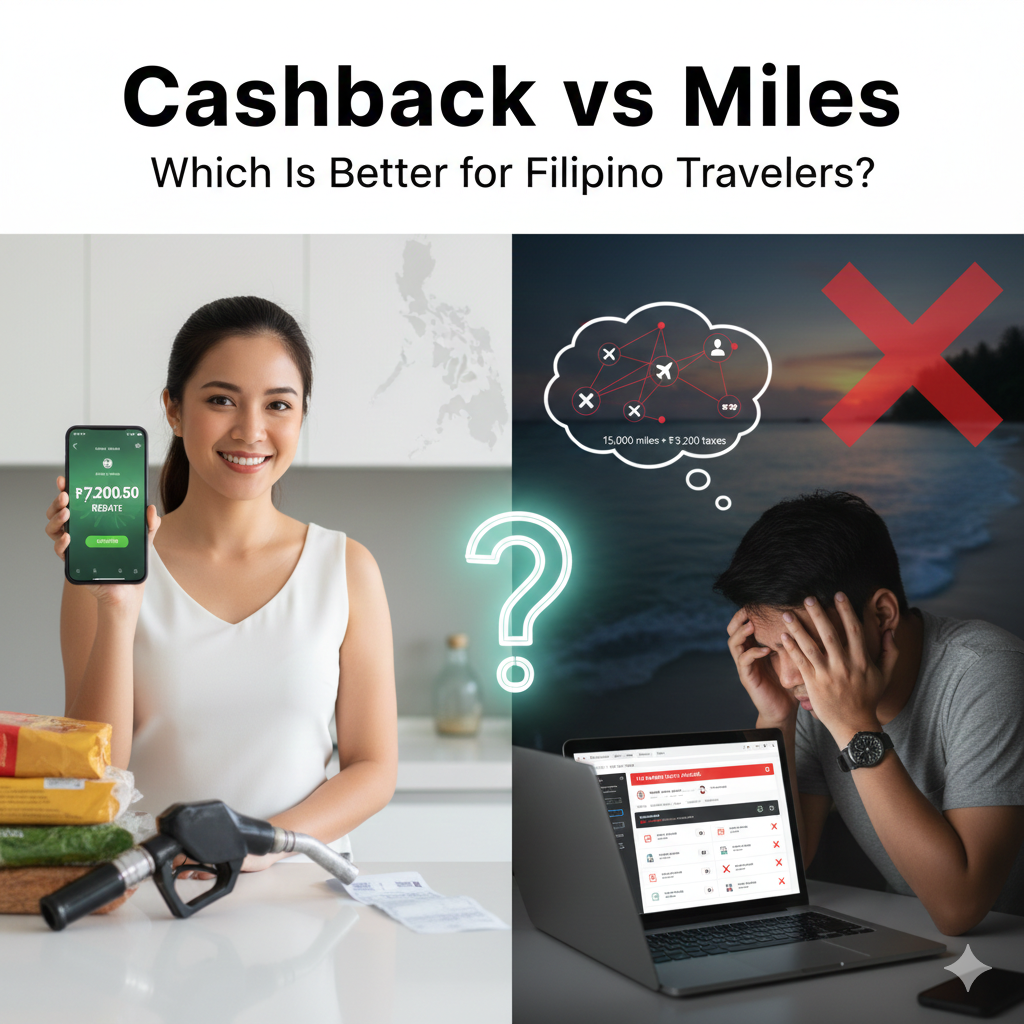
👉 Cashback vs Miles: Which Is Better for Filipino Travelers?
The excitement of finding award availability is real.
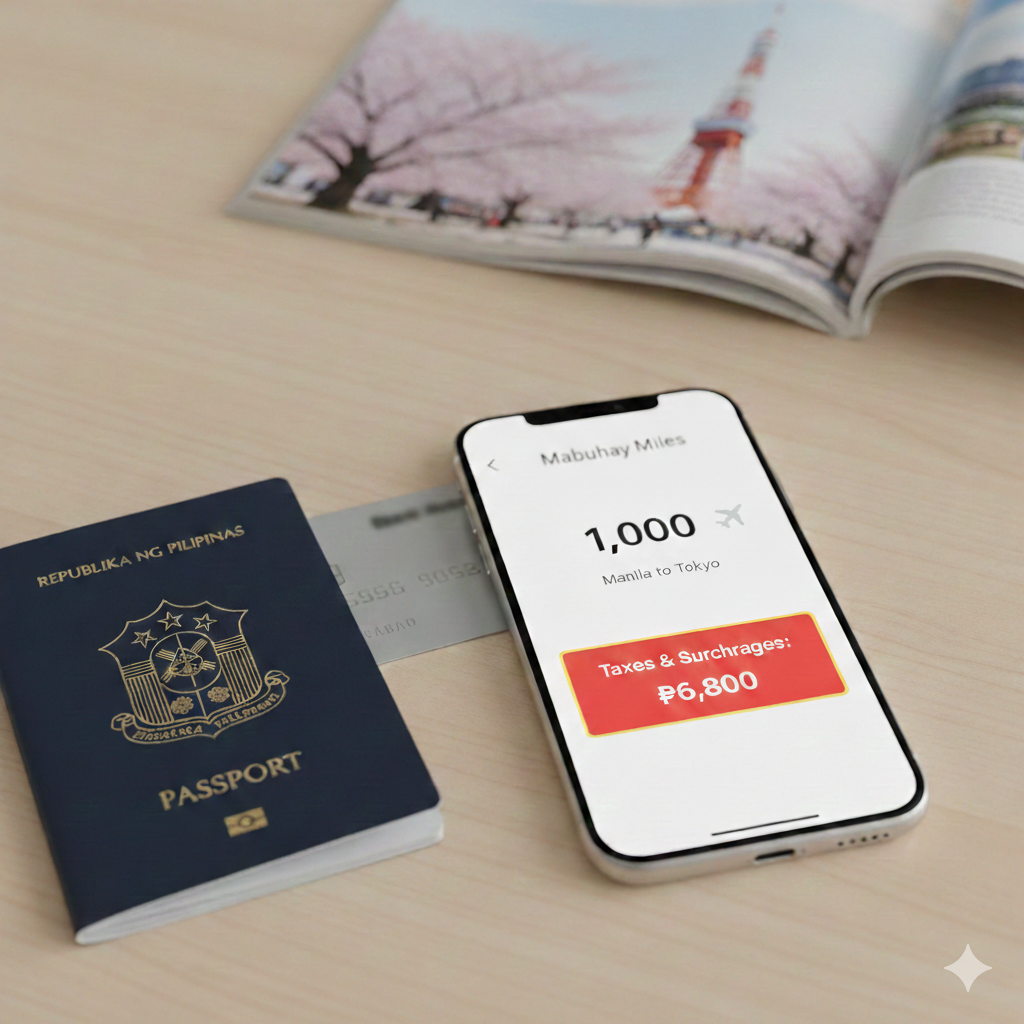
You search, you find open seats, you get the miles-required number — and it looks good. So you confirm. Then the full booking summary appears. Taxes. Terminal fees. Fuel surcharges per segment. Sometimes the total is in dollars.
The "free" flight is suddenly ₱6,000 out of pocket.
For some routes that's still great value. For others, not so much. The mistake isn't that fees exist — they always do. The mistake is discovering them after you've already committed, because at that point you're stuck. Changing a Mabuhay Miles award booking costs USD 30 to USD 50 depending on the route. Miss the flight entirely without cancelling at least 24 hours before and that's a USD 75 to USD 125 no-show fee.
The habit to build is simple: check the full cash-out total before confirming anything. Compare it to the cash fare. If the math still makes sense, go. If it doesn't, wait.
A lot of redemption disappointment comes from this one step being skipped.
Business class is genuinely wonderful. Lie-flat seats, actual food, the whole thing. And yes, using miles for a premium cabin redemption can be one of the best uses of a large balance — when it works out.
But a lot of beginners treat business class as the only goal worth having. And that's where things get messy.
Earning enough miles for a single business class international ticket with a typical Philippine credit card takes years of spending. While you're building toward that one redemption, your balance sits frozen. You're afraid to use any of it for smaller trips because it'll chip away at the dream. And when you finally have enough, award seats might not be available on your dates anyway.
Someone on r/PHCreditCards said it well: "I'd rather take three economy trips with my family than one business class flight alone just for the flex."
That's not settling. That's an honest look at what actually makes a trip worth taking.
Premium redemptions can be great when they happen naturally. But they shouldn't be so aspirational that you end up hoarding miles for years and enjoying nothing in the meantime.
All of these mistakes are more common in the beginning. And that's not a character flaw — it's just how the system works.
When you see "100,000 points" in your app it sounds like a lot. But without knowing the value per point, that number means nothing. 100,000 points redeemed on gift cards might be worth ₱5,000. The same balance used smartly on the right flight could be worth ₱15,000 to ₱20,000.
Beginners also tend to underestimate how much complexity comes with airline miles specifically — availability windows, conversion ratios, expiry rules, surcharges. None of it is impossible to learn. But there's a real learning curve, and the mistakes you make while climbing it can cost you real value.
The bad news: these lessons usually only stick after you've experienced one bad redemption yourself.
The good news: you're reading this now.
They're not always dramatic.
Sometimes a good redemption is just booking a Manila to Singapore flight during a long weekend and saving ₱8,000 versus what the cash fare would have been. Nothing Instagram-worthy. Just real savings on a trip you actually wanted to take.
Good redemptions fit your schedule without a lot of compromise. The fees are reasonable. The route makes sense. And when the trip is over, you feel like the miles did something — not like you just shuffled numbers around for the same outcome.
That feeling is the benchmark. Not the cabin class. Not the destination. Just: did this redemption actually help me?
If you wouldn't be happy paying cash for that flight, don't use your miles for it.
The inconvenient routing doesn't become acceptable because you paid in points. The overpriced surcharges don't disappear. The bad timing is still bad timing. Using miles on a poor choice just means you made the same poor choice and also lost your balance.
Miles should make a good trip possible. Not make a questionable one feel okay.
The most underrated skill in travel rewards isn't knowing which redemptions are good.
It's being patient enough to hold out for them.
Points sitting in your account aren't wasted. They're waiting. Redeeming them badly just to feel like you did something — that's the actual waste.
Marco rebuilt his balance after the rice cooker. Took him about a year. This time he waited until he had a specific trip in mind, checked availability before converting anything, and used his miles for a flight to Osaka during off-peak. Saved around ₱18,000 versus the cash fare.
"Sana ganito na lang yung ginawa ko noong una," he said.
You still have time to skip the rice cooker phase entirely.