How Credit Card Travel Points Actually Work in the Philippines
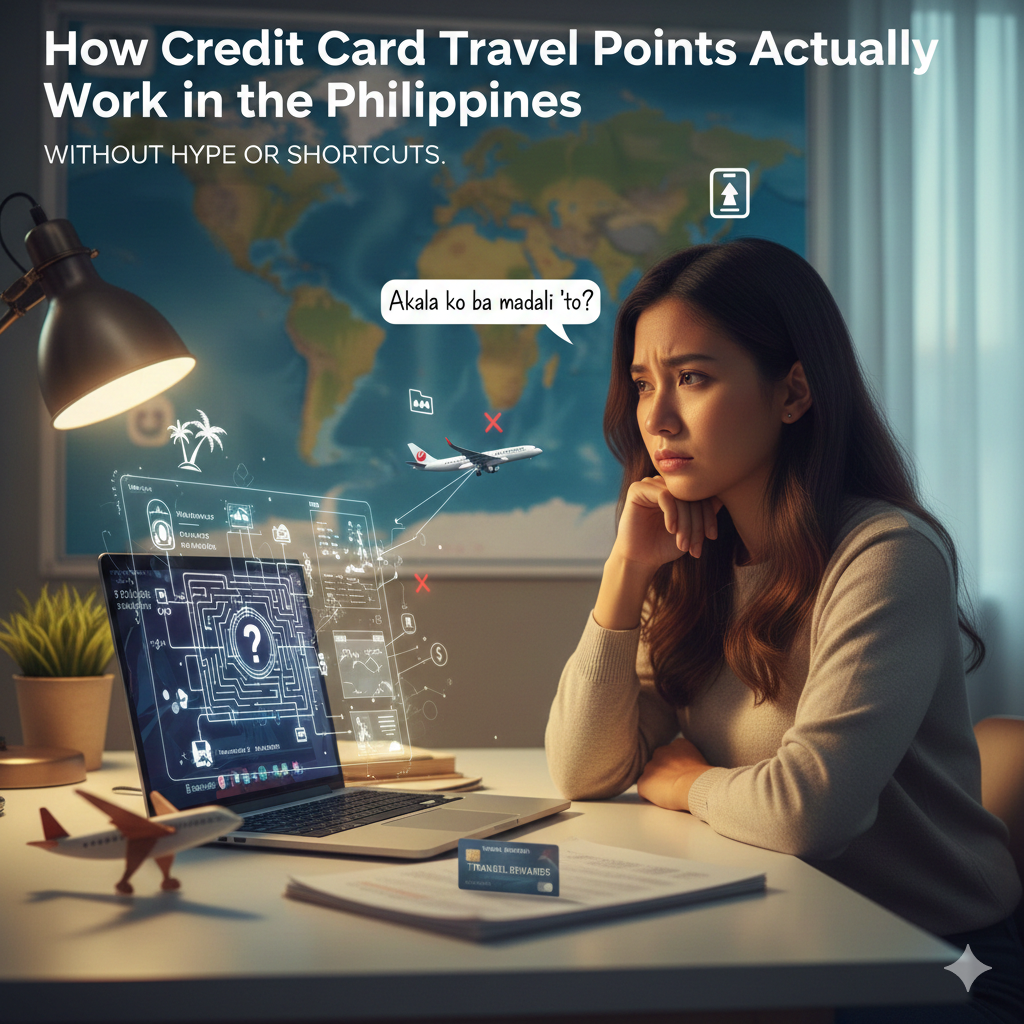
Confused about travel points? This beginner-friendly guide explains how credit card travel points actually work in the Philippines — without hype or shortcuts.
This Debate Never Ends (For a Reason)
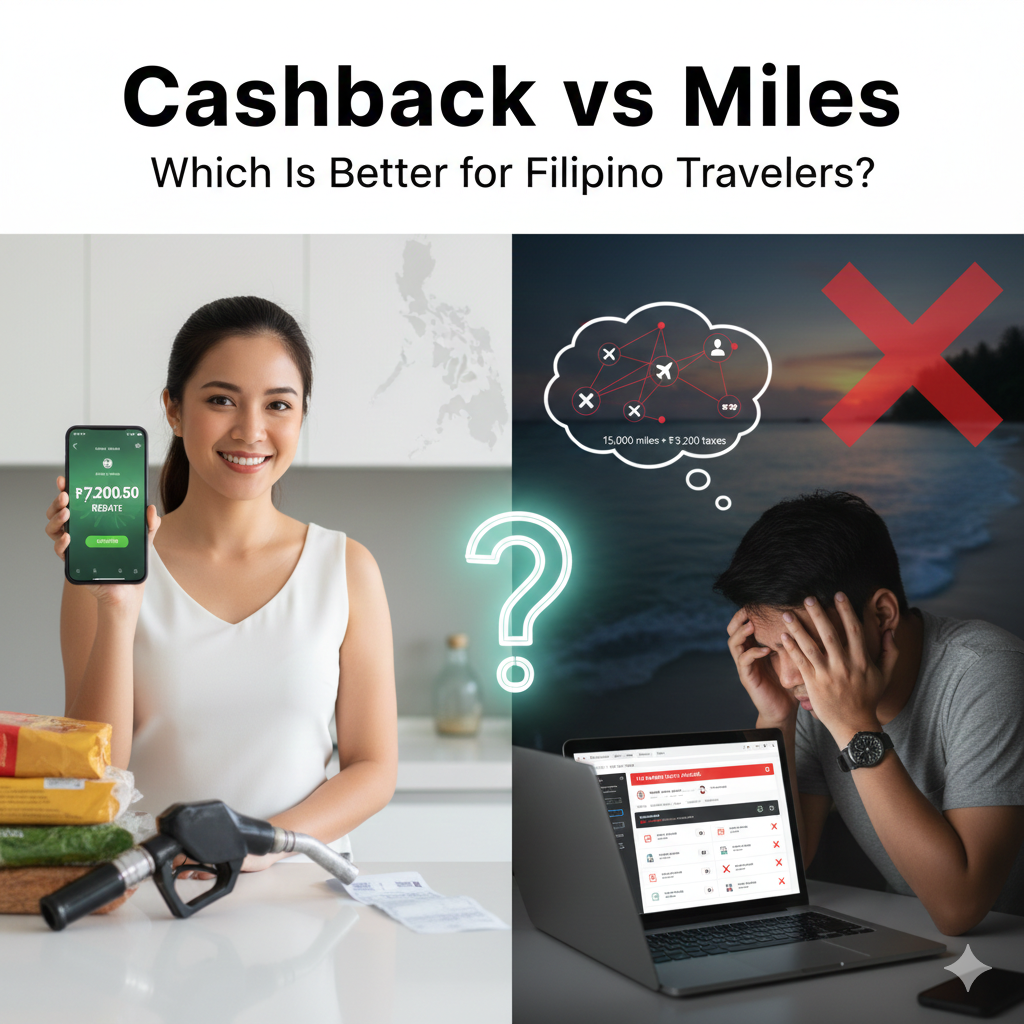
"Cashback or miles?"
It's the question that never dies on r/PHCreditCards.
Last week, someone posted: "Just got my first credit card. Should I go for cashback or miles?"
Thirty-seven comments later, the thread was still going.
Half the replies said: "Cashback, walang stress."
The other half said: "Miles, kung marunong ka."
Both sides were confident. Both sides were often right for different people.
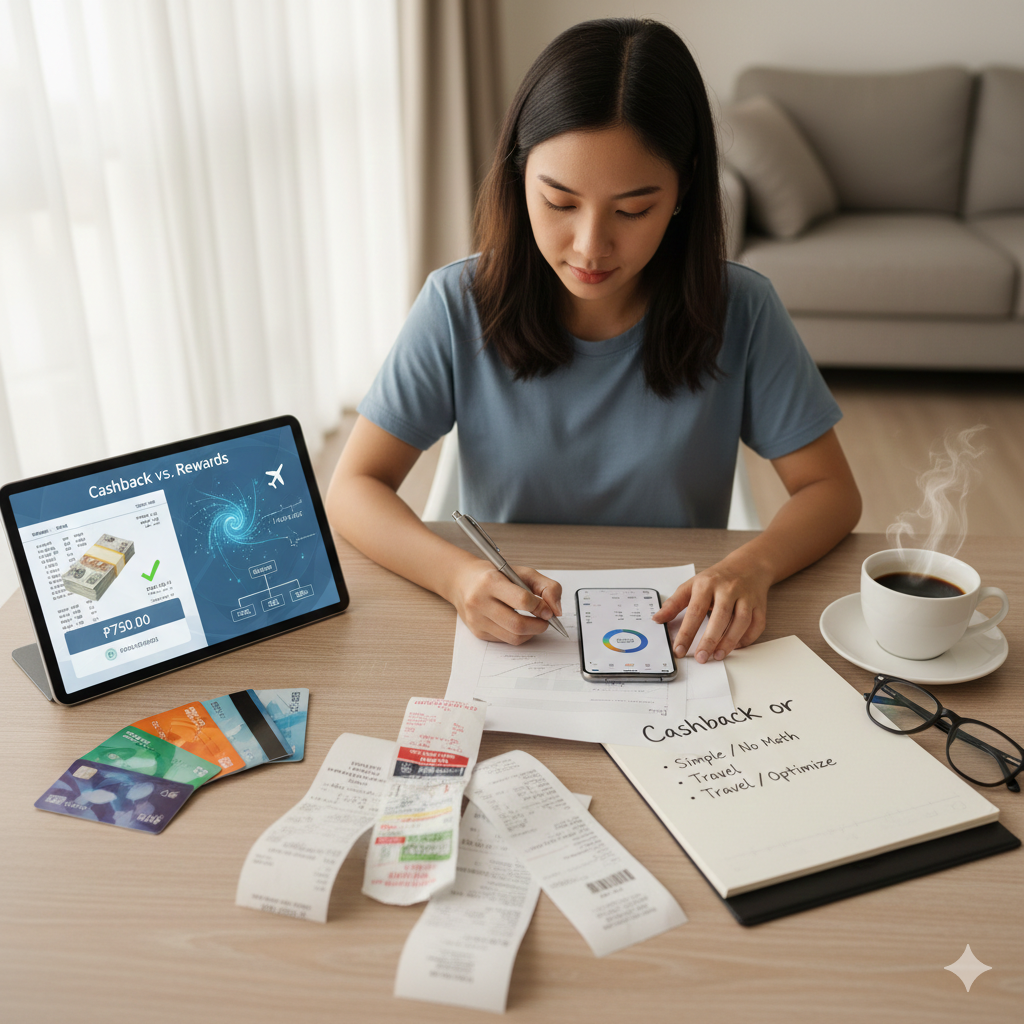
Here's the thing: there's no universal answer. The best choice depends on how you actually live, spend, and travel.
This article breaks it down, walang hype.
Cashback is:
You earn pesos back. Walang conversion needed.
Most PH cashback cards give you 0.3–5% back, usually with higher rates on essentials like groceries, fuel, or bills, and lower rates for "everything else."
Some cards may kailangan minimum spend per transaction (like ₱1,000) and may monthly caps. But once you earn it? Straightforward. The cashback offsets your statement or gets credited as a rebate.
Example:
Rico uses a cashback card that gives him 5% back on groceries and 1% on everything else.
He spends ₱8,000 on groceries a month. That's ₱400 back.
He spends another ₱12,000 on random expenses. That's ₱120 back.
Total: ₱520 a month. ₱6,240 a year.
He knows exactly what he's getting. Walang confusion. Walang waiting.
This is why beginners love cashback.
Miles promise:
But they require:
Without those? Value drops fast.
How miles cards work for Filipinos:
Travel or miles cards in the Philippines usually earn either direct airline miles (like PAL Mabuhay Miles) or bank points na pwede i-convert to miles at specific rates — say, 1 mile per ₱30–₱48 spend.
Co-branded PAL cards like the PNB-PAL Mabuhay Miles earn 1 rewards point = 1 Mabuhay Mile. Some come with welcome bonuses (2,000–10,000 miles) and PAL fare discounts that are most useful kung regular PAL flyer ka.
Reddit comparisons estimate 1 mile to be worth roughly ₱0.8 on average — but only kung mag-redeem ka ng maayos. Your miles become worth less than what you hoped.
Example:
Jen got a miles card last year. She was excited about the welcome bonus: 5,000 miles after spending ₱30,000 in three months.
She hit the bonus. She started hoarding miles. By the end of the year, 18,000 miles na siya.
She tried to book a Manila–Cebu flight for the holidays. The website said: "No award seats available."
She tried different dates. Wala pa rin.
She finally found availability in February — four months later, on a Tuesday morning.
"Okay, fine," she thought.
She clicked through. The confirmation page showed: 15,000 miles + ₱3,200 in taxes and fees.
The same flight on a promo fare? ₱2,800.
She paid more. For a "free" flight.
"Eh di sana nag-promo fare na lang ako," she told her friends later.
Common regrets on r/PHCreditCards:
Why this happens:
Many miles cards have higher annual fees than basic cashback cards. Kailangan mo ng enough realistic travel and spend to earn rewards na lalampas pa sa fees.
And here's the reality for most Filipinos: trips often depend on limited vacation leaves, school schedules, or "kung may budget." You can't always be flexible with dates and airlines the way miles optimization requires.
Carlo's story:
Carlo signed up for a miles card kasi his officemate kept talking about "free flights to Japan."
Annual fee: ₱3,500.
He spent consistently for a year. He earned 12,000 miles.
He tried to book Manila–Osaka. The system wanted 35,000 miles for economy.
Kulang siya. And his miles were set to expire in six months if he didn't use them or earn more.
He let them expire.
₱3,500 annual fee. Zero trips. Zero value.
"Sayang," he told himself. "Sana nag-cashback na lang ako."
Cashback is better if:
For many Filipinos, this describes reality.
Example:
Liza travels once a year, usually to the province for the holidays, minsan Boracay or Baguio kung may promo fare.
She uses a cashback card that gives her 3% back on utilities and groceries, 1% on everything else.
Hindi siya nag-iisip about conversions. Hindi siya nag-track ng expiry dates. She just earns pesos back every month.
Simple. Predictable. Sulit.
Last year, she earned ₱7,200 in cashback. She used it to offset her Christmas shopping.
Miles can win if:
Even then, they're not guaranteed to beat cashback.
Example:
Marco travels twice a year for work and leisure. He's flexible with dates kasi he works remotely.
He uses a miles card that earns 1 mile per ₱35 spend. He also takes advantage of welcome bonuses and multiplier categories.
Last year, he redeemed 40,000 miles for a Manila–Bangkok round trip. He paid ₱5,500 in taxes and fees.
The same flight on a promo fare? ₱18,000.
For him, miles worked. But he put in the effort to make them work.
"Kailangan mo lang talaga mag-plano," he says. "Hindi pwedeng basta-basta."
Here's the thing people don't talk about enough:
Miles feel exciting. Cashback feels boring.
But boring is often safer.
Miles make you feel like you're "hacking" travel. Like you're getting something for free. Like you're part of a secret club.
Cashback? It's just… money back. Walang thrill.
But that thrill can be expensive.
Example:
Gina signed up for a miles card kasi it felt aspirational. She imagined herself flying business class to Singapore, sipping champagne, posting photos on Instagram.
"Ikaw na, 'te!" her friends would comment.
She started spending more to hit bonuses. She bought things she didn't need just to reach the next milestone.
A new bag. Another pair of shoes. Gadgets on sale.
"At least I'm earning miles," she told herself.
Except: she spent ₱15,000 extra over six months to earn 3,000 miles. Those miles were worth maybe ₱2,400 in redemption value — if she redeemed perfectly.
She lost ₱12,600.
The excitement cost her.
When she finally sat down and did the math, she realized: "Nag-aksaya lang ako ng pera para sa feeling na 'winning' ako."
Many miles cards come with high annual fees — sometimes ₱2,500, ₱3,500, even ₱10,000 for premium cards.
Always ask: "Will I realistically earn more than this fee?"
PH guides and threads stress computing whether your expected yearly cashback or miles meaningfully beats the annual fee. Otherwise, a no-frills or waived-fee card can be better.
Some travel/miles cards offer strong sign-up bonuses (thousands of Mabuhay Miles plus fare discounts). But you usually must spend a substantial amount within a time limit or focus your flying on one airline to fully benefit.
Reality check:
If your annual fee is ₱3,500 and you only travel once a year on a promo fare, kailangan mo mag-redeem ng miles worth more than ₱3,500 just to break even.
For most beginners? That doesn't happen.
Tina's story:
Tina got a premium miles card with a ₱5,000 annual fee. The agent told her: "You'll earn it back in miles."
After one year, she had 25,000 miles. She tried to redeem for a Manila–Singapore flight. Available seats required 30,000 miles.
She didn't have enough. And the annual fee was due again.
She canceled the card.
"Hindi worth it for me," she said. "Ang laki ng binayad ko, tapos hindi ko naman nagamit nang maayos."
Start with cashback.
Move to miles only when:
Local "starter card" roundups consistently lean toward simple cashback cards as the best first step for new Filipino cardholders — especially those building credit and still learning rewards.
Moving into miles starts to make sense once your spending is stable, you always pay in full, you travel at least every 1–2 years, and you're willing to learn conversion rules and redemption strategies.
Example:
Nikko started with cashback. For two years, he used a simple card that gave him 2% back on groceries and 1% on everything else.
He paid in full every month. He learned how credit cards worked. He built good habits.
After two years, he switched to a miles card. He knew what he was doing. He understood the trade-offs.
Now he redeems miles once a year for a trip. It works for him kasi he's prepared.
"Kung di ako nag-start with cashback, I would've been lost," he admits. "Kailangan mo munang matutunan ang basics."
That's the right progression.
The best reward system is the one you actually benefit from.
Not the one that sounds impressive.
Not the one your officemate brags about.
The one that fits your life, your spending, your travel habits.
For most Filipino beginners: that's cashback.
It's predictable and simple.
And if you eventually outgrow it? Miles will still be there.
One last story:
David and his wife both have credit cards. She has cashback. He has miles.
She uses hers for groceries, bills, everyday expenses. She earns around ₱500–₱700 back every month. She uses it to offset her statement or treat the family to dinner.
He uses his for bigger purchases and travel bookings. Once a year, he redeems miles for a family trip.
They both win. Kasi they know what works for them.
"Hindi competition," David says. "Depende lang sa kung ano ang kailangan mo."
That's the real answer.