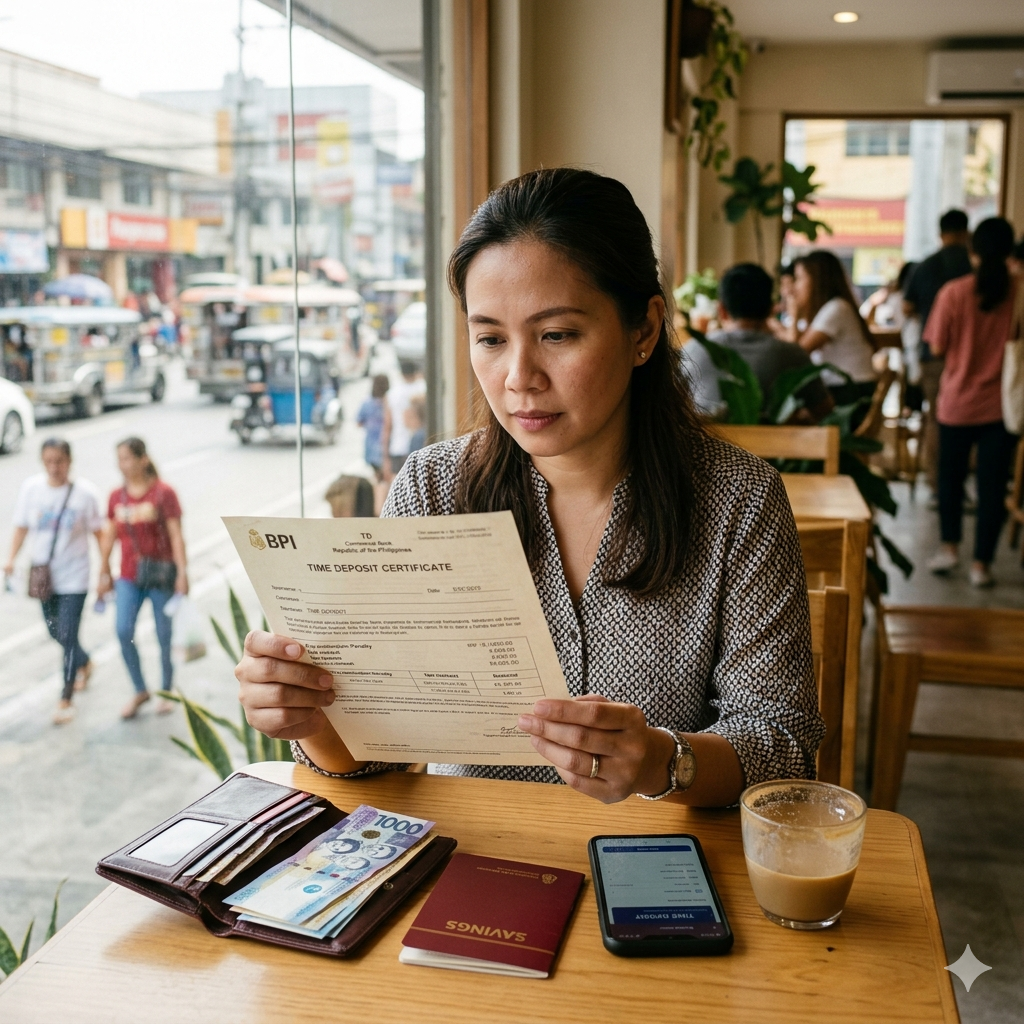
Savings Account vs Time Deposit: What's Better for Filipinos?
The real differences for Filipinos — and how to choose based on flexibility, goals, and peace of mind.

Somewhere along the way, time deposits got a reputation as the responsible move.
"May extra money ka na? Mag-time deposit ka na. Para hindi mo magastos."
It's well-meaning advice. And sometimes, it's exactly right. But it skips over a more important question: right for whom, and right for when?
A time deposit that works perfectly for one person can quietly create stress, penalties, and regret for another — not because the product is bad, but because the timing or the circumstances weren't right.
This article is about that distinction. Not whether time deposits are good or bad. But when they actually help, and when they don't.
👉 Still deciding between a savings account and a time deposit? Start here: Savings Account vs Time Deposit: What's Better for Filipinos?
Before deciding if a time deposit is right for you, it's worth being precise about what it's actually built for.
Time deposits solve two specific problems.
The first is temptation. For people who have a habit of dipping into savings for a sale, a trip, a "sandali lang" withdrawal that somehow becomes permanent — the lock-in removes the option. When the money is genuinely inaccessible without a penalty, the temptation disappears along with the access.
The second is return uncertainty. A time deposit gives you a fixed rate for the entire term. Even if market interest rates drop after you open it, you still earn the agreed rate. That predictability is genuinely valuable for people who want to know exactly what they'll have at maturity.
Those are real strengths. But notice what's not on that list.
Time deposits are not designed to solve income instability. They don't fix the problem of living paycheck to paycheck. They don't substitute for an emergency fund. And they're not built for money that has even a small chance of being needed in the near term.
When people use them for those purposes — locking money they actually need flexible access to — the product that was supposed to help becomes a source of stress instead.
A time deposit can genuinely work in your favor. But not always, and not for everyone. The clearest way to think about it: it makes sense when all of the following are true at the same time.
This one isn't negotiable. If an unexpected medical bill, a job disruption, or a family emergency would force you to break the time deposit before maturity, then the conditions aren't right yet.
The point of the lock isn't to trap you. It's to protect money you've already decided you don't need. That distinction only works if you genuinely have another place to turn when life gets unpredictable.
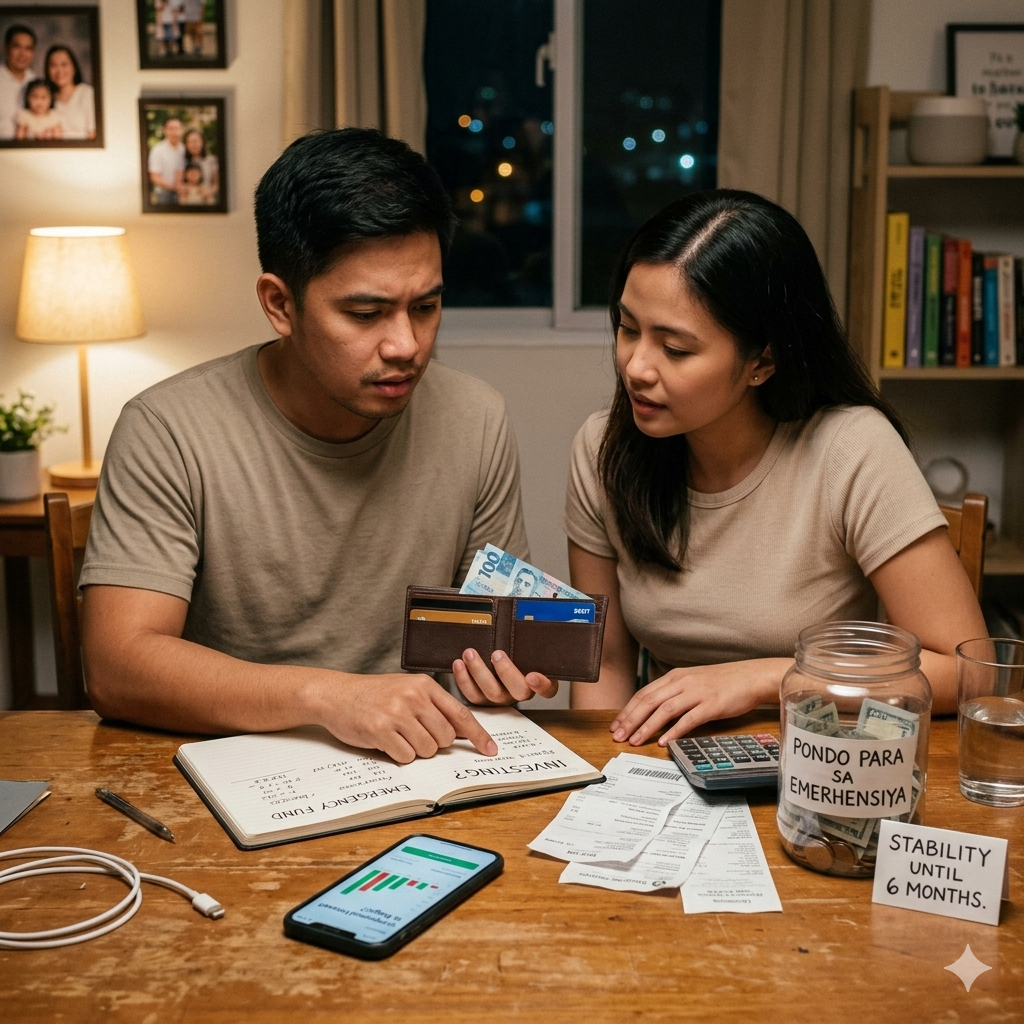
An emergency fund — typically three to six months of living expenses — sitting in a liquid savings account, needs to exist separately before any money goes into a time deposit.
👉 Emergency Fund First or Investing First? (A Filipino Reality Check)
Time deposits and irregular income are a risky combination. If your monthly cash flow is predictable — such as from salaried employment, reliable remittances, or a business with consistent revenue — then locking extra money for a set period is manageable. You know roughly what's coming in and what's going out.
But if your income fluctuates — freelancers, commission-based earners, and small business owners with seasonal swings — flexibility is worth more than a slightly higher interest rate. A savings account you can actually reach is more valuable than a time deposit earning an extra 1–2% that you end up breaking at month four.
Not 80% confident. Not "siguro naman hindi." Actually confident.
Think about what could realistically change in the next 6, 12, or 24 months. A potential move. A family member's health. A career shift. A business opportunity. If any of those scenarios have a real chance of requiring this money, the lock-in is likely to create more problems than it solves.
Time deposits work best for money with a clear, defined future purpose: next year's tuition, a down payment fund in two years, a renovation budget in 18 months. Money with a destination. Not money you're parking vaguely because it feels like the mature thing to do.
For some people, the hardest part of saving isn't earning money; it's not spending it. An easily accessible savings account can feel like a constant test of willpower. For those people, the inconvenience of a time deposit isn't a downside. It's the entire point.
If you know yourself well enough to say "I save better when I literally cannot touch it," then a time deposit is a legitimate behavioral tool, not just a financial product. There's nothing wrong with using structure to your advantage.
These patterns show up repeatedly in online forums, in financial advice columns, and in the quiet frustration of people who opened a time deposit with good intentions and ended up paying penalties anyway.
This is the most common mistake, and it's easy to understand why it happens. You finally have a meaningful amount saved. Someone suggests a time deposit. It sounds responsible. So you move everything over.
Then an emergency happens — because emergencies don't check your bank account first. And now you're in the exact situation a time deposit was never designed for: forced to break it early, absorb the penalties, and possibly borrow on top of that while your own money sits locked in a bank.
The product didn't fail you. But it was used in the wrong context.
👉 Why Your Savings Keep Getting Used (And How to Fix It)
Rate-chasing is understandable. Seeing a 4% or 5% time deposit rate next to a 1% savings account rate feels like an obvious upgrade. But the math only works if you hold to maturity.
If there's any real probability you'll need to break the deposit early, the penalty structure can eliminate most or all of the extra interest you expected to earn, leaving you with a worse outcome than a simple savings account would have delivered. A slightly higher rate isn't worth the stress or the cost if your circumstances don't support the lock-in.
Time deposits are inconvenient on purpose. That inconvenience is the feature. But for some people, that design creates a specific kind of anxiety — not the comfort of "my money is growing safely," but the discomfort of "what if I need this and can't get it?"
If you open a time deposit and spend the following months mentally calculating whether you can afford to break it, the product has created the opposite of financial calm. That's a sign of a mismatch, not a personal failing.
The full picture of early withdrawal penalties is something most people only learn about after it happens to them.
When you break a time deposit before maturity, your original contracted rate gets thrown out. The bank recalculates your interest at a much lower rate — sometimes a pre-termination rate as low as 0.35% per annum, regardless of what your original rate was. Some banks apply a penalty that can eat up 50–75% of whatever interest you had accrued.
On top of that, you still pay the mandatory 20% final withholding tax on whatever reduced interest amount remains after the penalty calculation.
The result: a time deposit you expected to earn 4–5% on can end up delivering a fraction of a percent. In some scenarios, you would have been better off leaving the money in a regular savings account the entire time.
To be clear: you don't lose your principal. Your original deposit comes back. But the expected return — the whole reason most people open a time deposit — can effectively disappear if you break it early.
This is worth knowing before you open one, not after.
👉 How Time Deposits Actually Work in the Philippines
The Filipinos who tend to have positive experiences with time deposits aren't necessarily richer or more financially sophisticated. They're usually just more deliberate about the structure.
The typical approach that works:
Keep the emergency fund and everyday bill money in a liquid savings account — accessible, separate, and untouched by the time deposit decision. Then use the time deposit only for genuinely extra money, the amount that has a clear future use and a timeline you're confident about.
Some people go further and use a strategy called laddering: opening multiple time deposits with different maturity dates. For example, splitting ₱120,000 into three ₱40,000 deposits maturing every three months. This way, some money becomes available regularly, while the rest remains locked at higher rates. You get partial liquidity without fully sacrificing structure.
It's a more intentional approach than opening one large deposit and hoping nothing comes up before maturity.
There's a version of the time deposit conversation that's purely mathematical: here's the rate, here's the term, here's the net interest after tax. That math is useful, but it's incomplete.
The same product can create completely different experiences depending on who holds it.
For some people, locked money means peace of mind. The deposit is working quietly in the background, growing at a predictable rate, impossible to accidentally spend. That structure reduces anxiety and helps them stay focused on the goal.
For others — especially people who carry a lot of financial uncertainty or worry about emergencies — the same lock-in creates low-level stress that doesn't go away until the money is accessible again. They spend the entire term half-regretting the decision.
Neither reaction is irrational. They're just different psychological relationships with money and access. And they matter more than a rate comparison table when you're deciding whether to open a time deposit.
If the thought of your money being locked makes you feel secure, that's a signal the product suits you. If it makes you feel trapped, that's worth paying attention to — even if the numbers look good on paper.
👉 The Difference Between Saving Money and Feeling Secure
Before opening a time deposit, go through these questions honestly:
If most of your answers point toward uncertainty, liquidity, or anxiety — wait. There's no version of this where opening a time deposit too early is the smart move.
No one needs a time deposit to be financially healthy. They're useful in the right context and unnecessary — or even harmful — in the wrong one.
They're not a rite of passage. They're not proof that you've graduated from basic saving. And they're definitely not a substitute for the less exciting but more foundational work of building a liquid emergency buffer first.
Used intentionally — with stable income, a separate emergency fund, a clear purpose, and the right psychological fit — they do what they're designed to do. They keep money out of reach long enough to reach a goal.
Used prematurely, they create exactly the kind of stress and regret they were supposed to prevent.
The question worth asking isn't "should I get a time deposit?" It's "Am I in the right position for one right now?"
Sometimes the honest answer is not yet. And that's a perfectly valid place to be.