Why Most Filipinos Struggle to Save (And It's Not Discipline)
Why saving feels so hard for many Filipinos — and what actually helps.

Most Filipinos ask this question the moment they finally have some extra money:
"Ilalagay ko ba ito sa savings, o mag-time deposit na kaya?" (Should I keep this in savings, or put it in a time deposit?)
It sounds like a simple question. But the answer has less to do with interest rates and more to do with how you live, how you earn, and how you handle uncertainty.
This guide breaks down the real difference between the two — not just the numbers, but the practical trade-offs that actually matter for Filipinos.
👉 If saving itself still feels difficult, start here: Why Most Filipinos Struggle to Save (And It's Not Discipline)
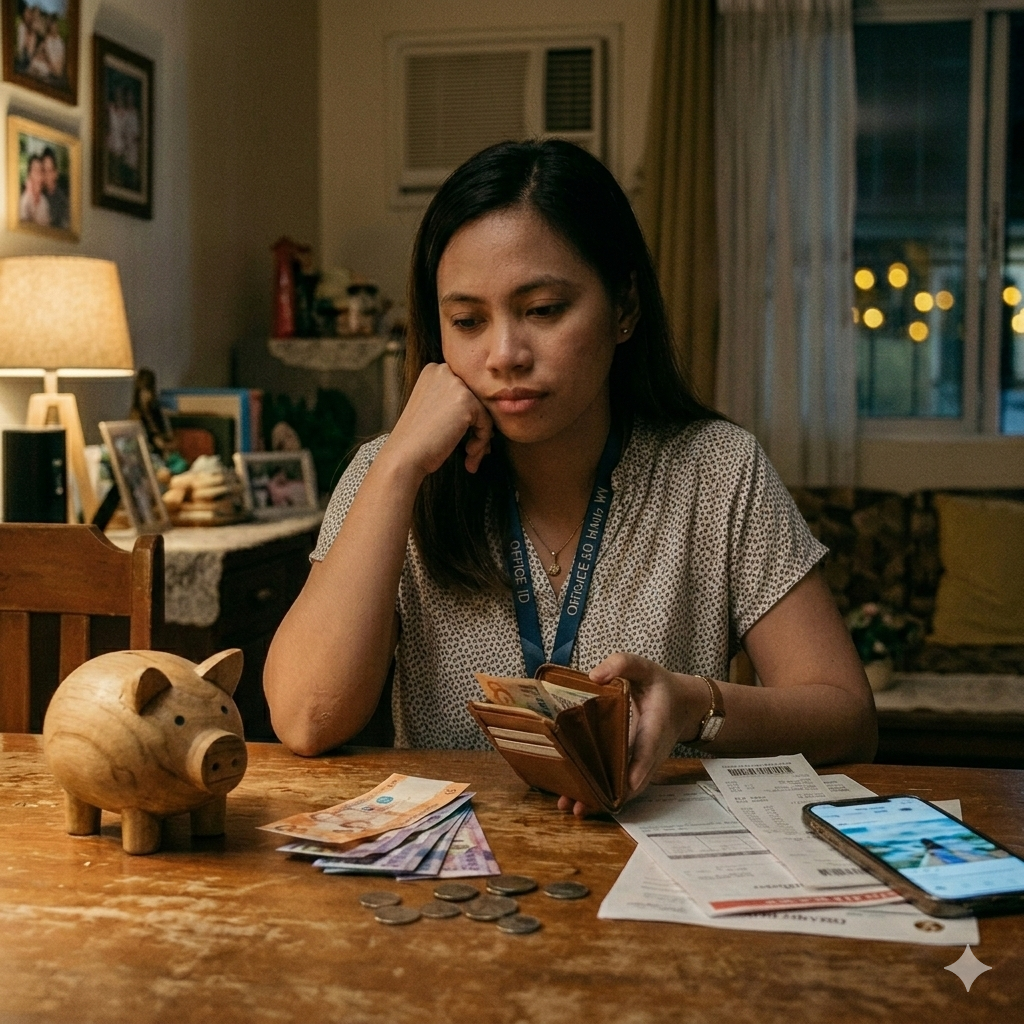
Think of Marga. She's a nurse at a government hospital in Quezon City. Her salary is steady, but her expenses aren't. One month, it's medicine for her mom. Another month, it's a sudden trip home to Batangas because someone got sick.
For Marga, a savings account isn't an investment. It's a buffer. It's her "just in case" fund — and the keyword is access.
A savings account's three main strengths are:
Yes, the interest is low. Traditional banks often earn well below 1% per year. Some digital banks offer 2–4% per year, but even those have conditions. The point isn't the rate.
The point is: convenience is the real feature.
This is especially true for freelancers, OFW families, and small business owners, whose incomes don't always arrive on schedule. The flexibility to move money around quickly isn't a luxury. It's a necessity.
Meet Kuya Jun. He works in accounting. Every time he gets a bonus, he tells himself he'll save it. Then somehow, three weeks later, it's gone — new gadget, spontaneous trip, "basta naubos na."
Not because he's irresponsible. Just... human.
So one day, he puts ₱50,000 in a 12-month time deposit. He can't touch it without a penalty. And for the first time, the money is actually still there 12 months later.
That's the thing about time deposits most people miss.
A time deposit offers a fixed term (30 days, 60 days, 90 days, 6 months, 1 year, or more) and a fixed interest rate—typically higher than a regular savings account, ranging from 2–5% per year, depending on the bank, amount, and term. Withdrawing before maturity usually means a penalty fee and reduced or forfeited interest.
The three strengths of a time deposit:
The lock is the feature — not the rate.
Time deposits work best when you're parking money that has a clear purpose and a clear timeline. Not "baka kailangan" money. Definite, "hindi ko gagalawin" money.
Let's be honest about the math.
If you put ₱100,000 in a 12-month time deposit at 3% per year, your gross interest is ₱3,000. After the 20% final withholding tax (which applies to both savings and time deposit interest in the Philippines), your net is ₱2,400.
That's ₱200 a month.
Not bad. But not life-changing either — especially if something goes wrong.
Here's what the interest comparison tables don't show you:
Choosing based on interest rates alone is like accepting a job offer based purely on salary without checking the commute, the hours, or the job security.
The difference might look good on paper. But paper doesn't pay your hospital bills.
Consider Andrea. She's a virtual assistant with two clients this month, one last month, and possibly zero next month. Her income is real — but it's irregular.
If Andrea locks her savings in a time deposit and one client drops her mid-term, she'll find herself applying for a personal loan while her own money sits in a bank, inaccessible.
A savings account makes more sense when:
Liquidity is protection. It keeps you from having to borrow at high interest — credit cards, personal loans, or worse — just because your own money is temporarily out of reach.
There's also a psychological dimension: knowing you can access your savings anytime reduces financial anxiety. That peace of mind has real value, especially in a country where many households depend on a single breadwinner.
👉 Emergency Fund First or Investing First? (A Filipino Reality Check)
Now picture Tito Boy. He works a stable government job. He already has three months of expenses sitting in a separate savings account as his emergency fund. And he just saved ₱80,000 for a home renovation in his province — a project he's planning to start in exactly 18 months.
For Tito Boy, a time deposit is the right call. The timeline is fixed. The money has a clear purpose. And honestly, if it stays in savings, there's a real chance it quietly disappears into a reunion trip or balikbayan expenses before the renovation ever starts.
A time deposit works well when:
The most common regret with time deposits? People lock money too early — before they've built a real emergency buffer — and end up paying penalties and borrowing anyway. Twice the loss.
👉 Compare time deposit rates and terms when you're ready to lock in a goal.
Here's a scenario that plays out more often than most people admit.
You put ₱100,000 in a 12-month time deposit. Three months in, a parent ends up in the hospital. You need ₱40,000.
If you break the time deposit: you lose part of your interest and possibly pay a penalty. Your ₱100,000 might net you ₱98,500 or less.
If you don't break it: you borrow ₱40,000 via credit card at around 3% monthly interest. Over three months, that's roughly ₱3,600 in interest charges — on top of the principal.
Either way, you pay a price that doesn't show up in any bank brochure.
The hidden costs of locked money include penalty fees, interest on emergency borrowing, missed financial opportunities, and the quiet stress of not being able to access your own savings when you need them most.
None of these appear in a simple interest rate comparison. But they're more likely to affect your real financial life than a 1–2% rate difference on a modest balance.
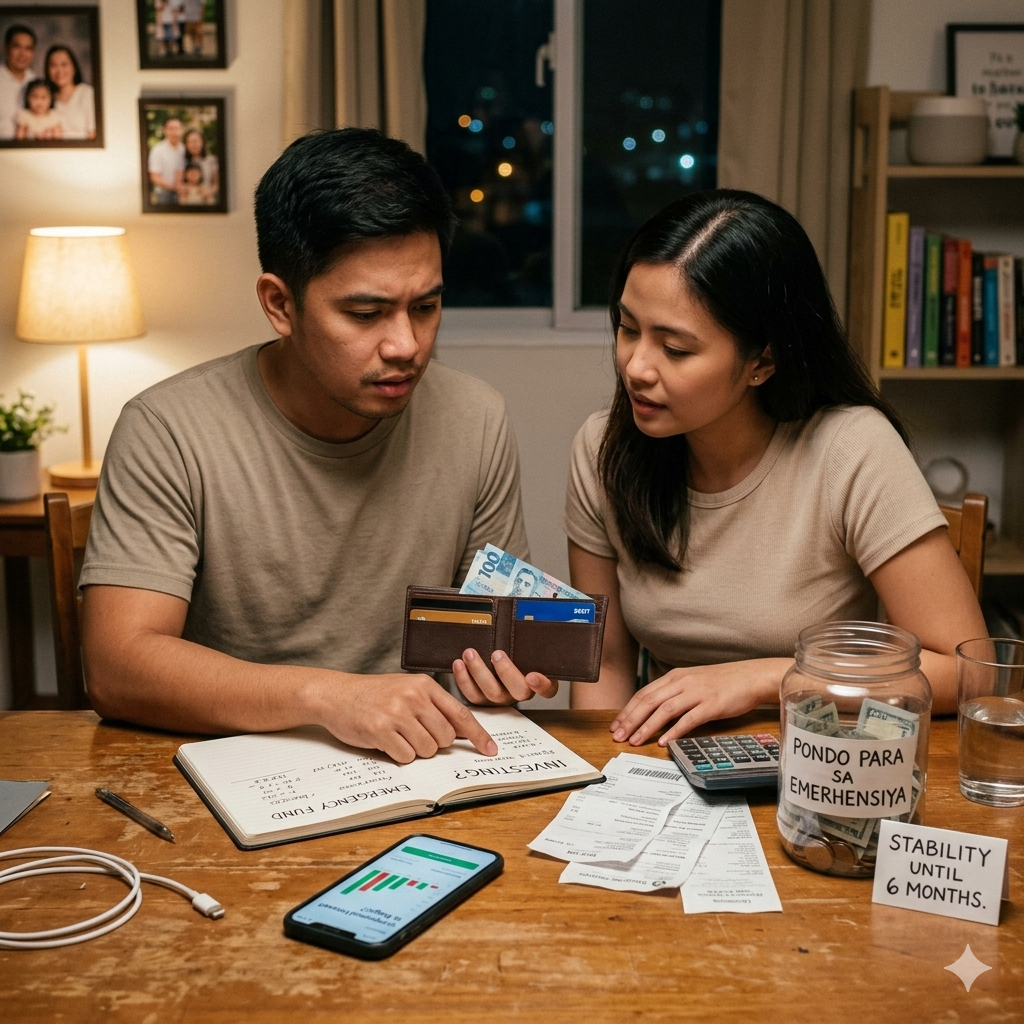
Before choosing, answer these four questions honestly:
Simple rules of thumb:
This isn't an either-or decision. Banks market both products together for a reason.
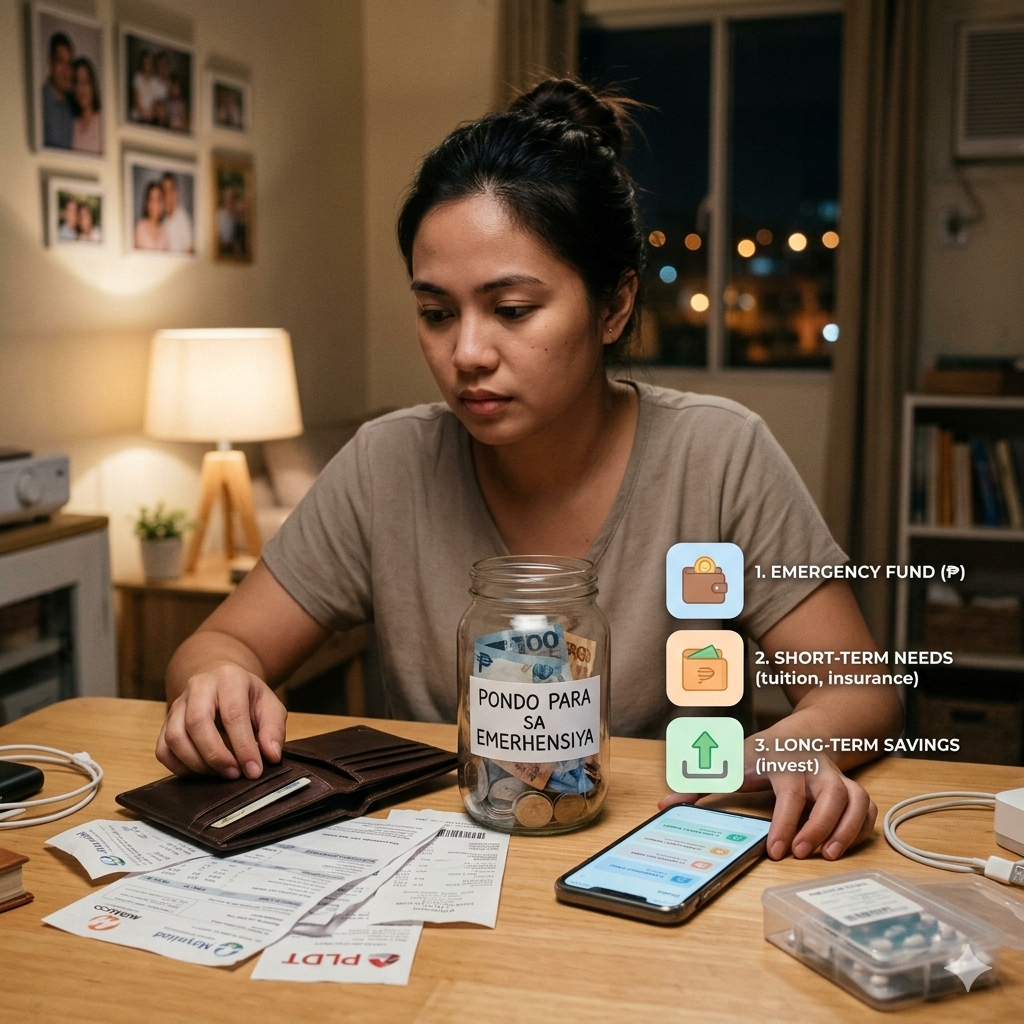
The typical setup for Filipinos who have found financial stability looks something like this: a savings account (or high-interest digital savings) for the emergency fund and everyday cash needs, and one or two time deposits for money with a clear future purpose.
That's not overcomplicating it. That's just matching the right tool to the right goal.
| Your Goal | Better Option | Why It Works |
|---|---|---|
| Emergency fund | Savings Account | Withdraw anytime, no penalty |
| Irregular income buffer | Savings Account | Flexible, adjusts with your cash flow |
| Tuition next school year | Time Deposit | Clear date, locked rate |
| House down payment in 2–3 yrs | Both (mix) | Liquidity + structured discipline |
| Extra money you keep 'accidentally' spending | Time Deposit | Lock reduces temptation |
👉 Why Your Savings Keep Getting Used (And How to Fix It)
If a financial product makes you anxious — "paano kung kailangan ko ito?" — it's probably not the right fit for you right now. Even if the rate is higher.
The best setup is the one where:
Start with a solid savings foundation. Once that's stable, try a small time deposit — not everything, just a portion you genuinely don't need.
Then adjust over time as your income grows, your responsibilities shift, and your confidence builds.
There's no perfect setup. There's only the one that fits your life right now.