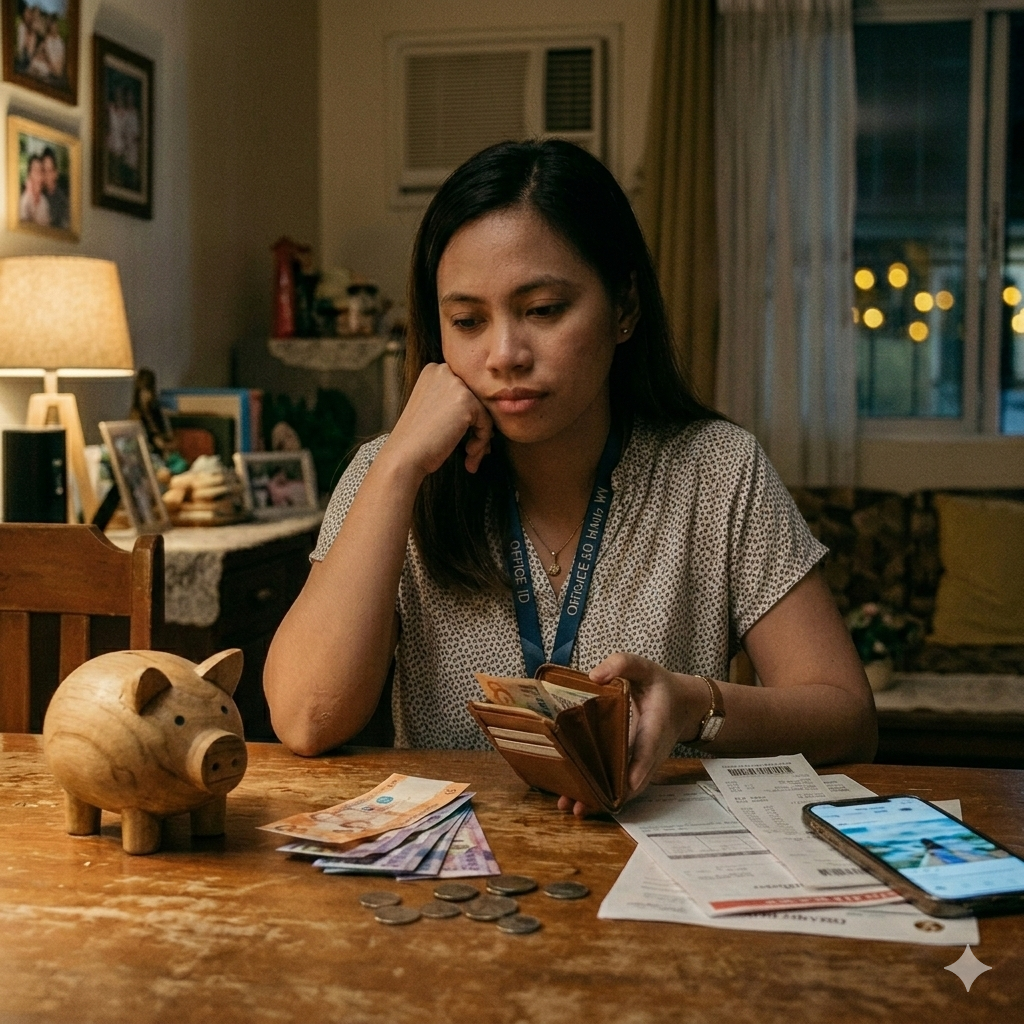
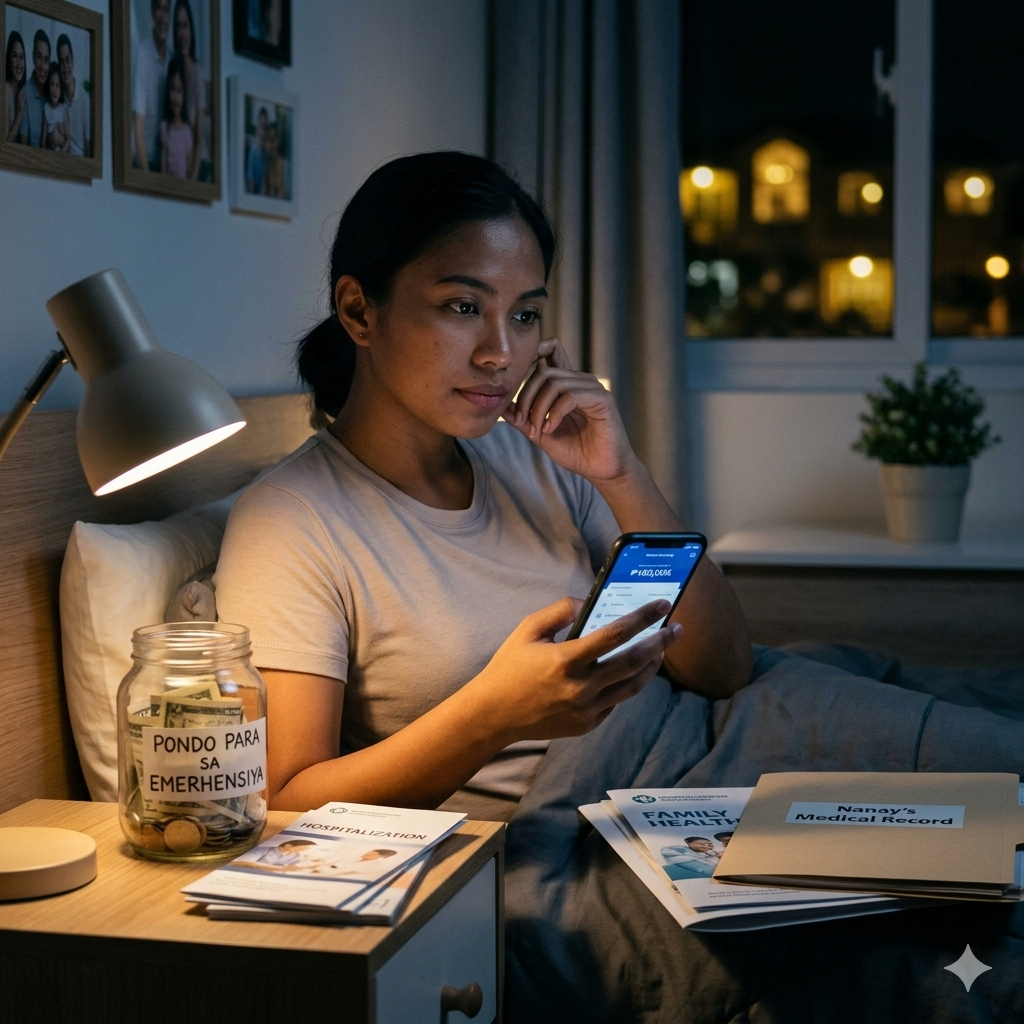
Why Most Filipinos Struggle to Save (And It's Not Discipline)
Struggling to save doesn't mean you're bad with money. Why discipline is rarely the real issue.
Ito yung cycle na alam na alam ng maraming Pilipino.
You work hard. You set aside money every payday. You watch your savings account slowly grow — ₱10,000, ₱20,000, ₱30,000. You start feeling good. Maybe this time, you'll finally build that emergency fund. Maybe this time, you'll actually get ahead.
Then something happens.
Your mom needs to go to the hospital. Your washing machine breaks. Your younger sibling needs tuition money. Your company delays your salary for two weeks. Your phone dies and you need it for work.
And just like that, your savings are gone. Back to almost zero. Again.
If this sounds familiar, you're not alone. And more importantly — you're not failing.
This article explains why your savings keep getting used, why that doesn't mean you're bad with money, and how to build a system that actually holds up to real life.
If saving anything at all already feels discouraging, you might want to start here: 👉 Why Most Filipinos Struggle to Save (And It's Not Discipline)
Here's something that might reframe how you think about this: savings that get used for real emergencies are not a failure. They're a success.
Think about what savings are actually for. They exist to handle emergencies — so you don't have to borrow money at high interest when something goes wrong. They exist to prevent debt — so a ₱15,000 hospital bill doesn't turn into a ₱25,000 credit card balance with 3% monthly interest. They exist to reduce panic — so you can deal with problems calmly instead of desperately.
When you use your savings for a genuine emergency, that money did exactly what it was supposed to do. It protected you. It kept a bad situation from becoming worse.
According to BSP's Financial Inclusion Survey, 81% of Filipinos who save do so specifically for emergencies. Not for travel. Not for luxury purchases. For sickness, calamities, accidents, unemployment, and death. These are the exact events that "keep coming up" and consuming savings — and they're the exact reasons savings exist in the first place.
So the problem isn't that you used your savings. The problem is what happens after: rebuilding feels impossible, and you end up stuck in a cycle of saving and depleting without ever getting ahead.
That's what we need to fix.
Most people keep all their money in one place. Payroll account, savings account — lahat nandoon. Emergency fund, travel fund, future goals, daily buffer — mixed together in one balance.
And that setup creates problems.
When everything is in one account, every peso becomes indistinguishable. You can't tell which money is for emergencies and which is for other goals. So when you withdraw ₱8,000 for a family emergency, it feels like you're "ruining" your savings — even though that's literally what emergency money is for.
It also creates guilt. You see your balance drop and feel like a failure, even when the withdrawal was completely reasonable. You don't have a mental framework for "this money was meant to be used" versus "this money was meant to grow."
And when emergencies and goals are mixed together, emergencies always win. You'll never save for that vacation or that gadget or that investment because something urgent will always come up first. The long-term goals keep getting sacrificed for short-term needs.
Structure matters. Not because you need to be fancy or complicated, but because separating money by purpose removes emotional confusion and helps you see what's actually happening with your finances.
Let's be honest about what's actually draining Filipino savings. These aren't frivolous expenses. These are real life.
Medical expenses. This is the big one. A Boston Consulting Group study found that 64% of Filipino families cannot pay a ₱10,000 hospital bill without borrowing. Seven in ten families rank financial preparedness for health emergencies as their top priority — above education, above homeownership. Out-of-pocket health spending in the Philippines reached ₱615 billion in 2024, about 42.7% of total health spending. That means households are shouldering nearly half of all healthcare costs directly.
One hospitalization can wipe out years of savings. It's not an exaggeration. Online forums are full of stories: "Five years of savings, gone in two weeks." "Hospital bill reached ₱1.5 million even in a public hospital." "I exhausted my savings, my emergency fund, and my medical card — and I still had to borrow."
Family obligations. In the Philippines, you don't just save for yourself. You're often the unofficial safety net for parents, siblings, and extended relatives. When your mom needs medicine, when your sibling needs tuition, when your cousin needs help with rent — that money comes from your savings. Because who else will it come from?
Job transitions. Losing a job, switching careers, waiting for a delayed salary, dealing with a contract that didn't get renewed. These gaps in income force you to dip into savings just to survive. And given how common job insecurity is in the Philippines, these aren't rare events.
Home repairs. The roof leaks. The aircon breaks. The refrigerator dies. These aren't luxuries — they're necessities. And they always seem to happen at the worst time.
None of these expenses are frivolous. None of them mean you're bad with money. They're just the reality of adult life in the Philippines.
Here's what most financial advice misses: most people don't actually struggle with saving. They struggle with rebuilding after using their savings.
Saving ₱2,000 a month when life is calm? Manageable. But starting over from ₱500 after a medical emergency wiped out your ₱50,000? That's demoralizing. It feels like all your effort was for nothing.
And without a plan for how to recover, most people just... stop. They feel defeated. They avoid looking at their bank account. They tell themselves they'll "start again next month" — and next month becomes next year.
The emotional toll is real. People describe feeling depressed after seeing their accounts emptied by illness. They feel shame, even though they did nothing wrong. They feel paralyzed, unsure how to begin again when the mountain seems so high.
This is why systems matter more than willpower. You need a structure that accounts for setbacks — not one that falls apart the moment life gets hard.
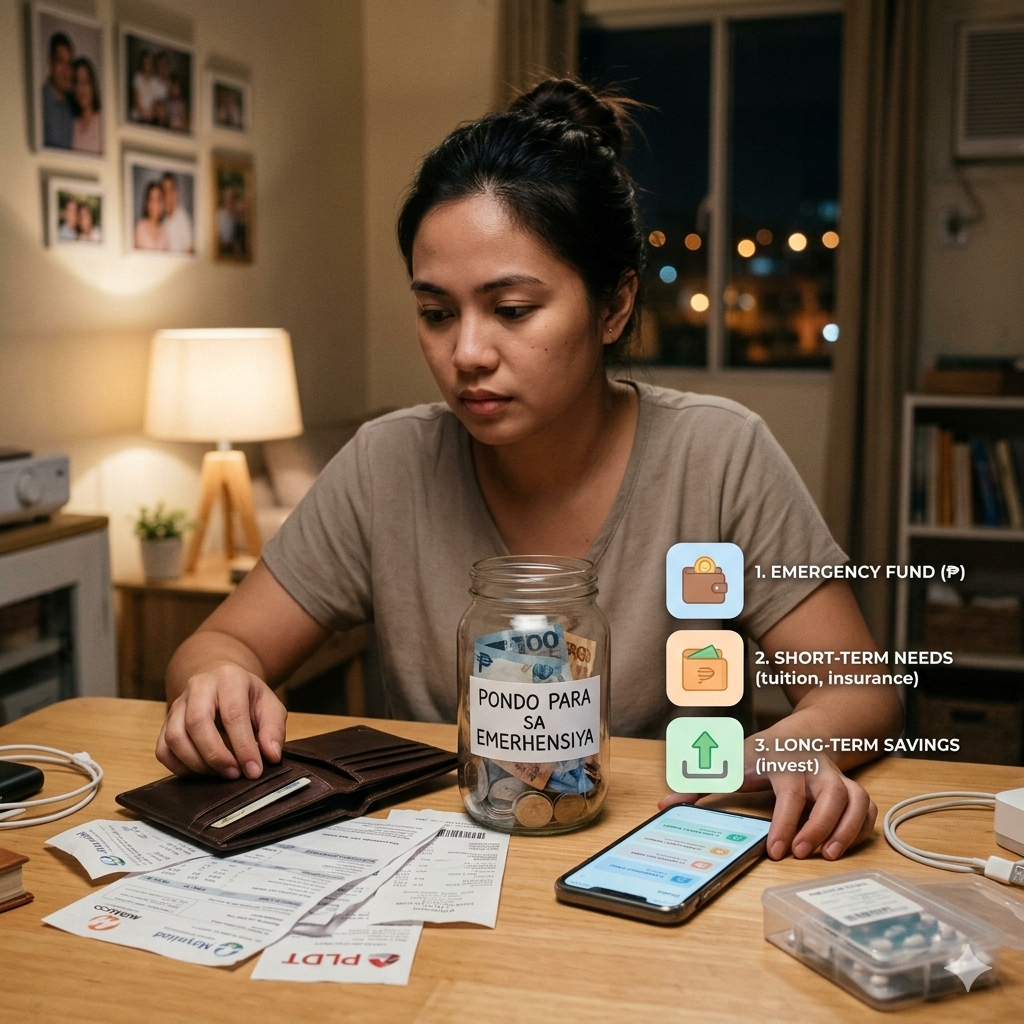
The simplest fix is also the most effective: stop keeping all your money in one place.
You don't need multiple bank accounts (though that can help). You just need mental — or actual — separation between different purposes.
Emergency fund. This is money specifically for genuine emergencies: medical costs, job loss, urgent repairs. You're supposed to use this when emergencies happen. That's its job. Aim for one to three months of expenses here, then build toward three to six months over time.
Short-term needs. This is money for predictable but irregular expenses: annual insurance premiums, tuition payments, holiday spending, scheduled repairs. These aren't emergencies — they're expected costs that you save up for in advance.
Long-term savings. This is money for future goals: retirement, a house down payment, investments. This money shouldn't be touched for emergencies because it's meant to grow over years or decades.
When you separate by purpose, withdrawing from your emergency fund for an actual emergency doesn't feel like failure. It feels like using a tool correctly. And your long-term savings stay protected because they're not in the same "pot" as your emergency money.
Even a simple system — three separate digital wallets, three envelopes, three line items in a spreadsheet — is better than one undifferentiated lump of money that creates guilt every time you touch it.
This one's psychological, but it matters.
Let's say you saved ₱40,000, then a family emergency wiped it out. Now you're back to ₱3,000. The natural instinct is to feel crushed. You were so close to your goal, and now you're starting over.
But here's a healthier way to think about it: your previous peak doesn't matter right now. What matters is your next step.
After using your savings for a real emergency, you need to lower the bar for yourself. Don't aim to get back to ₱40,000 immediately. That's overwhelming and will make you give up.
Instead, aim for your first ₱5,000 again. That's your new milestone. Once you hit that, aim for ₱10,000. Then ₱15,000. Small, achievable targets that build momentum.
Focus on consistency, not speed. It doesn't matter if it takes you two years to rebuild what you had before. What matters is that you're moving forward, even slowly.
Ignore the previous peak. Your emergency fund did its job — it protected you from debt. Now you rebuild. That's not failure. That's the cycle working as intended.
👉 Small Savings Are Not Pointless (Despite What Social Media Says)
Here's a mindset shift that changes everything: emergencies are not rare exceptions. They're a regular part of adult life.
In the Philippines especially, shocks are constant. Typhoons, flooding, medical emergencies, family crises — these aren't once-in-a-decade events. They happen every year. Sometimes multiple times a year.
So instead of treating every emergency as a devastating surprise, build the expectation of setbacks into your financial plan.
This means:
When you expect setbacks, they don't feel like personal failures. They feel like normal life events that your system is designed to handle. And recovery becomes faster because you're not spending weeks paralyzed by disappointment.
BSP and local financial advisors consistently list sickness, calamities, accidents, unemployment, and death as the main reasons for emergency funds. These aren't "what ifs" — they're "whens." Plan accordingly.
Most people measure their savings by looking at their current balance. "I have ₱25,000 saved." And when that balance drops, they feel like they've failed.
But current balance is a terrible measure of financial progress because it doesn't account for what you've been through.
A better way to track progress:
These measures capture something important: your resilience is improving, even if your balance fluctuates. And resilience is what actually matters for long-term financial health.
👉 How Much Savings Should You Actually Have in Your 20s and 30s?
Let's talk about the elephant in the room: shame.
When your savings get used up, the natural response is to feel embarrassed. You feel like you should have done better. You compare yourself to people who seem to have it together. You avoid looking at your bank account because it reminds you of your "failure."
But shame doesn't help. In fact, it makes everything worse.
Shame delays restarting. When you feel bad about where you are, you avoid thinking about money entirely. You tell yourself you'll "deal with it later" — and later never comes.
Shame encourages avoidance. Instead of making a plan to rebuild, you pretend the problem doesn't exist. You stop checking your balance. You stop budgeting. You disengage.
Shame increases stress. Financial anxiety is real, and it affects your mental health, your relationships, your work performance. Beating yourself up adds emotional weight to an already heavy situation.
Here's the truth: systems work better than self-criticism. Instead of asking "why am I so bad at this?" ask "what system would make this easier?" The answer is almost never "try harder." The answer is usually "structure it better."
Somewhere along the way, we started treating savings like a trophy. Something to display, to brag about, to compare with others.
But savings aren't a trophy. They're a tool.
A hammer isn't "failing" when you use it to drive a nail. A fire extinguisher isn't "failing" when you use it to put out a fire. And your emergency fund isn't "failing" when you use it for an actual emergency.
The purpose of savings is to be there when you need them. That's it. They're not a measure of your worth as a person. They're not proof that you have your life together. They're just a resource that helps you navigate an unpredictable world.
When you internalize this, using your savings stops feeling like defeat. It starts feeling like exactly what you planned for.
And rebuilding stops feeling like punishment for failure. It starts feeling like the natural next step in a cycle you've accepted and prepared for.
👉 The Difference Between Saving Money and Feeling Secure
If your savings keep getting used, it doesn't mean you're failing at money. It means you're living life in a country where medical bills can bankrupt families, where jobs are unstable, where family obligations are non-negotiable, and where emergencies are constant.
You're not broken. The environment is just hard.
The goal isn't to never use your savings. The goal is to build a system that lets you use them when needed, recover without shame, and gradually become more resilient over time.
Fix the system, not your self-image. Separate your money by purpose. Expect setbacks and plan for them. Measure progress by recovery, not by balance. And stop treating every withdrawal as evidence that something is wrong with you.
Your savings are a tool. Use them. Rebuild them. Use them again if you have to. That's not failure — that's life, handled well.