A Simple Savings System for Young Professionals
Save consistently without spreadsheets or pressure — a simple system for young Filipinos.

Celeste had been saving for two years straight.
Every paycheck, she moved money out before she could spend it. She skipped trips. She said no to things she actually wanted. She watched the number in her savings account slowly climb.
Then one day, she checked her balance and thought: I think this is enough.
And then, almost immediately: But now what?
She expected relief. Instead she felt something closer to anxiety. She didn't know whether to keep saving at the same rate, start investing, leave it alone, or move it somewhere else. The goal she'd been chasing for two years had arrived. And she had no idea what to do next.
This is more common than most people talk about.
This article is for the Filipinos who've done the hard part and are now standing at the checkpoint, unsure which direction to go.
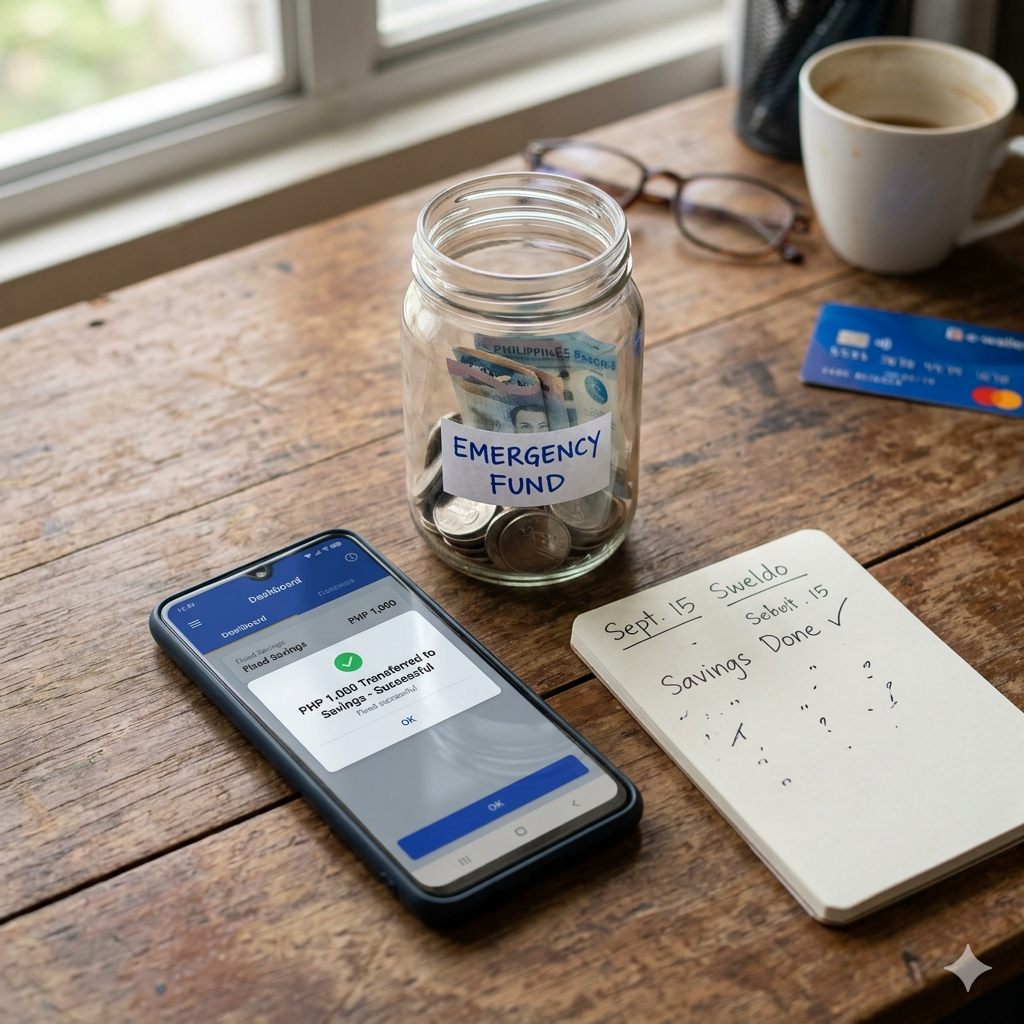
If you're still in the process of building savings, start here first: 👉 A Simple Savings System for Young Professionals
Savings goals give you structure. A number to chase. A direction to move in. Every month, you either hit your target contribution or you didn't. The goal was clear.
When you reach that number, the script disappears. The rules that guided every financial decision for months suddenly don't apply anymore. And without that structure, new questions rush in. Am I done? Should I keep going? What if I touch it and it starts shrinking? What if something goes wrong?
This shift isn't a character flaw. It's a natural consequence of moving from scarcity to stewardship. For a long time, the job was just to build. Now the job is to decide what the money is actually for. That's a harder job than most people expect.
About a third of Filipino households report having meaningful savings — and that share has been slowly growing. But even for those who have it, the anxiety doesn't automatically disappear once the number looks right. Surveys in multiple markets show that people who've built savings often shift from worrying about having nothing to worrying about losing what they've built.
Reaching "enough" creates responsibility, not just relief.
"Enough" doesn't mean you're finished. It doesn't mean nothing will ever go wrong. And it definitely doesn't mean you can stop paying attention.
In practice, "enough" usually looks like this: emergencies feel manageable. A hospital bill or a sudden car repair doesn't immediately send you into panic mode. You're not reflexively reaching for utang every time something unplanned comes up. You can leave money untouched between paydays because you're not constantly draining the account to survive the month.
For most Filipinos, the primary savings goals are emergency funds and health-related expenses. That's what "enough" is pointing at. Not wealth. Not retirement. Just: I can handle a setback without everything falling apart.
That's not a small thing. That's a genuinely meaningful upgrade in financial resilience.
What "enough" is not: a permanent finish line. Life costs more as you get older. Responsibilities grow. Inflation doesn't pause. The number that felt sufficient at 26 will feel thin at 34. Enough is a checkpoint, not a destination.
👉 The Difference Between Saving Money and Feeling Secure
When people don't know what to do next, they often do one of three things.
They stop saving entirely. Mission accomplished, money goes back into lifestyle. Within months, the buffer starts to erode and the anxiety creeps back.
They overprotect the money. They leave everything in a basic savings account, refuse to touch it, refuse to move it, and avoid thinking about it altogether. This feels safe but slowly becomes its own kind of stress — especially as the cost of living keeps rising and the purchasing power of idle cash quietly shrinks.
Or they freeze completely. They open the app, look at the balance, close the app. They know they should do something but they can't decide what, so they don't decide anything.
All three responses come from the same place: fear of regression. The money took so long to build that losing any of it feels catastrophic. So avoidance becomes the strategy.
The problem is that avoidance is also a decision. And it's usually not the best one.
You don't need to make a big announcement. But you do need to pause and recognize what actually happened.
Ask yourself honestly: am I less stressed than I was a year ago? When something unexpected comes up, does it feel manageable instead of catastrophic? Have my spending habits actually changed, or did I just white-knuckle through the savings period?
If emergencies feel more manageable, if borrowing feels less reflexive, if you're sleeping better than you were before — something worked. You built something real.
Acknowledging that isn't arrogance. It's accurate accounting. And accurate accounting is what keeps you from either dismissing the progress or overclaiming it.
Early in the savings journey, money has one job: survive. Hospital bills. Job loss. Family emergencies. The savings account is a shield.
Once that base exists, the same money can start serving a different purpose. Flexibility. Optionality. The ability to make a deliberate choice instead of a desperate one — to take a career risk, start something small, or simply say no to a situation without financial panic forcing your hand.
Savings shift from shield to launchpad. Not dramatically. Not all at once. But the purpose changes.
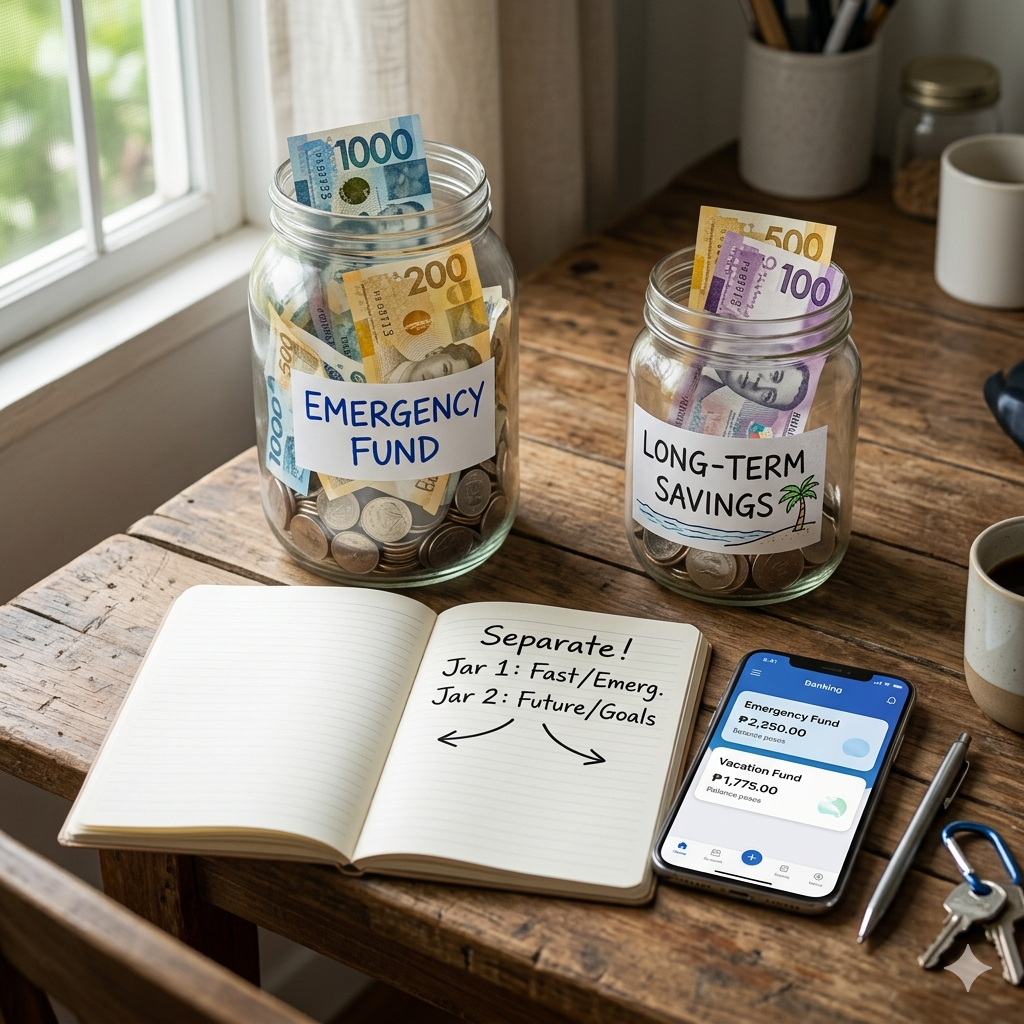
This is also where it helps to get clear on what each portion of money is actually supposed to do. The emergency buffer stays untouched and boring. Other savings can start working toward something specific. The accounts don't have to be doing the same job just because they're sitting in the same place.
This step gets skipped constantly, but it matters as much as any positive action.
Decide what money stays liquid no matter what. Your emergency fund is not an investment. It's not an opportunity. It's a buffer, and the moment it becomes inaccessible or gets redeployed, it stops functioning as one.
Decide what doesn't need to be optimized right now. Not every peso needs to be in the highest-yielding account. Chasing an extra 0.5% in interest while creating anxiety about whether you'll have access when you need it is a bad trade.
Decide upfront which portion is "untouchable buffer" and which portion is "available for life upgrades." Without that boundary, every want and opportunity becomes a renegotiation. And renegotiating your emergency fund every few months is how it slowly disappears.
👉 Should You Separate Emergency Fund and Long-Term Savings?
You don't have to keep saving at the same intensity you used to build the buffer. That pace was designed for a specific goal. The goal has shifted.
But stopping completely is rarely the right move either. Cost of living rises. Responsibilities grow. What's enough today won't be enough in five years.
A practical middle path: if you were saving ₱5,000 a month to build your emergency fund, maybe you keep ₱2,000 going into savings and redirect ₱3,000 toward something longer-term. You stay in the habit. You don't abandon the system. But you give yourself permission to use some of that effort differently.
Surveys show more Filipino households are now targeting at least 10% of their monthly income in savings. After reaching a solid buffer, that 10% doesn't have to go to the same place it used to. Some of it can start serving a different function.
👉 Emergency Fund First or Investing First? (A Filipino Reality Check)
This might be the part that's hardest to sit with.
The number that feels sufficient right now will feel different in a few years. Income shifts. Children arrive. Aging parents need support. Rent goes up. The same economic surveys that show Filipinos slowly saving more also show that many expect finances to get harder in the next twelve months, not easier.
"Enough" is not a permanent state. It's a temporary condition. And that's okay.
Savings are supposed to adapt. Your relationship with money is supposed to evolve. The version of you who needed ₱150,000 in savings to feel stable might need ₱300,000 at a different stage of life. That's not failure. That's just how life scales.
There's no exact formula here. But certain conditions suggest it might be worth adding a layer beyond savings.
If your emergency buffer feels genuinely solid — several months of actual expenses, not just a round number — and your income has been relatively stable, and you're not carrying high-interest debt, then keeping everything in low-yield savings starts to cost you something. Inflation quietly erodes the purchasing power of money sitting idle. And under current Philippine tax rules, deposit interest is now subject to a uniform 20% final withholding tax, which reduces the net benefit of large balances purely in savings.
None of this means abandoning your savings structure. It means considering whether you can add a layer — investing, goal-based accounts, or structured placements — on top of what's already working.
Expansion isn't replacement. It's addition.
Here's something the personal finance guides usually skip: building savings doesn't eliminate uncertainty. It just changes what you're uncertain about.
The worry shifts from "I have nothing" to "what if I lose what I built?" That's a real psychological transition and it takes time to navigate. Feeling cautious after progress isn't a sign that something is wrong. It's your brain adjusting to a new baseline.
For some people, tools like separate accounts or time deposits help protect "enough" from impulsive decisions or second-guessing. The structure reduces the number of daily choices. And fewer choices means less noise.
👉 When a Time Deposit Makes Sense (And When It Doesn't) — on structure, anxiety, and locking money on purpose.
The goal was never a specific figure in an app.
The goal was to feel calmer. More flexible. Less reactive. To have options when you previously had none. To stop borrowing out of desperation and start making deliberate choices.
If your savings are doing that job — if you're less stressed, more stable, and capable of handling what comes up without immediate panic — they're working. Whatever the number is.
The next step, whatever it is, should protect that calm. Not optimize it into something that creates new anxiety. Not chase a return that costs you sleep.
Build from where you are. Hindi kailangan ng perpektong plano. Kailangan lang ng susunod na tamang hakbang.