Why Most Filipinos Struggle to Save (And It's Not Discipline)
Struggling to save doesn't mean you're bad with money. Why discipline is rarely the real issue.
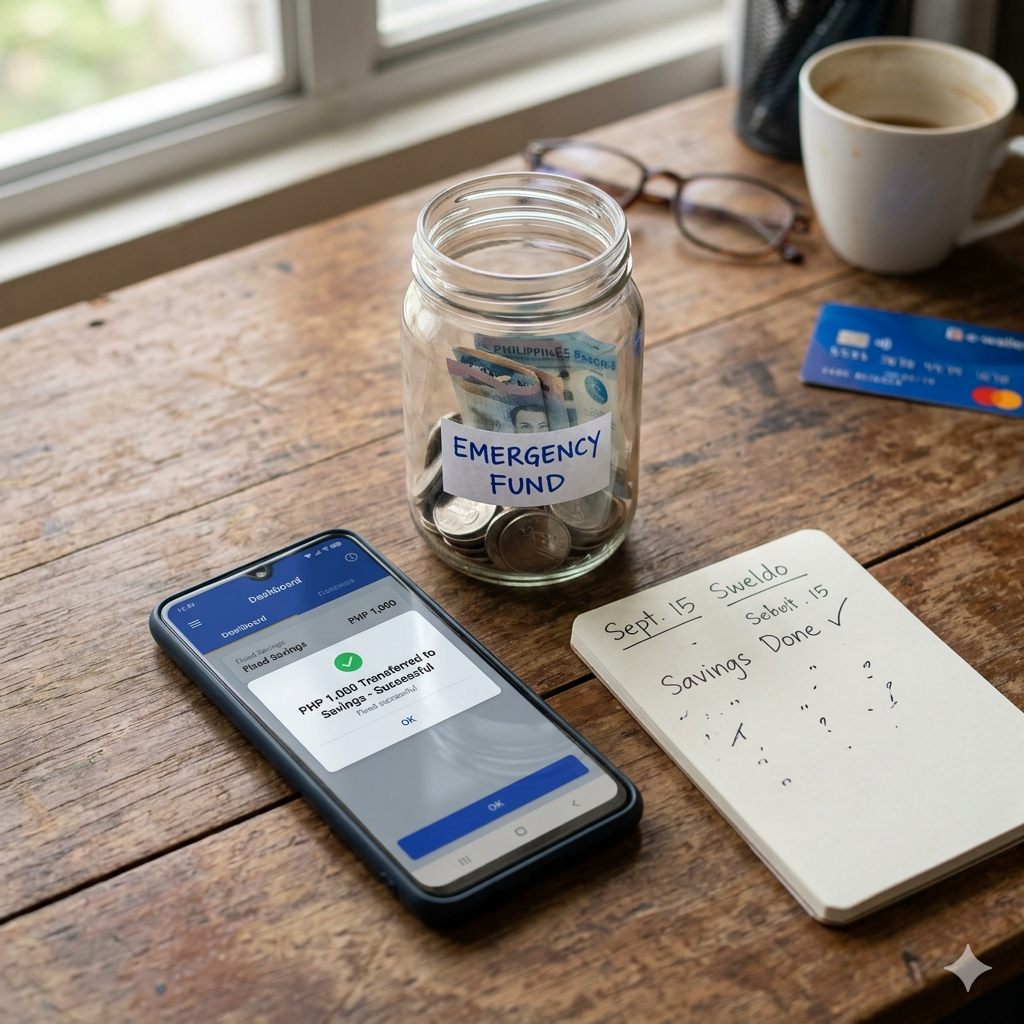
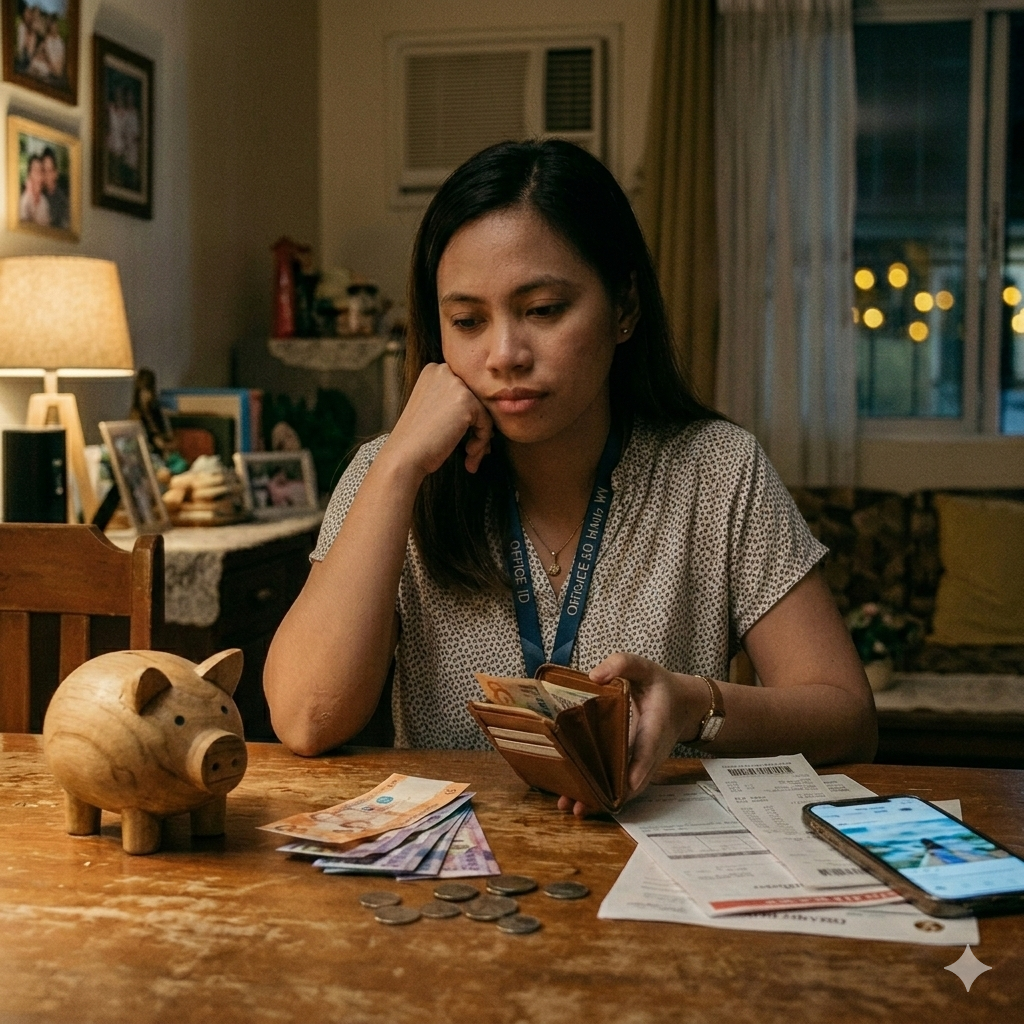
Rina is 26. BPO agent. Gets paid every 15th and 30th.
Every sweldo, she promises herself she'll finally start saving properly.
She researches budget templates, downloads an app and sets up a spreadsheet.
Then something comes up. A family emergency. A friend's birthday. The aircon breaks.
The spreadsheet gets abandoned.
By the 29th, she's wondering where her money went again.
Sound familiar?
Here's what most savings advice gets wrong: it assumes your life is consistent.
It's not. Nobody's is.
According to a Manulife study, younger Filipinos say they try to save around 25% of their income every month. But the actual average? Around 10%.
That gap isn't about discipline. It's about systems designed for imaginary months.
A good savings system isn't impressive. It's boring, repeatable, and forgiving.
This article lays out a simple savings system for young professionals who want to build something that actually sticks. Not something that looks good on paper for two weeks.
👉 If saving itself feels hard, start here first: Why Most Filipinos Struggle to Save (And It's Not Discipline)
Let's be honest about what a savings system should do.
That's it.
It is not meant to maximize returns. It's not meant to impress anyone. It's not meant to eliminate every mistake.
Simplicity is not a compromise.
Simplicity is the whole point.
Most savings systems fail because they're built for perfect months.
Months where nothing unexpected happens. Where the family doesn't ask for help. Where your income is stable, and your health is fine.
Real life includes:
Many young Filipinos are already budgeting and saving. They're doing the right things. But the systems they're using assume every month is the same.
They're not.
A system that collapses the moment real life shows up isn't a system. It's a plan that only works when you don't need it.
The simplest effective savings system does one thing.
It separates your money by purpose.
Not by optimization. Not by interest rate. By purpose.
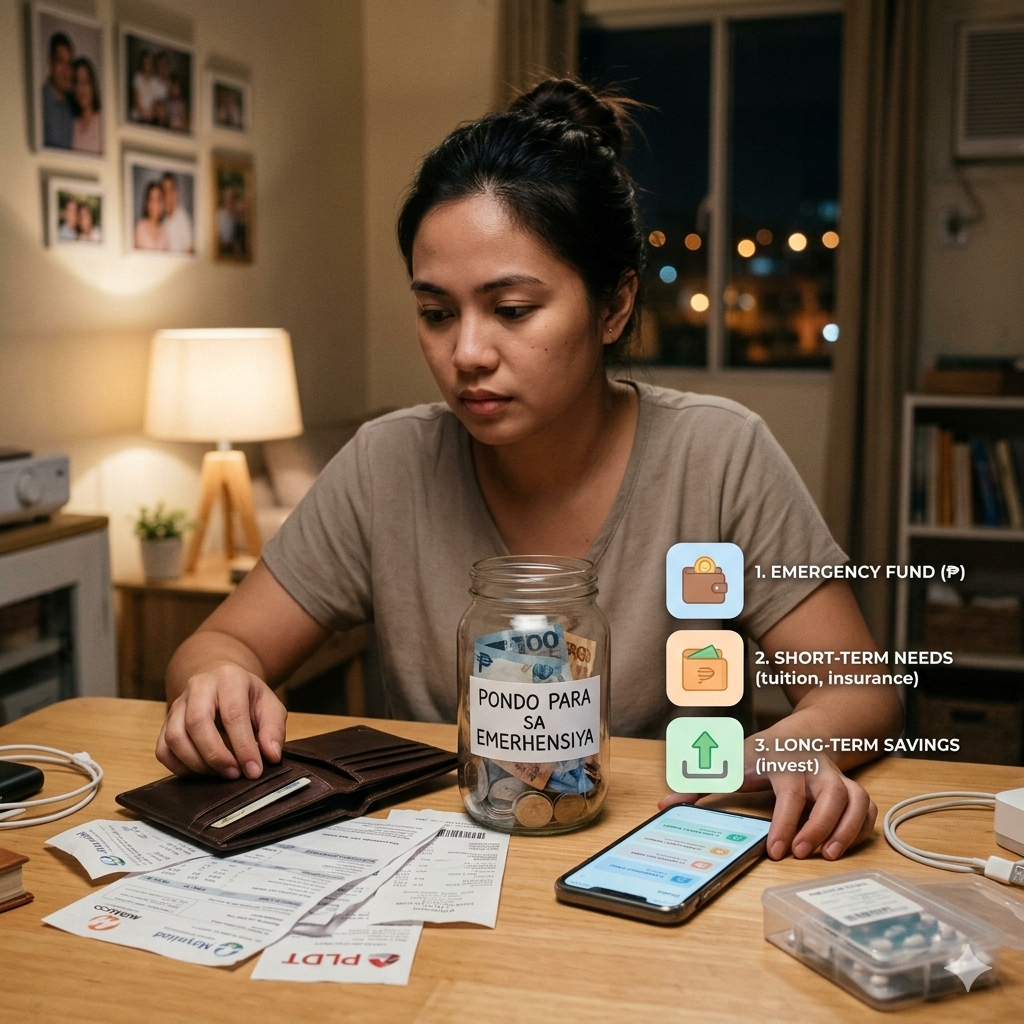
Three buckets is enough:
When your money sits in one account, every peso is fighting every other peso for attention. You spend more because everything feels available.
When money has a job, it stops feeling like one big pool you're slowly draining.
👉 Why Your Savings Keep Getting Used (And How to Fix It)
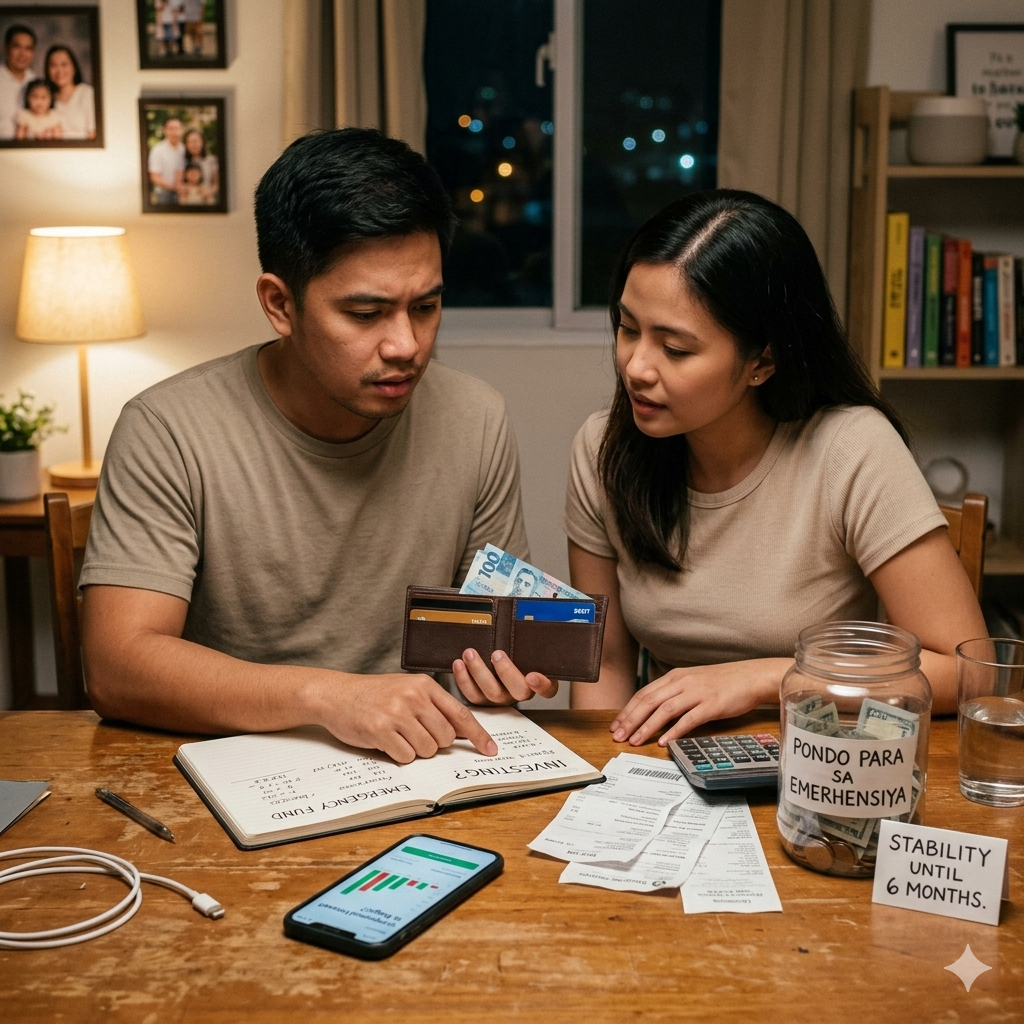
This is the most important step. Not the most exciting one. The most important one.
Only about 2 out of 10 Filipinos have at least three months' worth of emergency savings. That means 8 out of 10 are one bad month away from derailing everything.
He's 28. Accounting officer sa Makati. He had been saving little by little for a laptop upgrade.
Then he got sick. One week off work, hospital bills on top of it.
His laptop fund became his emergency fund by accident. He had to start from zero.
The problem wasn't that he got sick. The problem was he had no dedicated buffer.
Your emergency fund should be:
Start with one month's worth of essential expenses. Work toward three.
Don't wait until your emergency fund is "complete" before saving for other things. Build it in parallel. Just make it the priority.
👉 Emergency Fund First or Investing First? (A Filipino Reality Check)
Automation helps. But only if you design it around your actual income, not your ideal income.
After every sweldo, set aside a small fixed amount automatically. Even 500 or 1,000 pesos is enough to start.
The goal isn't to save as much as possible from day one.
The goal is to build a habit that survives bad months without breaking.
Think of it this way: a 500-peso automatic transfer that runs for 12 months is worth more than a 5,000-peso transfer you cancel after the second month because it was too aggressive.
Small and consistent beats aggressive and short-lived. Every time.
If a month is especially tight, you can pause. Walang judgment. A forgiving system is a system you'll actually keep.
👉 Small Savings Are Not Pointless (Despite What Social Media Says)
Dara is 29. She's been saving consistently for two years.
Her emergency fund is fully funded. She now has extra money sitting in her regular savings account earning almost nothing.
That's when a time deposit starts to make sense.
Time deposits are savings you lock in for a fixed term — usually 1 to 12 months. Philippine banks typically offer higher interest than a regular savings account in exchange for not touching the money during the term. Minimums are usually around ₱10,000.
They work as a second layer. Not the foundation. The second floor.
You don't lock money into a time deposit and then scramble for it during a medical emergency. You put money into a time deposit when you genuinely know you won't need it for the next few months.
The rule is simple: emergency fund first, time deposit later.
👉 When a Time Deposit Makes Sense (And When It Doesn't)
Here's a habit that actually hurts your savings progress: checking your balance every day.
When you check constantly, small fluctuations feel like crises. You start tinkering with your setup. You second-guess amounts. You feel anxious even when nothing is actually wrong.
A simple savings system needs only a monthly check-in.
Ask yourself three things:
That's the review. Ten minutes, once a month.
No dashboard required. No color-coded spreadsheet. Just a system you barely have to think about.
Let's say you're 25 and earning around ₱25,000 to ₱30,000 a month in Metro Manila.
A realistic setup looks like this:
Some months will be good. Some months the emergency fund will get dipped into. Some months the longer-term savings get paused.
That's fine.
Progress comes from restarting, not from being perfect.
You'll know it's working when:
That last one might sound underwhelming.
But neutral is what lasting looks like.
Hindi kailangang exciting ang pag-iipon. It just needs to keep going.
The best savings system is the one you'll still be using two years from now.
Not the one with seven accounts and a color-coded tracking sheet. Not the one that impresses people at a party.
The one that's simple enough to survive your worst month and still be standing on the other side.
Build something boring. Build something forgiving.
That's the whole system.