Why Most Filipinos Struggle to Save (And It's Not Discipline)
Struggling to save doesn't mean you're bad with money. Why discipline is rarely the real issue.
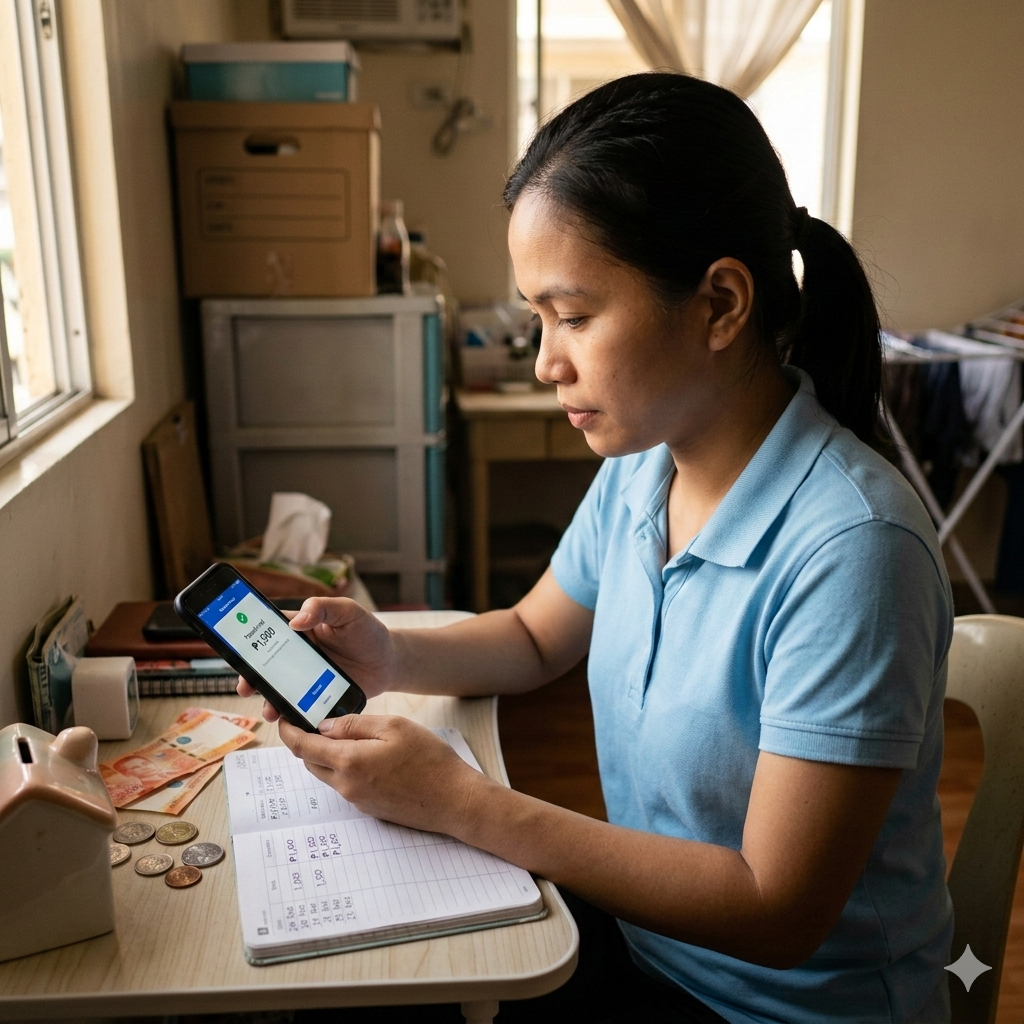
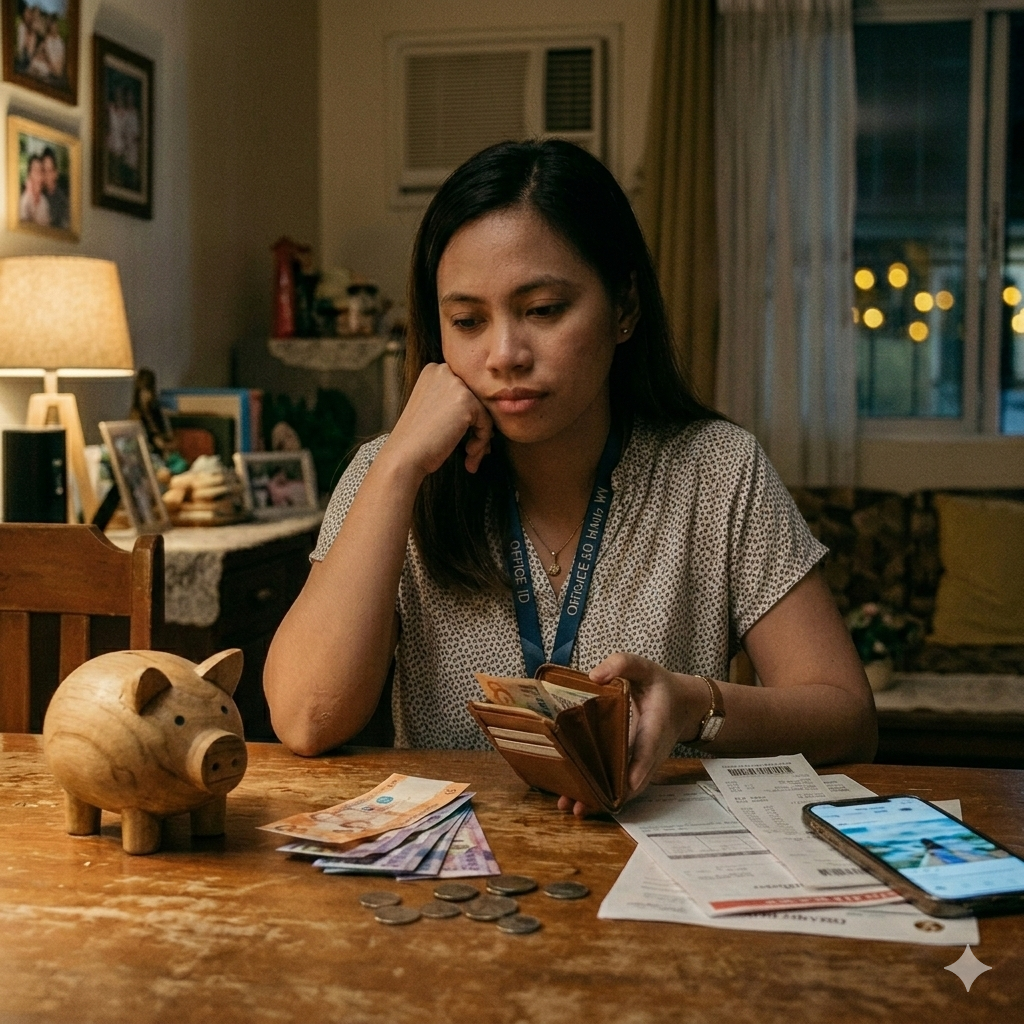
Every payday, Mia sets aside ₱1,500.
That's it. Not ₱10,000. Not ₱20,000. Just ₱1,500 — transferred from her payroll account to a separate digital wallet before she can spend it.
Mia is 26, works as a customer service representative in Pasig, and earns ₱22,000 a month. After rent, bills, food, transpo, and the ₱5,000 she sends to her parents in Leyte, ₱1,500 is genuinely all she can spare.
And honestly? She feels embarrassed about it.
She sees her friends posting about their ₱100,000 milestones. She watches TikToks about "how I saved ₱500,000 in two years." She reads threads where people casually mention setting aside 30% of their income like it's nothing.
Meanwhile, she's here with her ₱1,500. Nakakahiya. Parang walang kwenta.
If you've ever felt like Mia — like your savings are too small to matter, too pathetic to even mention — this article is for you.
Because here's the truth: small savings are not pointless. They do real work. And dismissing them causes more harm than waiting to "save big" ever will.
If saving anything at all already feels heavy, start here first: 👉 Why Most Filipinos Struggle to Save (And It's Not Discipline)
Let's talk about why small savings feel embarrassing in the first place.
Social media platforms are designed to reward extremes. The algorithm favors content that gets reactions — and "I saved ₱1 million before 30" gets a lot more engagement than "I saved ₱1,500 this month."
So your feed gets filled with:
What you rarely see:
This skews your expectations. You start thinking that small savings are meaningless because no one online talks about them. But the reason no one talks about them isn't because they don't matter — it's because they don't get likes.
The people saving small amounts are the majority. They're just not posting about it.
Here's what ₱1,500 a month — or ₱500, or ₱2,000, or whatever you can manage — actually does in real life.
These outcomes matter more than the number itself. Your savings don't need to be impressive to be useful.
👉 Why Your Savings Keep Getting Used (And How to Fix It)
Let me tell you about three moments when "small" savings made a real difference.
Denise, 24, call center agent in Quezon City.
Denise had ₱8,000 saved when her wisdom tooth got infected. She needed extraction — ₱3,500 at a dental clinic. Without that savings, she would've had to endure the pain until the next payday, or borrow from her officemate (again). Instead, she just paid for it, recovered, and went back to work. No drama. No debt. Her savings dropped to ₱4,500, but she started rebuilding the next month.
Paolo, 28, graphic designer (freelance) in Cebu.
Paolo's laptop charger broke, and his laptop was his entire livelihood. A replacement cost ₱2,800. He had ₱6,000 in his emergency fund — not much, but enough. He bought the charger the same day, kept working, kept earning. If he'd had zero savings, he would've lost days of work waiting for his next client payment, which would've cost him way more than ₱2,800.
Tina, 31, admin assistant in Makati.
Tina's dad needed to refill his maintenance meds — ₱1,200 that month. Her parents couldn't cover it. Normally, this would mean Tina scrambling, maybe borrowing from her sister or skipping her own needs. But she had ₱4,000 tucked away. She sent the money, her dad got his meds, and life continued. The ₱4,000 didn't feel like much before that moment. Afterward, it felt like everything.
These wins don't trend. They won't get you followers. But they're the difference between a small problem and a spiraling crisis.
When people talk about compounding, they usually mean money growing over decades through investment returns. And that's real — but it's not the only kind of compounding that matters.
Small savings compound in other ways:
The psychological compounding often matters before the financial compounding kicks in. You don't need decades for this to work. You just need to start.
Here's a trap a lot of people fall into:
"I'll start saving when I earn more." "₱1,000 a month is too small to matter. I'll wait until I can do ₱10,000." "There's no point saving now — I'll just use it anyway."
This logic feels reasonable, but it backfires.
Habits formed later are harder to sustain. If you've never practiced saving, suddenly setting aside ₱10,000 when your salary increases will feel painful. The lifestyle inflation will already be there. You'll have adjusted to spending everything, and cutting back will feel like deprivation.
But if you've been saving ₱1,000 all along — even when it felt pointless — the habit is already built. When your income grows, you just increase the amount. It's not a new behavior; it's a bigger version of an existing one.
BSP itself says that regardless of the amount, the key is to build a consistent saving habit, not to wait until you can save big. Starting small trains consistency early. Waiting trains nothing.
This is the part people don't talk about enough.
Having savings — even small savings — changes your mental state.
Studies on emergency savings show that most of the stress relief comes from having some buffer — not from reaching a huge number. The difference between ₱0 and ₱10,000 saved is much bigger, psychologically, than the difference between ₱100,000 and ₱110,000.
Mental calm is not proportional to balance size. Having something matters more than having a lot.
👉 The Difference Between Saving Money and Feeling Secure
If you want small savings to work for you, you need to stop treating them like they're worthless. Here's how:
Here's the thing about starting small: it doesn't stay small forever.
As your income grows — through raises, promotions, better jobs, side gigs — your savings can grow with it. But only if the habit already exists.
Think about it this way:
If you've been saving ₱1,500 a month on a ₱22,000 salary, and your salary jumps to ₱35,000, increasing to ₱3,000 or ₱4,000 a month feels natural. The system is already in place. The discipline is already there. You're not building from scratch.
But if you've been saving ₱0 on ₱22,000, and suddenly you try to save ₱5,000 on ₱35,000? That's hard. You've never practiced. You don't have the habits. You'll probably fail and feel bad about it.
Small savings now make bigger savings later much easier. You're not just saving money — you're training for the future.
Here are some statistics that might reframe how you think about your "small" savings:
So when you feel embarrassed about your ₱1,000 or ₱2,000 a month, remember: you're not failing. You're actually doing what most people who save are doing. The "₱20,000 a month into investments" crowd is a very small — and usually very privileged — minority.
If you want to feel good about your savings journey, you need to measure the right things.
These measurements capture what actually matters: your resilience is growing, your habits are strengthening, and your relationship with money is improving. None of that requires a six-figure balance.
Back to Mia — the one saving ₱1,500 a month and feeling embarrassed about it.
Here's what Mia doesn't see: she's been doing this for eight months now. That's ₱12,000 saved. Not a fortune, but not nothing either.
Last month, her phone screen cracked. Repair cost: ₱2,500. She paid for it from her savings, felt a small sting, then moved on. No credit card debt. No borrowing from friends. No waiting until payday while using a broken phone.
Her ₱1,500 a month did that.
If you're saving anything at all — whether it's ₱500 or ₱5,000 — you're practicing resilience. You're building habits that will serve you for decades. You're giving yourself options that people with zero savings don't have.
That practice matters. More than you think. More than social media will ever tell you.
So keep going. Your small savings are not pointless. They're proof that you're trying. And trying, consistently, is how real financial stability is built.