A Simple Savings System for Young Professionals
A boring, repeatable savings system that survives real life — without spreadsheets or pressure.
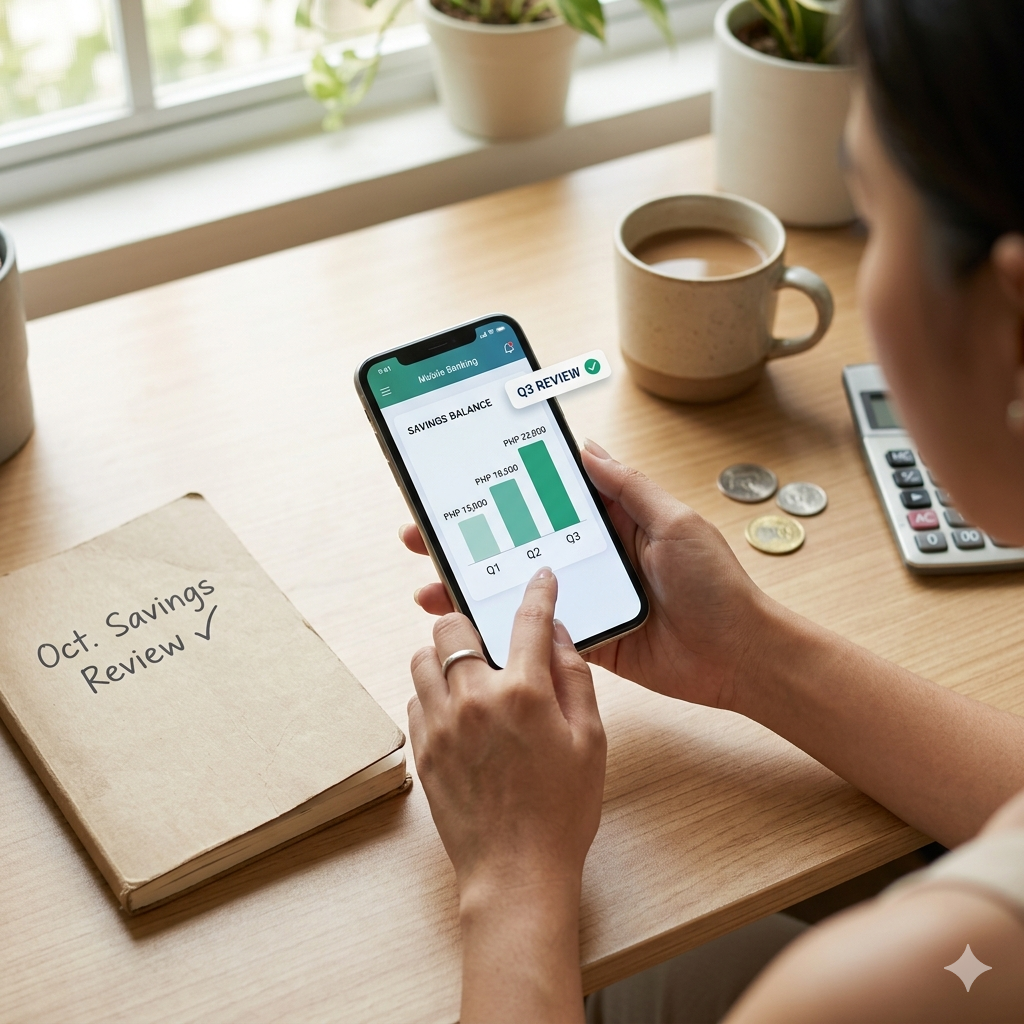
Trisha is 26, a marketing coordinator. She has a savings account she's been building since her first job.
Some months, she checks it almost every day.
She opens the app in the morning. Then again at lunch. Then before bed, just to see if the number changed.
It usually hasn't. But she checks anyway, and somehow still feels anxious.
Other months, she avoids it completely.
Too much happened. She had to use some of it. She doesn't want to see the number right now. So she just... doesn't look. For weeks. Sometimes longer.
Both habits feel protective.
Neither one actually helps.
Checking too often turns small, normal fluctuations into emotional events. Avoiding entirely means problems go unnoticed until they become harder to fix.
Savings don't need constant attention. But they do need periodic awareness.
This article explains how often to review your savings, what to actually check, and what you can safely ignore.
👉 If saving already feels stressful, start here: A Simple Savings System for Young Professionals
Imagine weighing yourself five times a day.
The number goes up slightly after lunch, down a little in the morning and up again after dinner.
None of those changes mean anything. But you'd feel something every time.
Savings work the same way.
When you check your balance daily, every small dip feels like a setback. Every slow month feels like failure. You start second-guessing your system. You tinker with amounts. You move money around not because you need to, but because doing something feels better than watching a number sit still.
Financial planners generally recommend reviewing savings no more than quarterly for exactly this reason. Constant checking raises stress and encourages impulsive changes without actually improving outcomes.
The balance going down ₱200 because of a bank fee is not a crisis. But if you check every day, it can feel like one.
Savings aren't meant to be exciting. They're meant to be growing quietly while you get on with your life.
On the other side: Marvin is 30. Government employee. He used part of his savings last December for Christmas gifts and family needs. He felt bad about it. So he stopped checking.
Three months passed. He didn't open his banking app once.
When he finally looked, he found a small monthly fee he hadn't noticed was being deducted. Not huge. But across three months, it added up. There was also a pending issue with his account he'd missed a notification about.
Avoidance didn't protect him. It just delayed the problem.
Avoiding savings usually comes from shame, not laziness. The number is lower than you wanted. You feel like you should be further along. So you don't look because looking hurts.
But not looking doesn't fix anything. It just means small issues — missed fees, forgotten balances, a contribution that stopped going through — quietly compound in the background.
👉 Why Most Filipinos Struggle to Save (And It's Not Discipline)
Before talking about frequency, it helps to be clear on what a review is supposed to do.
A savings review is meant to:
It is not meant to:
The review is a tool. Not a report card.
If you go into every review expecting to feel bad, of course you'll avoid it. Change the purpose first. A review is just a check-in.
For most young Filipino professionals with a basic savings system in place: quarterly reviews are enough.
Once every three months.
That's it.
Quarterly works because it:
Monthly reviews are often too frequent once your system is set up. They tend to generate anxiety without generating useful information.
If checking your savings every month makes you feel stressed, restless, or like you're constantly behind — that's a frequency problem, not a discipline problem.
When you do sit down for your quarterly review, keep it simple.
Check these:
Ignore these:
The review should take around ten to fifteen minutes. If it's taking longer, you're probably overthinking it.
👉 The Difference Between Saving Money and Feeling Secure
This is the review most people avoid the most.
Something happened. You used your savings. Maybe more than you planned. The balance dropped. You feel bad about it.
The instinct is to not look.
But this is exactly when a review matters most.
Lea is 28. Probinsyana working in Quezon City. Her emergency fund took a hit when her lola got sick last year. It wiped out almost two months of savings in three weeks.
She avoided her banking app for a month after. Nakakahiya pakinggan, she said. Like she had failed.
When she finally checked, she made one small decision: restart the ₱1,000 automatic transfer. That's all. Not a plan to recover everything at once. Just restart.
Six months later, the fund was almost rebuilt.
After a setback, a review isn't about fixing everything. It's about one thing: what's the smallest step I can take to start moving forward again?
Don't avoid the number. It can't hurt you. It's just a starting point.
👉 Why Your Savings Keep Getting Used (And How to Fix It)
A good quarterly review answers three questions:
That's it.
You're not measuring yourself against a target timeline. You're not comparing last quarter to some ideal version of you. You're just checking direction.
Forward is forward — kahit mabagal.
Progress isn't linear. Some quarters will show big gains. Some will show none, because life happened. Both are fine as long as the general direction holds.
There are situations where quarterly isn't enough. Monthly check-ins make sense when:
Even in these situations, daily checking isn't useful. Monthly is often enough. The goal is to confirm the system is running, not to react to every small movement.
Once your system is stable, you can pull back further.
Every six months might be enough if:
This is actually the goal: getting to a point where your savings run quietly in the background and don't need constant management.
Trust in a system is built over time. But once it's there, you don't need to keep proving it to yourself every month.
Set a reminder. Once every three months. The last week of March, June, September, December works well for most people — natural end-of-quarter moments.
When the reminder comes:
The best savings review is calm.
Not emotional. Not a source of dread. Not something you put off for three months because you can't face the number.
If your reviews are causing stress, there are two fixes: reduce frequency, or simplify your system so there's less to feel anxious about.
Check in quarterly. Fix what needs fixing. Leave what's working alone.
That's it.
Your savings are doing their job in the background. You don't need to watch them every day to prove it.