Why Most Filipinos Struggle to Save (And It's Not Discipline)
Struggling to save doesn't mean you're bad with money. Why discipline is rarely the real issue.

Nakakapagod mag-scroll sa social media minsan.
You open Facebook or TikTok and suddenly you're bombarded with posts like: "₱100k by 25 or you're behind." "I saved ₱1M before turning 30 — here's how." "If you don't have six months of expenses saved, you're not financially literate."
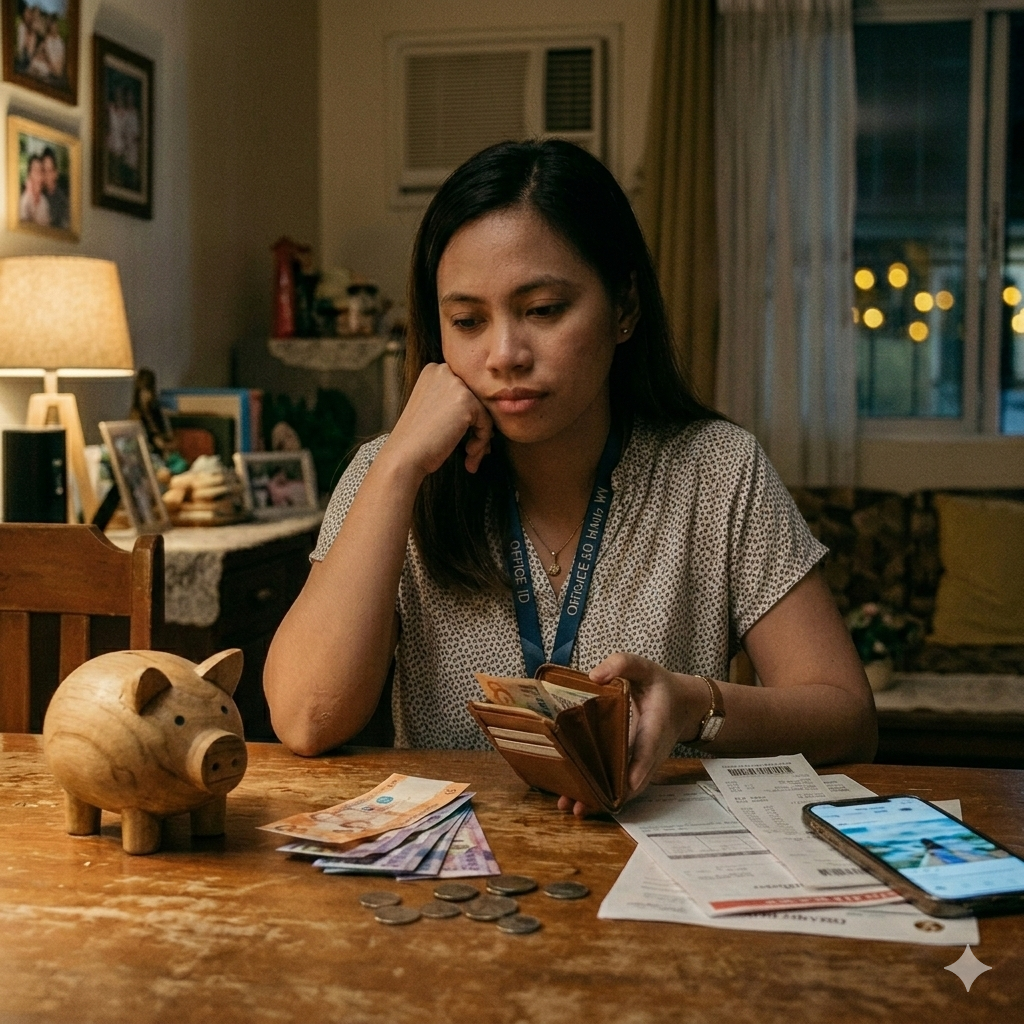
These numbers sound authoritative. They come with confident graphics, neatly organized spreadsheets, and creators who seem to have it all figured out. And if you're sitting there with ₱15,000 in your bank account at 27, wondering where you went wrong, these posts can make you feel like a complete failure.
But here's what those posts almost never mention: context.
They don't tell you their income. They don't mention if they live rent-free with their parents. They don't explain that they have no siblings to support, no medical bills to cover, no family depending on their paycheck. They just throw out a number and let you feel bad about not hitting it.
Let's fix that. This article will help you understand what savings targets actually make sense for your situation — without turning benchmarks into a source of shame.
If you're struggling to save anything at all, you might want to start here first: 👉 Why Most Filipinos Struggle to Save (And It's Not Discipline)
Here's the uncomfortable truth about savings benchmarks: they assume everyone is playing the same game with the same rules. But we're not.
A "good" savings number looks completely different depending on your situation. Consider two people who are both 28 years old:
Person A earns ₱80,000 a month, lives with their parents in a paid-off house, has no siblings to support, and their biggest expense is their car and weekend gimmicks.
Person B earns ₱35,000 a month, rents a bedspace in Makati for ₱7,000, commutes two hours daily, sends ₱8,000 home to their parents in the province, and is helping pay for a younger sibling's college tuition.
If both of them see a post saying "you should have ₱500,000 saved by 28," guess who's going to feel like a failure? And guess who can actually hit that target without really trying?
The math is not the same. The circumstances are not the same. So why would the benchmark be the same?
Savings targets rarely account for income differences, family responsibilities, health costs, or housing situations. And in the Philippines — where 42% of households with savings are in the high-income bracket — most of the people confidently posting their "₱1M by 30" milestones are already starting from a position of privilege that they don't always acknowledge.
Yung benchmark na "normal" sa kanila, impossible naman sa iba. That doesn't mean you're failing. It means the benchmark was never designed for your reality.
Before we talk about how much you should save, let's talk about why you're saving in the first place. Kasi minsan, nalilimutan natin yung actual purpose.
Savings aren't supposed to be a flex. They're not a scorecard. They're not proof that you're a responsible adult or that you "made it."
Savings are a tool. And like any tool, they serve specific functions.
Emergency buffer. This is money that protects you when life throws something unexpected — a medical bill, a broken phone, a sudden job loss. BSP and most Philippine financial institutions recommend having three to six months of living expenses set aside for this purpose. The goal isn't to feel rich. The goal is to avoid going into high-interest debt when emergencies happen.
Short-term stability. This is money that lets you breathe. Enough savings that you're not living paycheck to paycheck, that you can handle a delayed salary or a surprise expense without panicking.
Psychological safety. This one's underrated. Having savings — even modest savings — changes how you make decisions. You negotiate better. You don't stay in toxic jobs out of desperation. You sleep better at night.
Hindi lahat ng savings goals kailangang aggressive. Sometimes, the goal is just peace of mind. And that's valid.
👉 The Difference Between Saving Money and Feeling Secure
Instead of obsessing over a specific number, try thinking about savings in layers. Each layer answers a different question about your financial stability.
Layer 1: Can I handle small emergencies?
This is your first line of defense. We're talking about a buffer of ₱5,000 to ₱20,000 — enough to cover a sudden hospital visit, a broken appliance, or an unexpected bill. Hindi siya malaki, pero it keeps small problems from becoming big problems. If you have this, you're already ahead of many Filipinos who would need to borrow or use a credit card for the same situation.
Layer 2: Can I survive a few months of disruption?
This is your emergency fund proper. The standard recommendation is one to three months of living expenses. So if you spend around ₱20,000 a month on essentials — rent, food, bills, transpo — then your target here is ₱20,000 to ₱60,000. This layer protects you if you lose your job, get sick, or need to take a break. It buys you time to figure things out without immediately going into crisis mode.
Layer 3: Can I plan without panic?
This is the full three to six months of expenses that financial advisors often recommend — or even six to twelve months if you're a freelancer, a breadwinner, or someone with irregular income. At this level, you're not just surviving emergencies. You're able to make decisions from a place of calm instead of desperation. You can say no to bad opportunities. You can take calculated risks.
The beauty of this framework is that it's progressive. You don't need to jump straight to Layer 3. Start with Layer 1. Build from there. Every layer you complete is a real improvement in your financial safety, regardless of what the internet says you "should" have.
Let's get specific. What does realistic savings progress actually look like for Filipinos at different life stages?
You're probably earning an entry-level salary — somewhere between ₱15,000 and ₱25,000 for many industries. You might be on a contractual or project-based setup with limited benefits. You're still figuring out your career, your spending habits, and how adulting actually works.
At this stage, saving anything at all is already an achievement. Seriously. Data shows that only about 26% of Filipino households manage to set aside money for savings. If you're putting away even ₱500 to ₱2,000 a month while paying your own bills, you're already in the minority who saves.
The goal here isn't to hit a specific number. The goal is to build the habit. Learn how to budget. Figure out where your money goes. Start small, pero start.
A realistic target for this phase: work towards one month of expenses saved over a couple of years. If your monthly essentials cost ₱18,000, then ₱18,000 in savings is a solid first milestone. Hindi siya glamorous, but it's real progress.
By now, your income has probably improved — maybe you're earning ₱30,000 to ₱50,000 or more, depending on your field. But here's the catch: your responsibilities have likely grown too.
You might be renting your own place. You might be helping more with family expenses. You might have a partner, or be thinking about marriage and kids. You might be paying for a car, insurance, or other adult expenses that didn't exist in your early 20s.
At this stage, consistency matters more than speed. Among Filipino households who do save, most allocate only 5-9% of their income to savings. If you're earning ₱40,000 and saving ₱2,000 to ₱4,000 a month consistently, you're doing what most savers do.
A realistic target for this phase: two to three months of expenses saved, with a habit of setting aside 5-10% of your income. If your monthly expenses are ₱25,000, that means working towards ₱50,000 to ₱75,000 in your emergency fund. If you can reach three to six months of expenses by your mid-30s, you're doing better than average — genuinely.
Ito yung pinakamahirap i-internalize, pero importante: your timeline is not their timeline.
When you see someone post about reaching ₱500,000 in savings at 26, you're not seeing the full picture. You're not seeing that maybe their parents pay their rent. Maybe they got a signing bonus from a multinational company. Maybe they've been working abroad with a higher salary. Maybe they don't send a single peso home.
You're comparing your situation to someone whose financial obligations might be completely different from yours.
The data backs this up. Among Filipino households who have savings, 42% are in the high-income bracket. That means the people most likely to hit impressive savings milestones are already earning significantly more than the average worker. They're not better at discipline. They just have more money to work with.
Kung ikaw, you're earning a modest salary, paying Manila rent, and supporting family members — you're running a different race. Comparing your pace to theirs will only make you feel bad for no good reason.
Track your own progress. Compare yourself to where you were last year. That's the only comparison that actually matters.
Let's say you're 29, and you have ₱40,000 in savings. You look at the internet and feel like that's embarrassingly low. You should have six figures by now, right? You should be investing already, right?
Teka muna. Let's add some context.
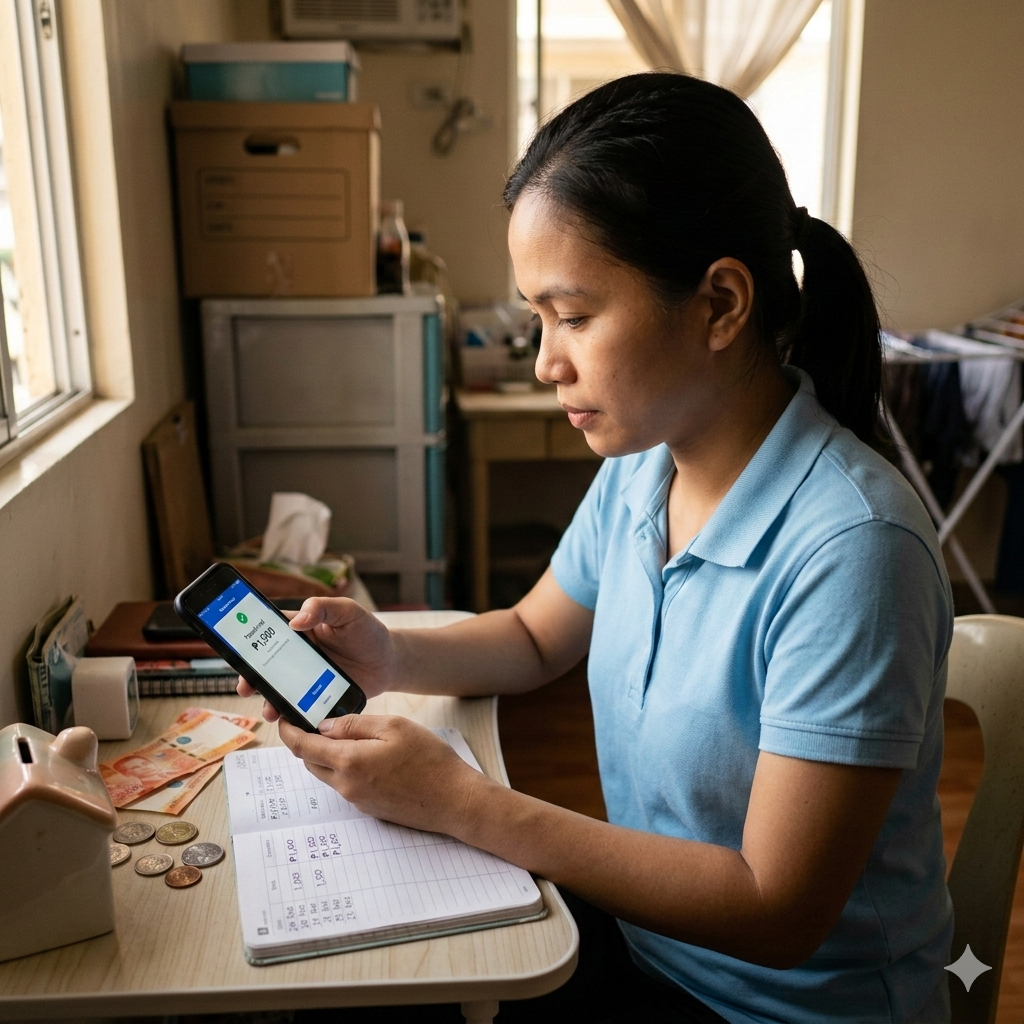
If you're saving that ₱40,000 while paying ₱10,000 in rent, sending ₱8,000 home to your parents, commuting ₱4,000 a month, and handling your own food and bills — then that ₱40,000 represents real sacrifice. It represents months or years of setting aside whatever you could, even when it wasn't much.
That's not failure. That's prioritization under pressure.
Here's a stat that might make you feel better: among Filipino households who save, the most common savings rate is just 5-9% of income. If you're earning ₱35,000 and saving ₱2,000 a month, you're actually in line with what most savers manage to do. You're not behind. You're normal.
And "normal" in a country where three out of four households can't save at all? That's already something.
👉 Small Savings Are Not Pointless (Despite What Social Media Says)
One thing that causes unnecessary anxiety is confusing different types of savings. Let's clear this up.
Emergency fund is money set aside specifically for unexpected disruptions — job loss, medical emergencies, urgent repairs. This should be liquid, meaning easily accessible, like in a savings account. The standard recommendation in the Philippines is three to six months of living expenses. This is your priority, your first savings goal.
Long-term savings is money you're setting aside for the future — retirement, a house down payment, your kids' education. This is often invested in stocks, mutual funds, or other instruments that grow over time. You build this after you have your emergency fund in place.
Sinking funds are savings for predictable but non-monthly expenses — annual insurance premiums, tuition payments, holiday spending, a planned vacation. These aren't emergencies; they're expected costs that you save up for in advance.
When you lump all of these together, it's easy to feel like you're not saving "enough." But if you have ₱50,000 in your emergency fund and ₱30,000 allocated for your annual insurance, that's ₱80,000 working for different purposes. That's not one "low" savings number — that's two funds doing their jobs.
Clarity on what your savings are for reduces a lot of unnecessary stress.
👉 Emergency Fund First or Investing First? (A Filipino Reality Check)
If fixed numbers don't work, what should you measure instead?
Try asking yourself these questions:
These questions focus on trend over total. They measure your trajectory, not just your position. And trajectory is what actually predicts long-term financial health.
Savings benchmarks are tools. They're meant to give you a sense of direction, a rough target to aim for. They're not verdicts on your worth as a person.
In a country where only about one in four households can save at all, any consistent progress — even a few percent of your income, even ₱1,000 a month — is already a quiet win. You're doing something that most people, despite their best intentions, cannot do given their circumstances.
So the next time you see a post about someone's ₱1M savings at 28, you don't need to feel bad. You don't need to compare. You just need to ask yourself: am I moving forward, even slowly, even imperfectly?
If the answer is yes, then you're doing fine. Keep going.