Savings Account vs Time Deposit: What's Better for Filipinos?
Compare savings accounts and time deposits — liquidity, rates, and when each fits your goals.
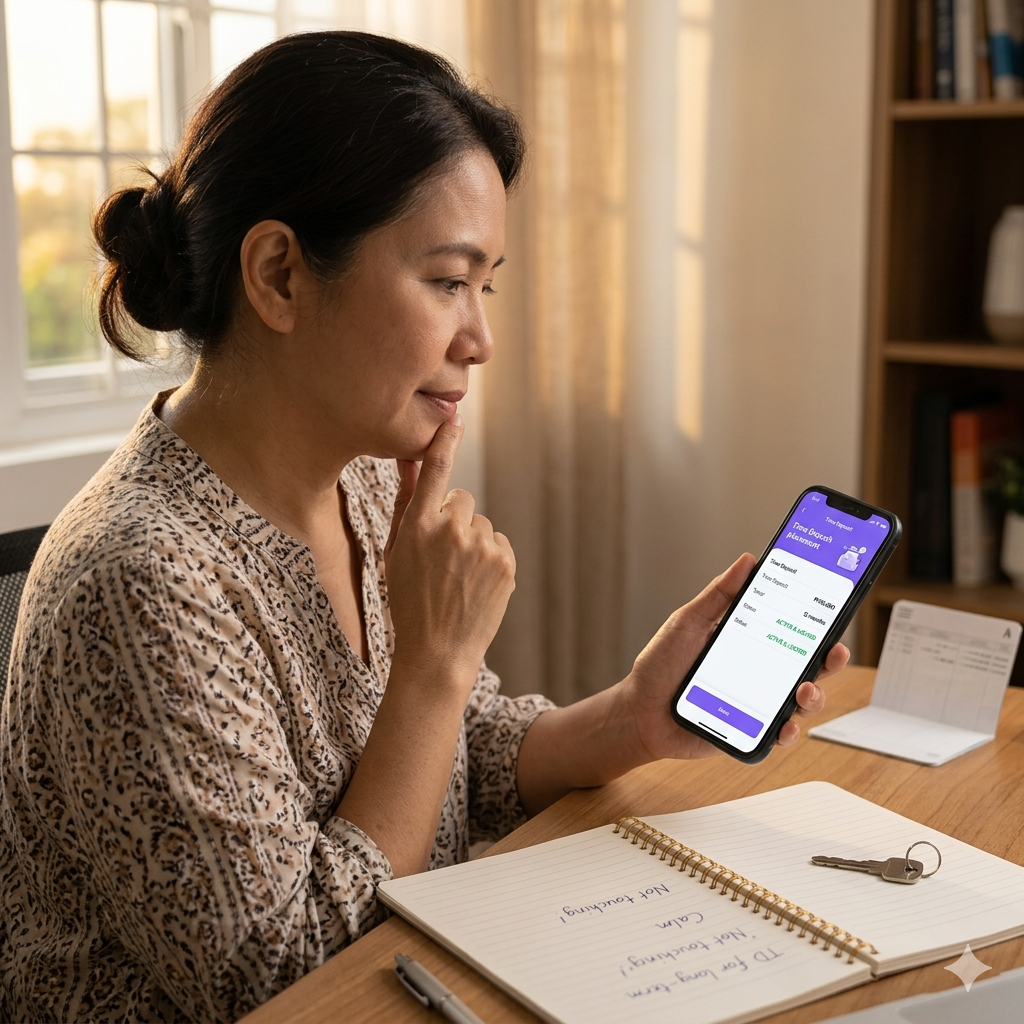
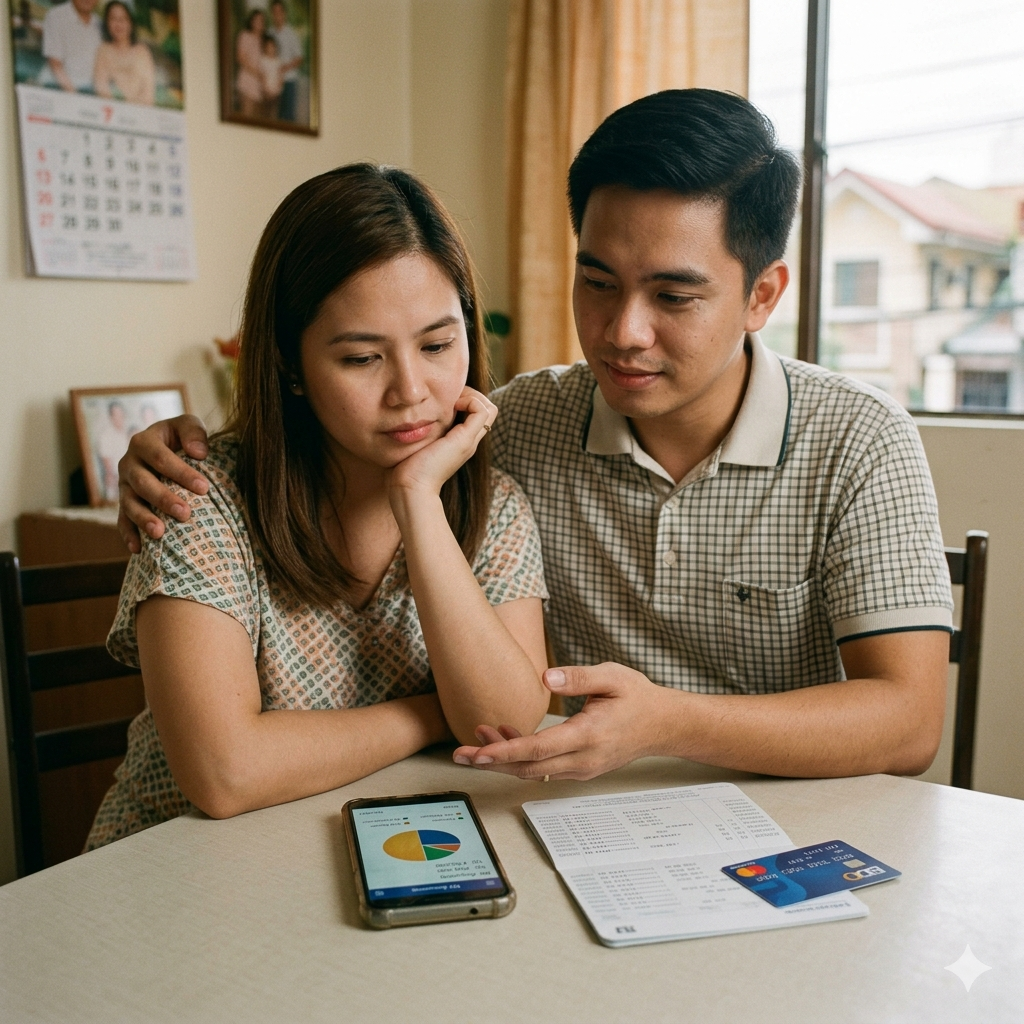
Rina keeps her savings in a digital bank.
She checks it constantly. Sometimes three, four times a day. She tells herself it's just to "stay informed." But every time she opens the app, her brain starts calculating. Kaya ko pa bang mag-ipon ng mas malaki? Should I move this? What if I need it next month?
By Friday, she's exhausted. Not from work. From thinking.
A friend eventually convinced her to open a time deposit for her excess savings. She was reluctant. It felt restrictive. But a few weeks in, something strange happened.
She felt calmer.
This isn't unusual. A lot of Filipinos quietly admit the same thing: locking money away actually makes them less anxious, not more. It sounds backwards. But there's a real reason it works.
This article explains why restricted access can reduce anxiety, when it helps, and when it backfires.
👉 Savings Account vs Time Deposit: What's Better for Filipinos?
Most people assume financial anxiety is about not having enough.
Sometimes it is. But often, the stress comes from having constant access to money you're not supposed to touch.
Here's what makes it worse today: digital banks have made it incredibly easy to move, spend, or withdraw money in seconds. One tap and it's gone. That frictionless access is convenient. But for someone who's already prone to second-guessing themselves, it's a problem.
Formal saving in the Philippines is slowly rising. By 2024, roughly 24% of Filipino adults were using formal accounts to save regularly. But for those who do save, digital banks now make it easier than ever to leak that money without even realizing it.
Every time your balance is visible, your brain treats it as a decision that needs to be made. Should I spend this? Move it? Top it up?
That loop doesn't stop on its own. Constant access creates endless decision-making, temptation, and mental noise. Restrictions reduce the number of decisions. And fewer decisions means less stress.
It's a familiar promise. Hindi ko gagalawin. I'll leave it alone.
And for a while, you do. But discipline is a muscle that tires. A bad week at work, an unexpected expense, a relative who needs help — suddenly that promise is harder to keep.
Systems that rely on "I won't touch it" or "I'll be disciplined" often collapse under pressure. Not because you're irresponsible. But because willpower was never designed to carry that weight alone.
External restrictions don't mean you're weak. They mean you're building a system that works even when you're not at your best.
Time deposits get marketed as a way to earn better interest. And yes, the rates are higher than a regular savings account. Traditional bank TDs now commonly sit around 4 to 4.5% per year for 6 to 12-month placements. Digital time deposits, like those from Tonik, can go up to around 6% for shorter terms. Some goal-based promos in apps like Maya go even higher, though those rates are usually temporary and come with conditions.
But chasing those numbers isn't the point.
What a time deposit actually does is remove temptation, reduce second-guessing, and create a mental boundary around money you're not supposed to touch. Once it's locked, the decision is made. You can stop thinking about it.
You might earn 1 to 2 percentage points more than a high-yield savings account. But the bigger benefit for anxious savers is psychological: that money doesn't appear in your main balance, and you know there's a real cost to breaking it early.
They aren't about maximizing interest. They're about removing friction.
👉 When a Time Deposit Makes Sense (And When It Doesn't)
These two strategies get confused a lot. They're related, but they work differently.
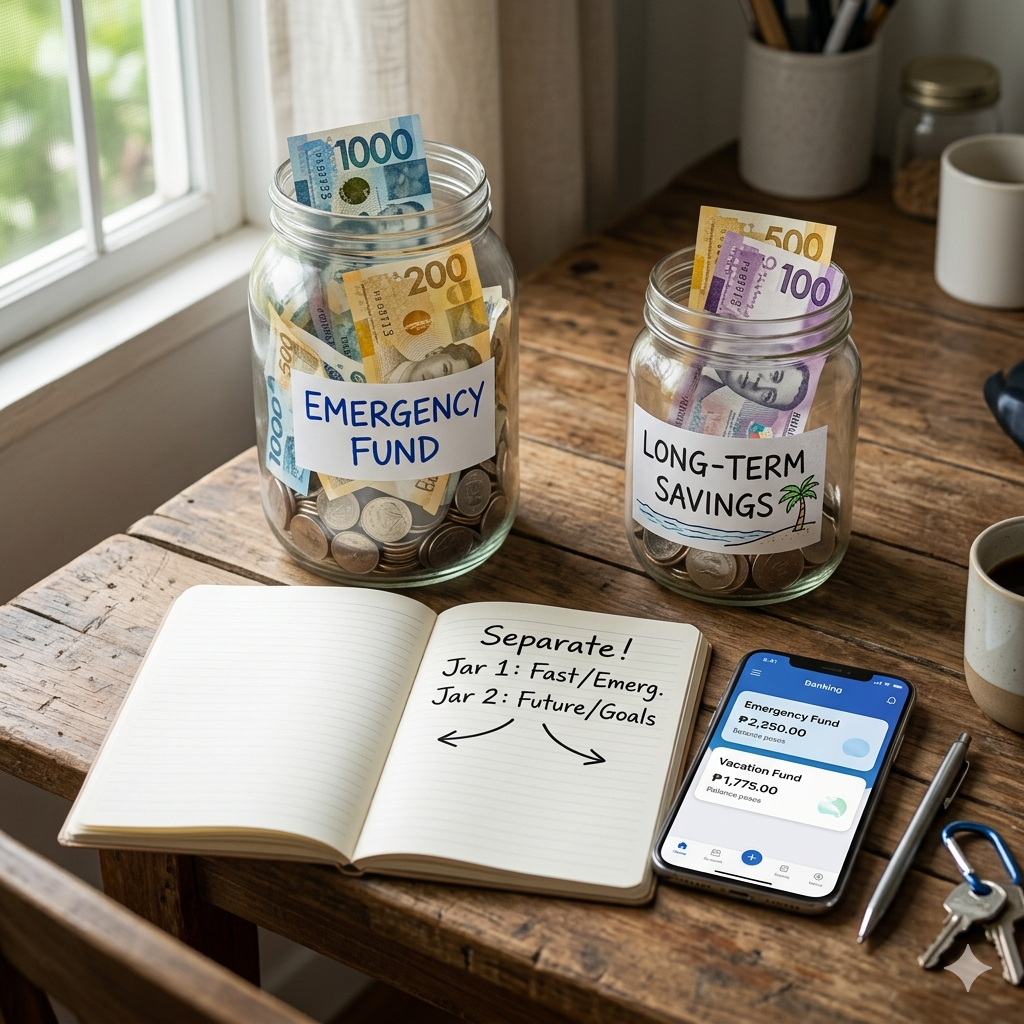
Separation means putting money into a different account with a clear purpose. Think of keeping your everyday gastos in your payroll bank or e-wallet, while your savings sit in a separate app like MariBank or GoTyme. You can still access it anytime, but the extra step creates a psychological buffer. Separation clarifies purpose.
Locking goes further. It removes access entirely, usually through a fixed-term time deposit at a traditional bank or a digital bank. You can't touch it even if you want to, not without penalties. Locking removes access.
Both can reduce anxiety. Just in different ways. Separation helps if you're organized but easily tempted. Locking helps if separation alone isn't enough.
👉 Should You Separate Emergency Fund and Long-Term Savings?
Not everyone benefits from locking. But for certain patterns, it's exactly the right tool.
Marco spent impulsively whenever money was visible. He'd tell himself he was just treating himself, but he'd clean out his savings by the end of the month. Worse, the digital bank app he used made it so easy to transfer out that he never felt the friction. Once he moved his excess savings into a time deposit, the impulse had nowhere to go.
Locking helps if you overspend impulsively, especially in a world where QR payments and online shopping make spending invisible until it's already done. It helps if you constantly second-guess your savings decisions, tinkering with balances instead of letting them sit. It helps if seeing a large, "touchable" balance actually stresses you out more than it reassures you.
For these people, access is the stressor.
There's a real downside, and it matters.
Only about a quarter of Filipino adults consistently save in formal accounts. That means a lot of people are working with thin buffers. Locking those few pesos prematurely doesn't reduce anxiety. It creates a new kind.
If an emergency comes up and your only savings are inside a time deposit, you're forced into worse options. Breaking the TD early and losing interest. Borrowing. Asking relatives. The anxiety locking was supposed to reduce comes back, but harder.
This is especially risky for freelancers, seasonal workers, or families relying on OFW remittances. When income is unpredictable, flexibility isn't a luxury. It's a necessity.
A 3.75% flexible savings account that lets you sleep well may genuinely be better than a 6% time deposit that leaves you worrying every time an unexpected bill appears.
Locking backfires if you lack an emergency fund, if your income is unstable, or if you'd genuinely panic needing that money before the term ends.
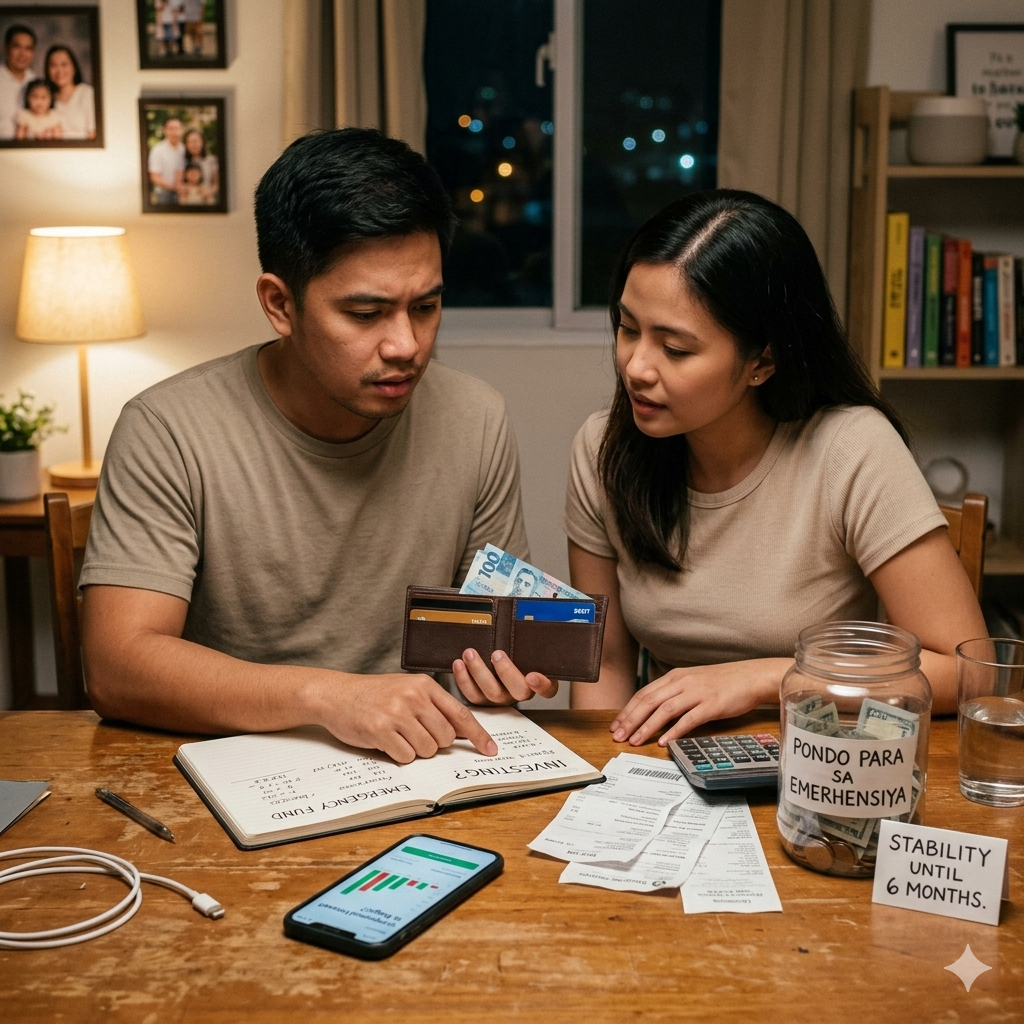
👉 Emergency Fund First or Investing First? (A Filipino Reality Check)
A simple way to think about it:
Never lock your emergency fund. If your monthly expenses are around ₱30,000, that means keeping at least ₱90,000 to ₱180,000 in flexible, easy-access savings before you lock anything. That money needs to be reachable in 24 to 48 hours, no penalties, no waiting. The moment it becomes inaccessible, it stops being an emergency fund.
Never lock money you know you'll need soon either. Enrollment, rent, a family commitment you've already agreed to.
What you can lock is the surplus. Money that's been sitting idle with no job in the next six to twelve months. Parking that in a TD or a goal-based product removes the temptation to tinker with it and adds structure to a balance that might otherwise just disappear over time.
Think of restrictions as guardrails. Training wheels. Temporary support.
They're not a permanent way of managing money. They're tools you use while building better habits, or while you're in a season of life where external structure helps more than internal discipline.
A lot of people start with a time deposit precisely because they can't trust themselves to leave money alone. After a year or two, something shifts. The habit starts to stick. Some eventually move back to regular accounts and do just fine.
The restriction was never permanent. It was practice. And you can always remove it later.
Before you decide, sit with this honestly.
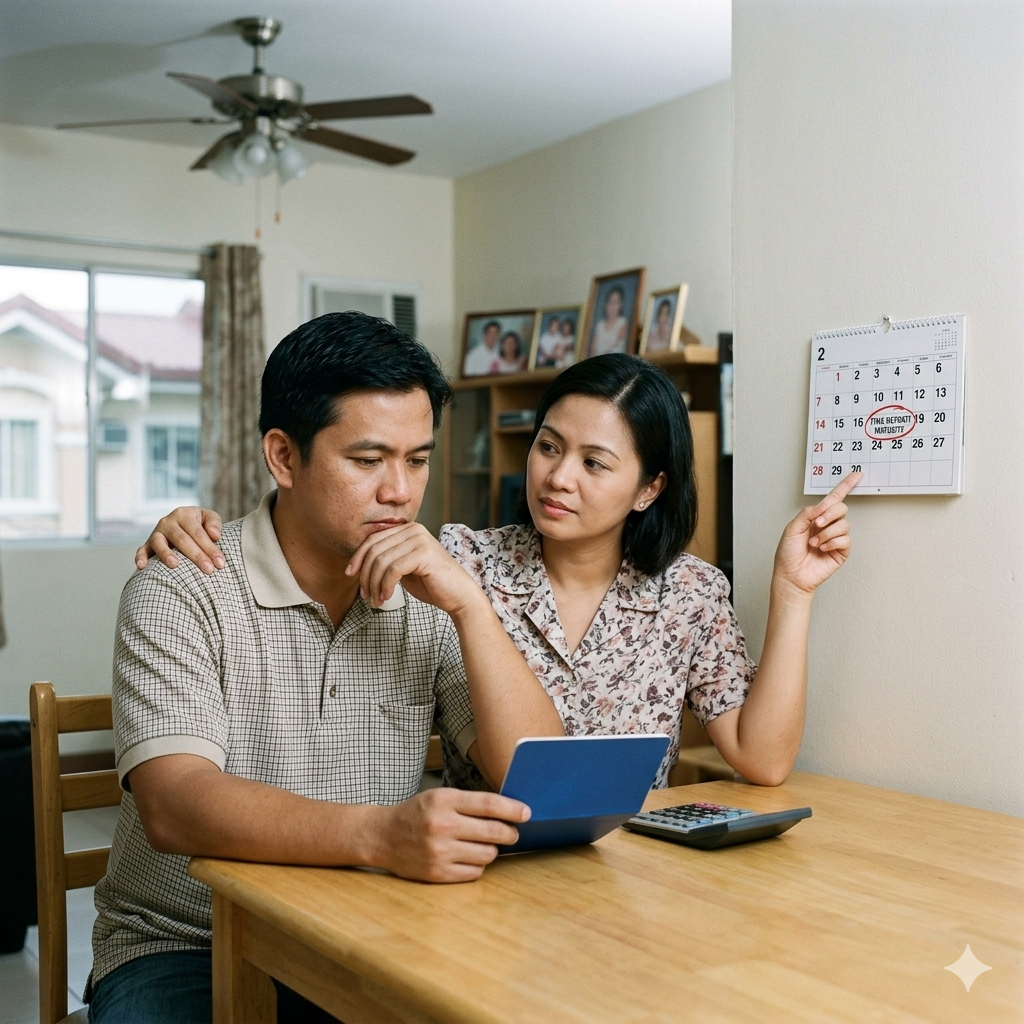
If an unexpected hospital bill came tomorrow, how would you feel about your current savings setup? For someone who's been caught short before, having too much locked away feels like a trap, no matter the interest rate. For someone who grew up watching money disappear the moment it became visible, a locked TD finally feels like a safe corner.
Ask yourself: do you feel calmer or trapped when money is restricted? Does it reduce your overthinking, or create a different kind of worry? Would you panic if you needed access and couldn't get it quickly?
Your answers matter more than interest rates. In a world where digital banks are advertising 8 to 15% promos and everyone's chasing the highest TD rate, it's easy to forget: the real win is a system you can actually stick to.
What feels restrictive to one person feels safe to another.
Some people thrive with full visibility and open access. Others spiral the moment they can see money sitting there. Neither is wrong.
Choose systems that reduce your anxiety. Not the ones that look most financially responsible from the outside. Not what your friend does, or what the highest promo rate says you should do.
If locking money gives you peace of mind, that peace is real. It counts.
Build around how you actually are. Hindi yung kung sino dapat ikaw.