Paying the Minimum vs Paying in Full
Understand the real cost of minimum payments and why paying in full matters.
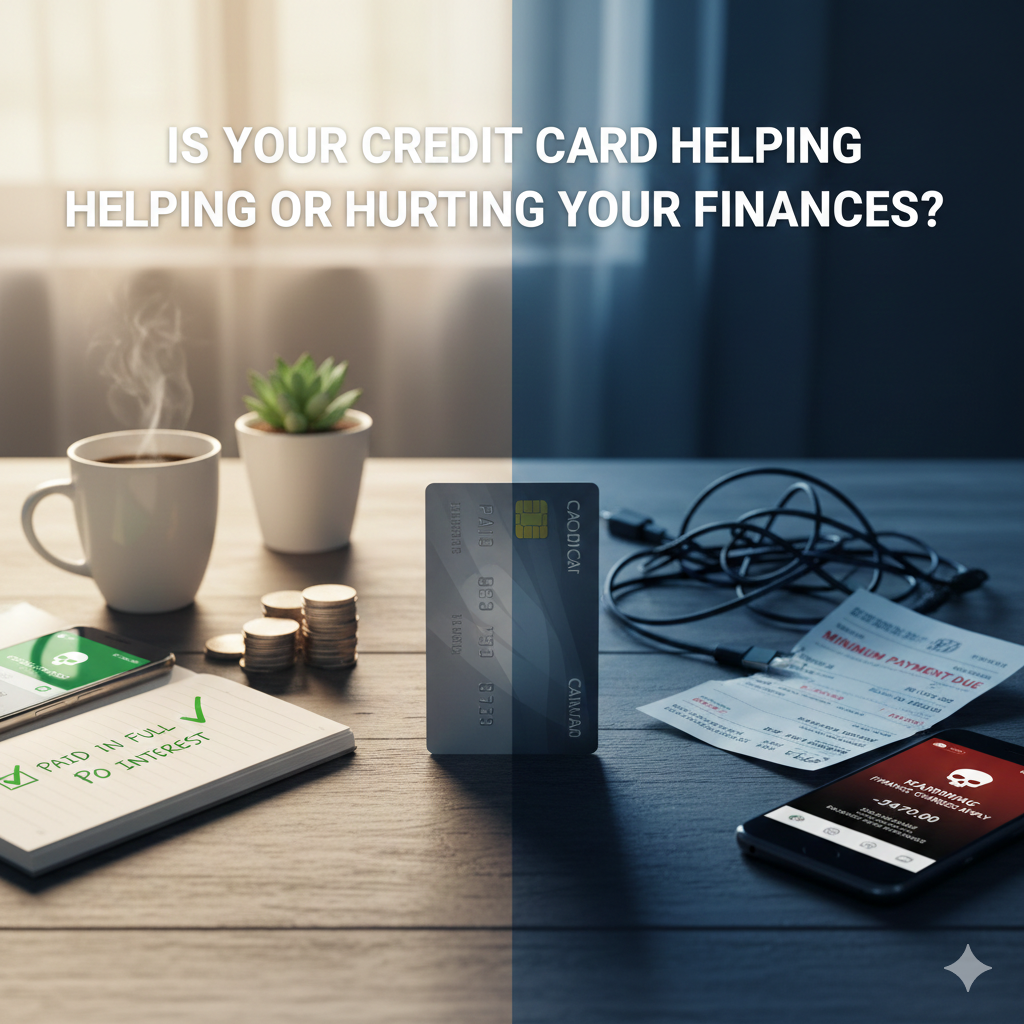
There's this question that keeps coming up on r/PHCreditCards:
"Is my credit card actually helping me, or am I just digging a hole?"
It's a good question. An honest question. And one that deserves a real answer.
Here's what most people don't realize: credit cards don't ruin finances overnight. They reveal habits.
Kung may decent system ka na for managing money, a credit card makes that system more convenient. You get cashback, you smooth out cash flow, you track expenses easily.
But if your system is shaky or walang sistema, a credit card amplifies the mess. Balances grow. Interest compounds. Stress builds quietly in the background until you're asking yourself paano naging ganito.
This article helps you figure out where you actually stand. Is your card supporting your goals, quietly creating stress, or just sitting there doing nothing useful at all?
Before we get into the signs, here's some context worth knowing.
A 2025 report flagged Philippine credit card debt as at "critical risk" levels. The typical borrower owes around ₱92,800, which is over four times the average monthly income. That's not sustainable.
At the same time, non-performing credit card loans in the Philippines jumped by over 50% year-on-year by mid-2024. Translation: mas maraming Filipinos ang struggling to pay on time.
This isn't happening because credit cards are evil. It's happening kasi a lot of people are using them without a system.
The good news? BSP (Bangko Sentral ng Pilipinas) has rolled out newer credit card rules, like caps on certain fees, clearer disclosures, and 60-day notice on changes. These protections help, pero they only work if you're using your card wisely to begin with.
Cards amplify whatever system you already have. With a good system, BSP's protections work in your favor. With a weak system, rising interest and compounding balances work against you.
So, let's figure out which side you're on.
This is the clearest indicator na your credit card is helping you.
What it looks like:
You get your statement every month. You check it. You pay the full amount on or before the due date. The finance charges on your bill are consistently zero.
You're not scrambling. You're not worried. You're not checking kung kaya mo. You just pay it, the same way you'd pay rent or your electric bill.
Why this matters:
Philippine banks explicitly say that paying your credit card bill in full on or before the due date means you avoid finance charges altogether. Zero interest. Zero stress.
Metrobank, for example, explains that if you only pay the Minimum Amount Due (MAD), you'll incur finance charges and it'll take way longer to repay. Kung less than MAD pa yung binayad mo, you get hit with both finance charges and late fees.
Paying only the minimum, which is typically around 3% to 5% of your balance depending on the issuer, keeps you in a cycle where interest prevents your balance from meaningfully going down.
The contrast:
If you're often paying only the minimum, and your balance barely shrinks or even grows month after month, your card is hurting you. It's costing you money in interest, and it's creating stress every billing cycle.
Bottom line:
Healthy credit card usage feels boring.
Walang surprises. No scrambling to figure out paano mo kocover yung bill. No "paano naging ganito kalaki?" moments when the statement arrives.
What predictable looks like:
Why predictability matters:
BSP's rules on transparent fees and interest caps are designed to make card costs predictable so consumers can plan, hindi yung hula-hula lang. Financial education materials from Philippine issuers emphasize using cards for planned expenses within your budget, paying on time, and staying within your limit to avoid over-the-limit fees and collection stress.
When your card spending is predictable, it means you're in control. The card is a tool you're using intentionally, hindi siya yung gumagamit sa'yo.
The contrast:
If your statement jumps around randomly, kung madalas kang surprised by fees you didn't notice, or kung regular na kailangan mong mag-adjust ng budget just to cover your card, that's chaos. And chaos is expensive.
Bottom line:
This is subtle, pero super important.
Rewards, cashback, points, miles — these are nice bonuses when you're already spending responsibly. But they become a problem when they start influencing your decisions.
What healthy looks like:
Why this matters:
Local issuers and financial platforms remind Filipinos that cashback and rewards are only a benefit kung bibili ka naman talaga and paid in full. Otherwise, interest and fees wipe out the perks.
And because Philippine credit card interest rates rose after the cap was lifted in 2023, card borrowing got more expensive. "Spending for the points" is even more dangerous now kung di mo naman naka-clear yung balance.
The contrast:
If promos, points, or miles regularly push you to buy more than you planned, or if you justify purchases by saying "at least may cashback," your card is hurting you. You're spending more to earn less, and that's backwards.
Bottom line:
Ask yourself right now, without opening your banking app:
Can you answer those questions with reasonable accuracy?
If yes: You're paying attention. You're tracking. You're in control.
If no: Your card usage is probably on autopilot, and autopilot is dangerous when money is involved.
Why this matters:
BSP requires banks to clearly disclose interest rates, fees, and key terms, and to give notice before changing them, precisely so consumers can plan and monitor their obligations.
Philippine guides on responsible card use emphasize tracking your usual monthly spend, your credit limit, and your due date as basic habits for staying out of trouble.
Knowing your numbers doesn't mean obsessing over every centavo. It just means you have a general awareness of what's happening with your card.
The contrast:
If you only find out what you owe when reminders or collection calls arrive, you're reacting instead of managing. That's a sign na yung card mo yung nag-run sa'yo, not the other way around.
Bottom line:
Let's be direct. Here are the red flags na your card is doing more harm than good:
These don't mean you're a failure. They mean your current system isn't working, and adjustment is needed.
With average credit card debt in the Philippines at over 4× monthly income and card non-performing loans climbing, a lot of Filipinos are already in this zone. You're not alone.
But staying here is expensive. BSP-mandated ceilings still allow relatively high card rates compared to other loans, so revolving credit card debt is usually among the most expensive kinds of personal debt you can carry.
Kung your card is hurting you more than helping, here's how to reset.
Step 1: Pause new discretionary spending on the card.
Stop adding to the balance while you figure this out. Use cash or debit for non-essentials hanggang ma-clear mo yung utang mo.
Step 2: Pay down your existing balances.
Aim to pay more than the minimum. Local sources suggest targeting at least a third of the remaining balance kung di mo pa kaya i-clear in full. The goal is to slow down compounding and actually make progress.
If you're carrying balances on multiple cards, focus on the one with the highest interest rate first while paying minimums on the others.
Step 3: Simplify your usage.
You don't need multiple cards kung di mo naman kaya i-manage ng maayos yung isa. Stick to one primary card. Use it for specific, predictable expenses. Pay it in full.
Step 4: Rebuild habits.
Once you've paid down your balance, rebuild a simple system:
Often, less usage leads to more control. You don't have to use your card for everything just because meron ka.
Here's a quick scorecard. Answer honestly.
1. Do you pay your full statement balance every month?
Yes = Helping | No = Hurting
2. Is your monthly card spending predictable and within your budget?
Yes = Helping | No = Hurting
3. Do rewards or promos influence you to spend more than planned?
No = Helping | Yes = Hurting
4. Can you state your current balance, usual spend, and due date without checking?
Yes = Helping | No = Hurting
5. Do you feel stressed or anxious when your statement arrives?
No = Helping | Yes = Hurting
If most of your answers point to "Helping": Your card is doing its job. Keep doing what you're doing.
If most of your answers point to "Hurting": Your card is costing you more than it's giving you. Time to reset.
If it's a mix: You're in the middle. Small adjustments can tip things in the right direction.
Good habits → convenience, rewards, and peace of mind.
Bad habits → stress, debt, and compounding interest.
The card itself is neutral. It's a tool. What matters is the system you're using it with.
Kung solid yung system mo — you budget, you track, you pay in full, you stay conscious — a credit card makes your life easier.
Kung weak or walang sistema, a credit card will expose that weakness and make it worse.
The card isn't the problem. It's the amplifier.
So if your card is hurting you right now, the solution isn't just to cut it up and swear off credit forever. The solution is to build a better system.
Start small. Track what you spend. Pay in full when you can. Review your statement every month. Turn on alerts. Know your numbers.
Over time, these habits compound just like interest does. Except they compound in your favor.