Credit Card Travel Rewards in the Philippines
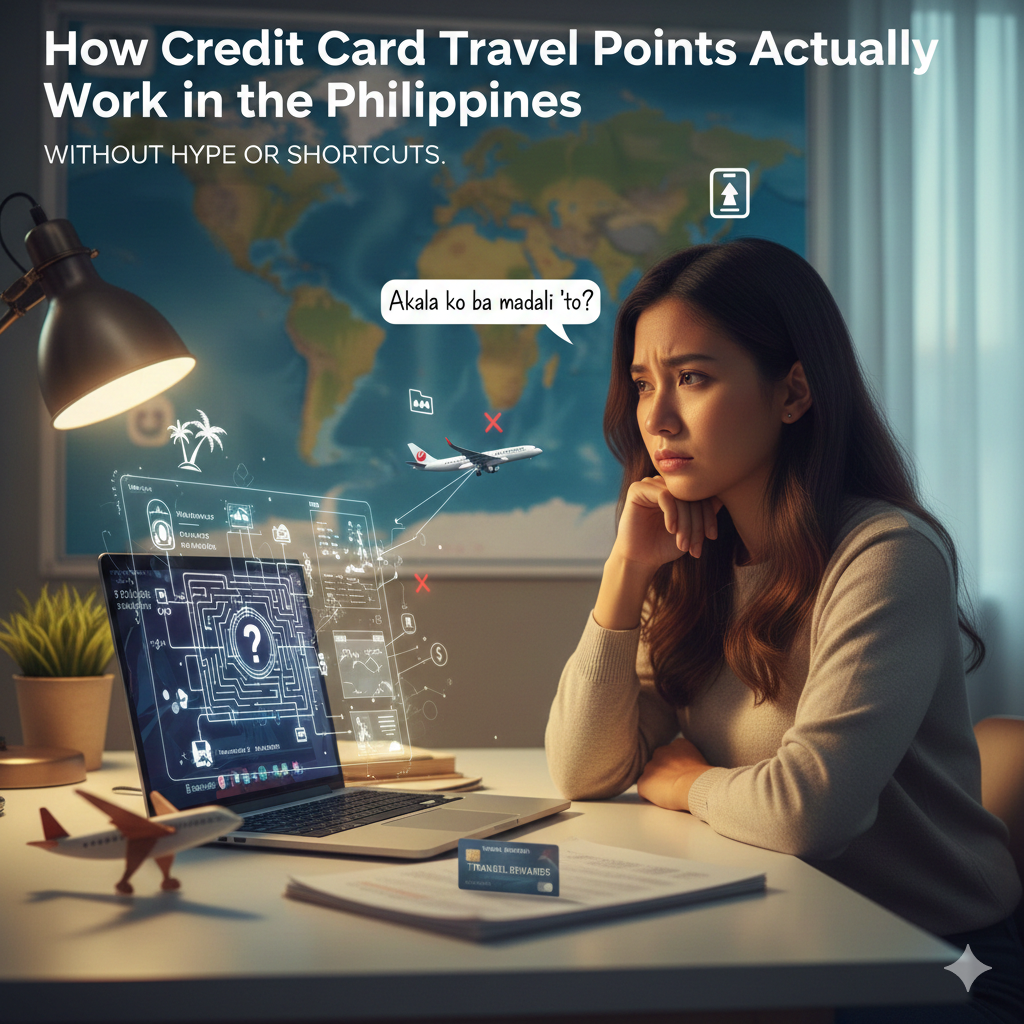
New to travel rewards? This beginner-friendly guide explains how credit card travel points actually work in the Philippines.
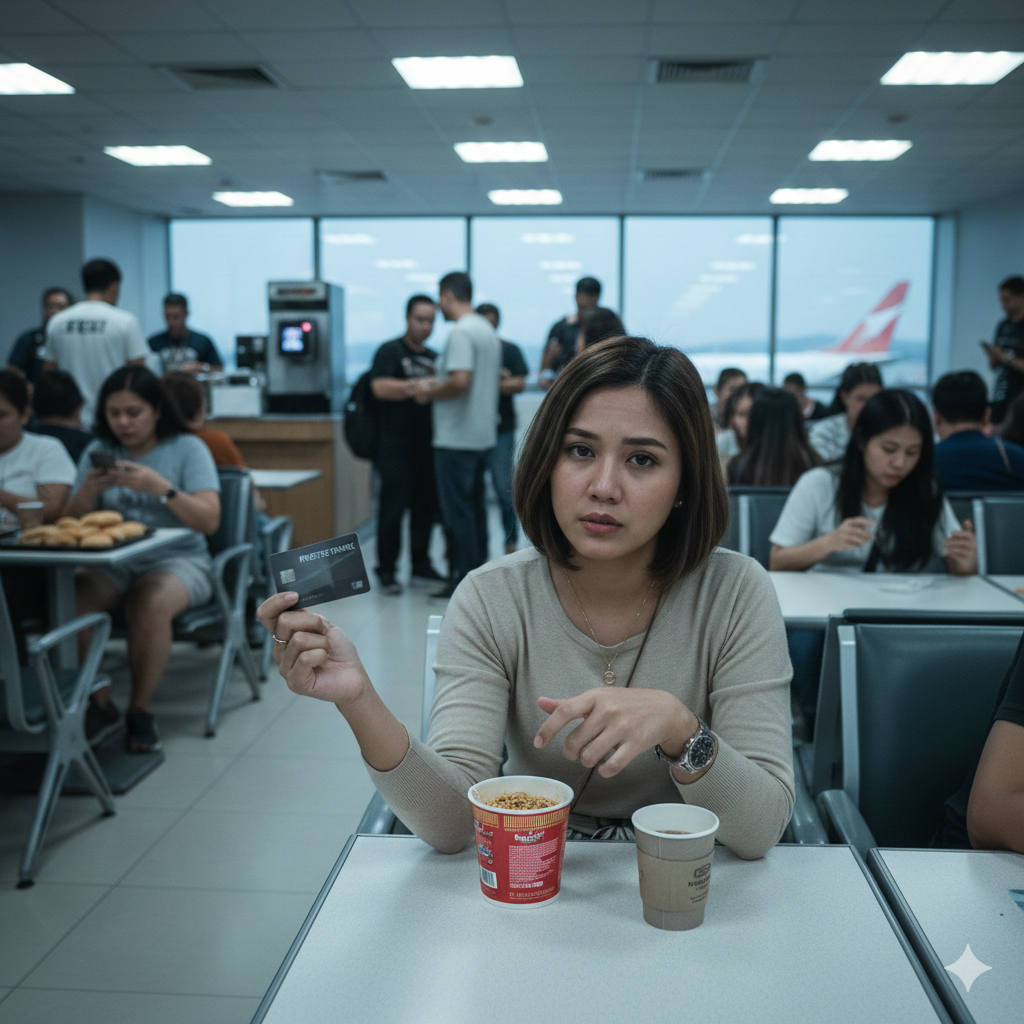
Jasmine had been looking forward to this moment for months.
She was flying to Singapore for a long weekend. First time using her new card. First time accessing a lounge. She walked up to the lounge entrance at NAIA Terminal 3 feeling kind of fancy.
Then she got inside.
There were twelve tables and maybe forty people. Every seat is taken. A buffet table with cup noodles, some bread rolls, and a coffee machine with a queue. The aircon was working, at least. She stood by the wall for twenty minutes before someone left, and she could sit down.
Thirty minutes later, her boarding call came.
"Okay lang naman," she told herself on the way to the gate. But the experience wasn't quite what the card brochure had suggested.
This is one of the most common quiet disappointments in the PH travel card world. Lounge access is one of the most heavily marketed perks on premium credit cards. It sounds genuinely luxurious. And sometimes it is. But a lot of the time, especially at NAIA and during peak travel, the reality is a lot more ordinary than the marketing suggests.
So the real question is: is it actually worth paying for?
👉 Credit Card Travel Rewards in the Philippines
Before getting into whether it's worth it, it helps to understand why lounge access is marketed so aggressively in the first place.
It's visual. Easy to imagine. "You'll be relaxing in a private lounge while other passengers wait at the gate." That image lands. It signals status without requiring the reader to do any math.
Unlike miles — where value depends on redemption strategy, availability, and timing — lounge access feels immediately understandable. You walk in, you sit down, you eat free food. Simple.
But that simplicity is also part of why people overvalue it. Because unlike miles, lounge access almost never saves you actual money. It offers comfort. Sometimes convenience. Occasionally, a genuinely relaxing experience before a long flight.
But it is not a financial benefit. It's an amenity. And that distinction matters when you're trying to figure out if a card is worth the annual fee.
Most lounge access perks with Philippine credit cards are offered through programmes like Priority Pass, DragonPass, LoungeKey, or local networks that cover PAGSS, Marhaba, and A Lounge at NAIA.
What you typically get: snacks or a light buffet, coffee and soft drinks, Wi-Fi, and a place to sit that isn't the terminal floor.
What you don't always get: privacy, quality food, guaranteed entry, or anything that feels distinctly premium once the place fills up.
During off-peak hours on a quiet Tuesday, the lounge genuinely is nicer than the departure hall. Quieter, more comfortable, less chaotic. That's real.
During peak season — Holy Week, Christmas, long weekends — it's a different story. Reviews of NAIA lounges describe crowded rooms, worn-out seating, guests being turned away at the door, and queues that eat into the time you actually wanted to spend relaxing. Some travelers report that their "reservation" ran out just minutes before boarding.
One important update worth noting: the PAGSS Premium Lounge in NAIA Terminal 3 has stopped accepting most free-access credit card perks, limiting entry to business-class passengers and paid walk-ins. So even if your card technically includes PAGSS access, you might not be able to use it.
This is the question that most card marketing hopes you won't ask too carefully.
A lot of people who hold lounge-linked cards fly once or twice a year. Maybe a vacation trip, maybe a quick business trip. They arrive at the airport with just enough time to check in and get to the gate. The lounge never even enters the picture.
Threads on r/PHCreditCards and r/FinancialLiteracyPH are full of people asking some version of: "Is this card sulit just for the lounge?" And the honest answer, most of the time, is no — not for someone flying two times a year.
The math only starts to work for people who travel frequently, arrive early by habit, and actually use the lounge each time. For everyone else, the lounge access is a benefit they're paying for without really using.
Lounge access is never truly free. It's bundled into the annual fee and sometimes into spending requirements that must be met before the benefit activates.
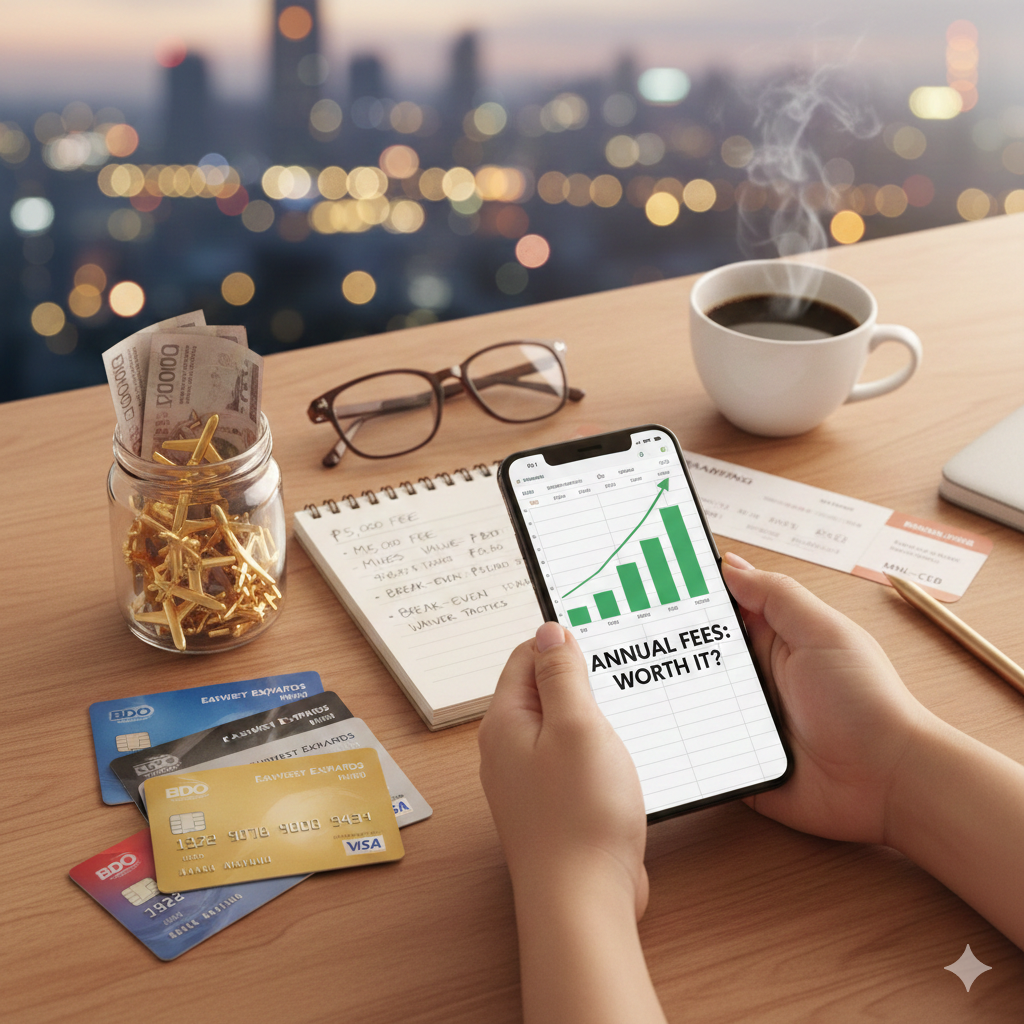
Premium cards in the Philippines that market lounge access tend to have annual fees in the ₱4,000 to ₱5,000 range — BPI Platinum at around ₱4,000, RCBC Visa Platinum and Eastwest KrisFlyer World Mastercard around ₱5,000, with some waived only in year one.
Some cards also have income requirements. Security Bank Platinum, for example, requires a ₱780,000 annual income. So the lounge benefit is already skewing toward a specific kind of traveler before you even get to the usage question.
And then there's the fine print. Some cards give you free Priority Pass membership but charge per visit to your credit card. BDO has had this setup — "complimentary membership," but visits are billed individually. That's not the same as free access. It just sounds like it.
A simple way to check your card's real lounge value: divide the annual fee by the number of times you'll realistically use the lounge this year. If you fly twice a year and use the lounge both times, you're paying ₱2,000 to ₱2,500 per visit in card fees alone — before counting anything else.
Would you pay ₱2,500 cash to sit in that lounge for thirty minutes? Probably not.
👉 Annual Fees on Travel Cards: When Are They Actually Worth Paying?
Here's the comparison that rarely makes it into card marketing materials.
A meal at Jollibee or Army Navy at NAIA costs ₱300 to ₱600. You get to choose what you eat. There's no queue to get in. You're probably close to your gate. And you're not spending mental energy wondering if the lounge will be full when you arrive.
Some lounges are also genuinely far from departure gates, which means you need to leave earlier than you otherwise would — adding a layer of planning to something that was supposed to reduce stress.
For a casual traveler who just wants to eat before a flight and not think too hard about it, paying for airport food and waiting at the gate is often simpler, cheaper, and honestly just as comfortable.
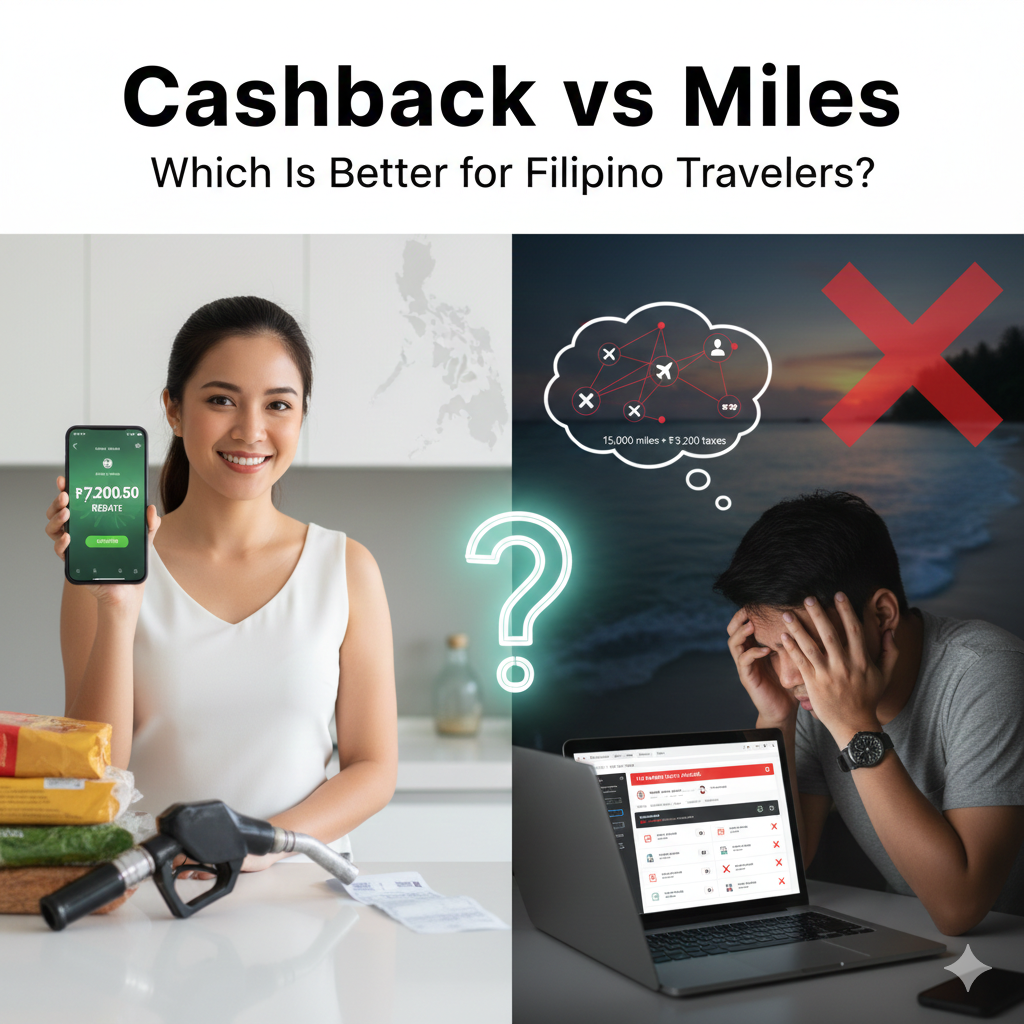
This is one of the quieter ways that cashback cards win against travel cards for a lot of people. The cashback just goes back into your account. No strategy required. No lounge queue. No disappointment.
👉 Cashback vs Miles: Which Is Better for Filipino Travelers?
All that said, lounge access genuinely does add value in the right circumstances.
If you travel frequently — say, four or more times a year — and you're often flying out of NAIA or international hubs, the calculus changes. Especially if you have long layovers, arrive early by habit, or travel for work and genuinely need a quiet place to catch up on things before boarding.
For OFWs with long transit waits, the difference between a crowded terminal and a quieter lounge is meaningful — not just comfortable, but actually useful. Same for frequent regional business travelers who spend a lot of time in airports and know which lounges are good on which days.
Cards like Security Bank Platinum, RCBC Visa Platinum, and EastWest KrisFlyer World Mastercard are highlighted as better options for this profile — especially when you combine lounge access with the other travel perks (travel insurance, miles earning, global coverage) that come with them. In that context, the annual fee starts to make more sense because you're getting value from multiple parts of the card, not just the lounge.
But if the lounge is the main reason you're considering a premium card, that's a fragile foundation.
This part doesn't always get said out loud, but it should.
A lot of people in PH finance forums admit that they keep their lounge-linked cards partly because of how it feels to have them. "I have a card with Priority Pass." There's a social signal there. It communicates something about you — even if the lounge experience itself is a crowded room with cup noodles.
That feeling isn't inherently wrong. Feeling good about your card is fine. But it becomes a problem when the prestige effect is quietly driving a financial decision that doesn't actually serve you.
If you're paying ₱5,000 a year for a card primarily because it makes you feel premium — and the concrete value you're getting back doesn't match that fee — a lower-fee cashback card would leave you genuinely better off, even if it doesn't feel as impressive.
Feeling premium and being financially better off are two different things. Sometimes they overlap. Sometimes they don't.
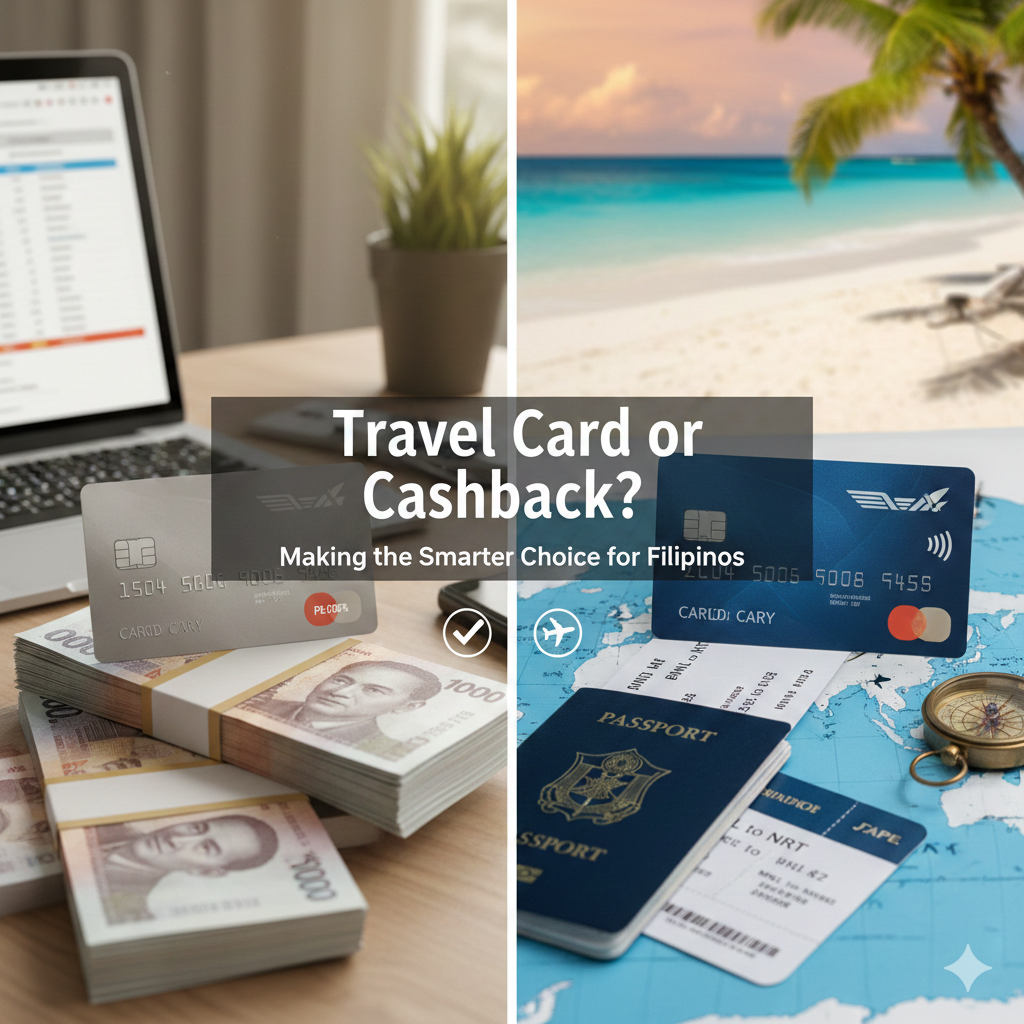
👉 Should You Upgrade to a Travel Card — or Stick With Cashback?
Before deciding if a lounge-linked card makes sense, run through these honestly:
If you're forcing usage — visiting the lounge not because you want to but because you feel like you have to justify the card — the perk isn't serving you. You're serving it.
Lounge access can genuinely improve a travel experience. On the right day, at the right airport, with the right timing, it's a real comfort. That's worth acknowledging.
But it shouldn't be the primary reason you choose a card. And it definitely shouldn't be the justification that makes a high annual fee feel acceptable when the rest of the card's value doesn't add up for your lifestyle.
Jasmine still uses her BPI Platinum. She flies more frequently now, and she's found a couple of quieter lounge windows that work for her travel schedule. The experience has gotten better — mostly because her expectations adjusted.
"It's nice when it works," she says. "I just don't go expecting a five-star hotel anymore."
That's probably the healthiest way to think about it.