Best Credit Cards for Beginners in the Philippines (2026)
Looking for your first credit card? Here are the best beginner credit cards in the Philippines for 2026, plus how to choose the right one safely.

Jen just got her credit card statement. She used her card to pay Meralco, PLDT, and Globe bills last month thinking she'd rack up rewards.
Total bills paid: ₱8,500
Convenience fees charged: ₱340
Rewards earned: ₱170
She lost ₱170 trying to earn rewards.
Her officemate Carlo uses his card for bills too, but pays zero fees and gets ₱200 back monthly.
They had same bills, but different results.
This is what most Filipinos don't understand about paying bills with credit cards: it's not automatically smart. Sometimes it costs you money. Sometimes it saves you money. The difference is knowing which fees to avoid and which cards actually work for bills.
Yes, but not all bills and not through all channels.
Many Philippine banks and platforms let you pay utilities, telco, broadband, government fees, and more using credit cards. Platforms like Coins.ph, BPI online banking, Metrobank Bills2Pay, and RCBC digital channels all support bill payments funded by credit cards.
Common bill types you can usually pay:
But here's the catch: availability depends on merchant payment systems, bank partnerships, and which platform you use.
Just because your friend can pay their PLDT bill through their BPI card doesn't automatically mean you can do the same through your Metrobank card. Each bank has different biller partnerships.
New to credit cards? Start here: Credit Cards for Beginners in the Philippines
This is where most people get burned.
Many billers and payment platforms charge convenience fees when you pay with a credit card. These fees come in two types:
Meralco, for example, charges a fixed convenience fee when you pay through Meralco Online or their app using Visa or Mastercard. The fee is the same whether you're paying ₱2,000 or ₱20,000.
If your bill is small, the fixed fee eats a huge percentage of your payment.
Ana pays ₱1,800 monthly for electricity. Convenience fee: ₱50. That's almost 3% of her bill just to use a credit card.
Her card gives her 1% cashback on bills.
She's paying ₱50 to earn ₱18. Net loss: ₱32 every month.
Some billers charge a percentage of your total bill. Pag-IBIG, for instance, charges 1.75% when you pay contributions through Virtual Pag-IBIG using a credit card.
If you're paying ₱5,000, that's ₱87.50 in fees.
Your cashback card giving 2% back? You earn ₱100. After the ₱87.50 fee, your net gain is only ₱12.50.
Is ₱12.50 worth the hassle? Maybe not.
Always compare cashback or rewards earned against fees paid.
If fees exceed rewards, using a credit card makes no sense. You're literally paying extra to use your own money.
Mark learned this the hard way. He thought he was being smart by putting all his bills on his rewards card. After three months, he calculated his actual returns.
Bills paid: ₱25,500
Convenience fees: ₱890
Rewards value: ₱510
He paid ₱380 more than he got back. He was losing money trying to earn rewards.
Bill payments aren't always a bad idea. They work when three conditions are true:
Some payment channels charge zero convenience fees for credit card bill payments. Reddit threads on r/PHCreditCards are full of users sharing which platforms and billers allow fee-free card payments.
Examples that users frequently mention:
Carlos found a combination that works: he enrolled his Meralco and PLDT bills through his bank's auto-debit feature. No convenience fees. His bills auto-charge to his card monthly. He earns 2% cashback on everything.
₱8,000 in monthly bills = ₱160 cashback monthly = ₱1,920 annually.
There are zero fees paid.
This is non-negotiable.
Credit cards charge around 3% monthly interest (up to 36% annually per BSP's cap) on unpaid balances. If you're carrying balances month to month, the interest charges will obliterate any rewards you earn from bills.
Sofia uses her card for all bills but pays her credit card balance in full every single month without exception. Her system works because she treats the card like a payment method, not like borrowed money.
Her friend who pays minimum only? She's paying ₱400+ monthly in interest charges on her ₱15,000 average balance. Any bill payment "rewards" she earns are meaningless when she's hemorrhaging money in interest.
Don't understand this yet? Read: Paying the Minimum vs Paying in Full: What Really Happens
Even with low or zero fees, you need rewards that make the effort worthwhile.
If you're earning ₱50 monthly from bill payment rewards but spending 30 minutes managing transactions, tracking due dates, and reconciling statements, is that worth your time?
For some people, yes. For most beginners, probably not.
Liza uses a card that gives her 3% back on utilities. She pays around ₱6,000 monthly in bills through fee-free channels. That's ₱180 back every month or ₱2,160 annually.
For her, the juice is worth the squeeze because the setup is automatic and requires zero ongoing effort.
Not all cards treat bill payments the same way. Some give rewards on bills. Others don't.
According to Moneymax and comparison sites, cards commonly mentioned for bill payments include:
Offers up to 3% cashback on utilities, plus higher percentages on groceries (5%) and fuel (4%). Cashback is auto-credited to your statement with no manual redemption needed. Monthly rebate cap applies (typically around ₱1,000).
Good for people who want one card for utilities, groceries, and fuel without complex tracking.
Gives up to 5–8% rebate on select categories including utilities and everyday essentials, though monthly caps apply. Reddit users specifically mention using it for Meralco and other utility payments through official channels.
Good for maximizing bills and essentials if you're comfortable with caps and tracking categories.
Strong all-around cashback card for recurring household bills and groceries. Higher cashback rates on supermarkets (up to 6%) and utilities (around 2%).
Good for families with larger monthly utility and grocery expenses who want straightforward cashback.
Positioned specifically for home and utilities spending with higher cashback rates (up to 5%) in those categories. Works well with RCBC's online banking and partner platforms like Bayad Center.
Good for RCBC users who want utilities-focused rewards.
Allows auto-charging of enrolled billers to your Metrobank credit card and earns points on those transactions. Convenient if you already bank with Metrobank and want automated payments.
Good for people who value convenience and want set-it-and-forget-it bill payments.
But here's the important part: what works depends on how you pay the bill (which platform or channel), not just which card you have.
The same card might earn rewards if you pay through Channel A but earn nothing if you pay through Channel B. Some banks only count bill payments as "eligible spend" if processed through specific partners or their own platforms.
This is why many beginners get frustrated. The system is more complicated than it should be.
Not everyone should pay bills with credit cards. Here's when to avoid it:
If you're not paying your credit card balance in full every month, stop using it for bills immediately.
Paying bills with a card you can't pay off in full means you're financing basic utilities at around 36% annual interest. That's insane.
Your ₱3,000 Meralco bill becomes a ₱3,000 loan at credit card interest rates if you don't pay it off when the statement comes.
Some bills have fees so high that no amount of rewards can justify them.
Paying ₱200 in fees to earn ₱80 in cashback is throwing money away. Just pay the bill directly and skip the card entirely.
If you're currently working down existing credit card debt, adding bills to that card makes the problem worse.
Every bill you charge increases your balance, which increases your interest charges, which makes it harder to pay down the debt.
Stop digging the hole deeper. Pay bills with cash or debit until you've cleared your credit card balances completely.
The moment bill payments make budgeting or tracking more complicated, stop.
Miguel tried paying all his bills through his card to "maximize rewards." Within two months, he lost track of which bills were auto-charged versus which he paid manually. He missed a Globe payment because he thought it was on autopay but it wasn't.
Late payment penalty: ₱500.
The "rewards" he was chasing cost him ₱500 in avoidable fees.
He went back to paying bills the old way. Less "optimal" but way less stressful.
If you're new to credit cards, here's the safe approach:
Don't use your card for bills until you've mastered paying in full for at least 3–6 months on regular purchases.
Get comfortable with the basics first. Learn your billing cycle. Understand due dates. Build the habit of paying in full every month.
Once that's locked in and feels automatic? Then experiment with bill payments if the fees and rewards actually make sense.
But don't start with bill payments. That adds complexity before you've learned the fundamentals.
Think about it like learning to drive. You don't learn parallel parking on day one. You master basic steering and braking first, then add complexity later.
Same with credit cards. Master the fundamentals, then add optimization strategies like bill payments.
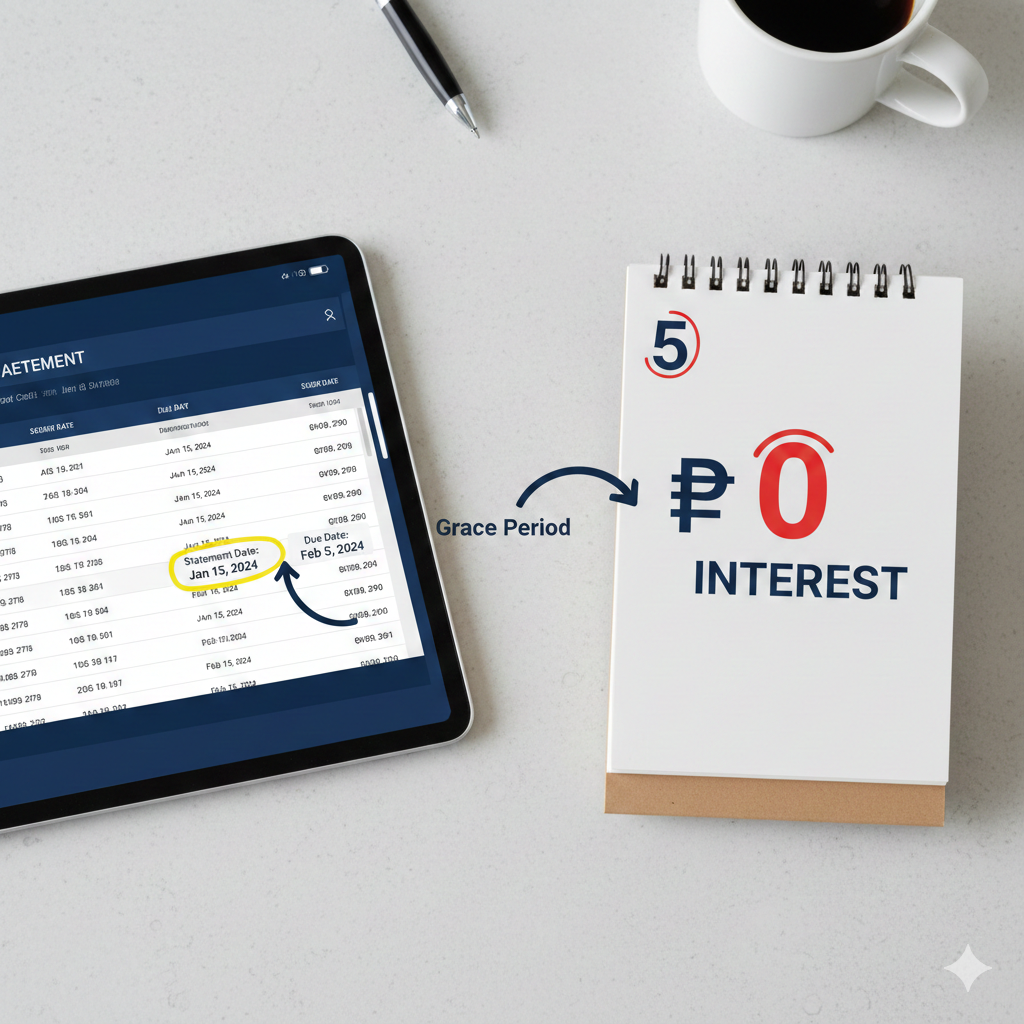
Still learning billing cycles? Read: Credit Card Due Dates Explained (Why Most Filipinos Get Charged Interest)
If you've been paying in full for months and want to try bill payments, here's how to do it safely:
Don't immediately switch all your bills to credit card. Pick one utility bill (like Meralco or PLDT) and test the system.
Pay it for 2–3 months. Track the fees. Calculate the actual net benefit. Make sure you're still paying your credit card in full.
If it works smoothly, consider adding another bill. If it's stressful or costly, stop.
Fees change. Platforms change. What was free last month might have fees this month.
Before you click "pay," check if there's a convenience fee. If the fee appeared suddenly, consider paying through a different channel or just paying the bill directly.
The biggest risk with charging bills to credit cards is forgetting to pay the credit card itself.
Your ₱8,000 in utility bills becomes a disaster if you miss your credit card due date and get hit with late fees and interest.
Set multiple reminders. Use autopay if possible. Never let bill payments cause you to miss your credit card payment.
Every three months, sit down and calculate: "Did I actually come out ahead?"
Add up all rewards earned. Subtract all convenience fees paid. Be honest about the time spent managing this system.
If the answer is "barely breaking even" or "losing money," stop. Go back to paying bills directly.
Paying bills with a credit card isn't some secret hack that everyone should do.
It's a tool that works well in specific situations for people who already have solid credit card discipline.
If you can pay bills with zero fees, earn meaningful rewards, and always pay your balance in full, go for it. The system can work in your favor.
But if you're chasing rewards while paying convenience fees, carrying balances, or making your financial life more complicated, you're doing it wrong.
The goal isn't to maximize every possible reward. The goal is to manage your finances simply and sustainably without stress.
For most beginners, that means keeping bills separate from credit cards until the credit card fundamentals are second nature.
Remember Jen from the beginning? After three months of losing money on convenience fees, she stopped using her card for bills entirely. Now she just pays bills directly and uses her credit card for groceries and gas only.
She earns less in total rewards than she was "supposed" to. But she also doesn't pay fees, doesn't stress about tracking multiple platforms, and sleeps better at night.
Sometimes simple beats optimal.
Want to understand the basics first? Read: Credit Cards for Beginners in the Philippines